
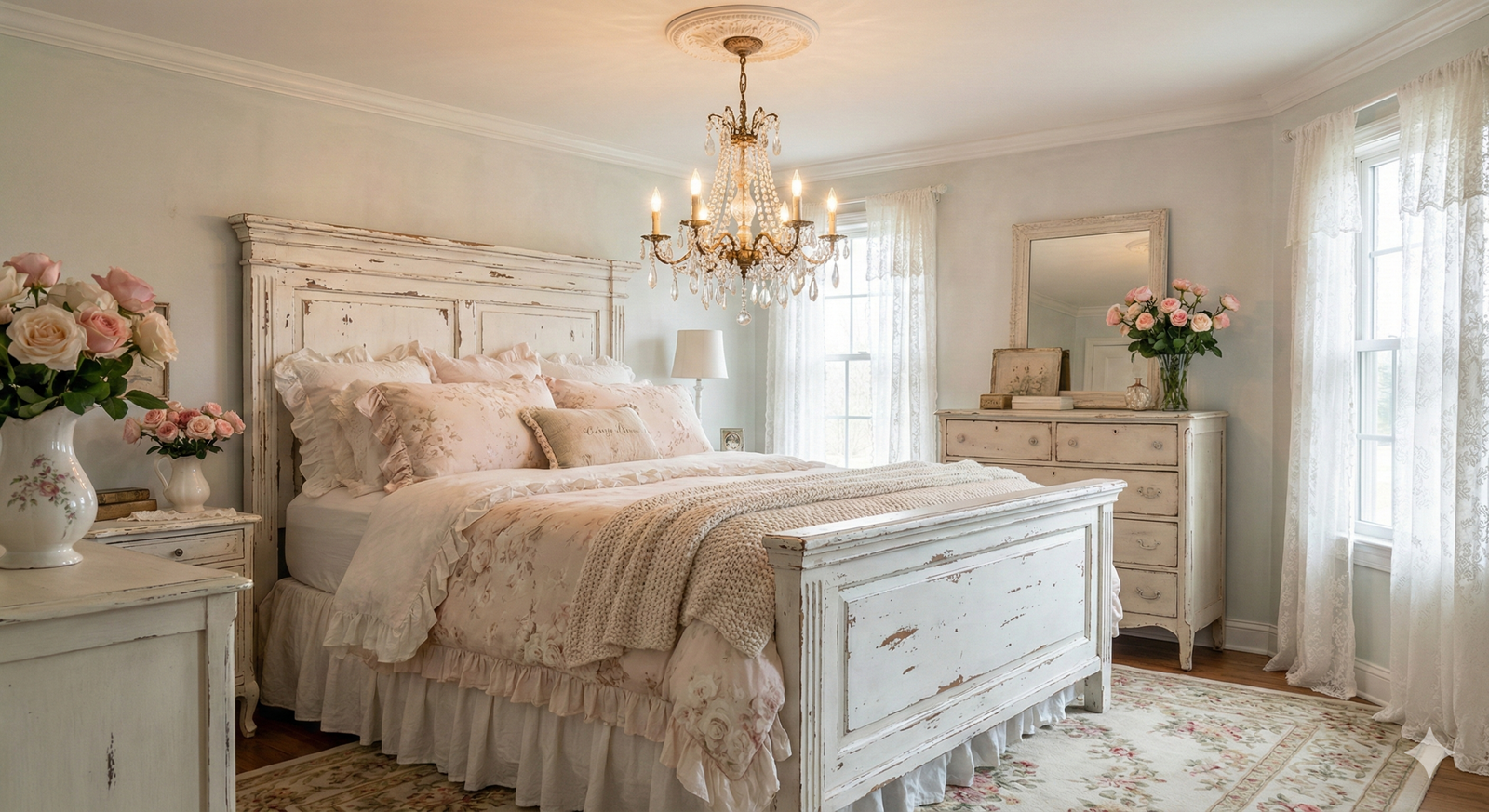
Shabby chic bedrooms turn old, worn furniture and soft colors into spaces that feel peaceful and romantic. This style is perfect because it’s not expensive, easy to do, and makes any bedroom feel like a cozy place to rest. Unlike modern or fancy designs, shabby chic embraces things that are a little worn and tells stories through mismatched pieces. Your bedroom becomes a comfortable retreat where you can truly relax.
What Makes Shabby Chic Special?
Shabby chic is all about celebrating the beauty of things that have been loved and used. Instead of wanting everything to look new and perfect, this style finds charm in worn edges, faded colors, and signs of age.
Understanding the Core Elements
Shabby chic design has some key ideas that make it work so well. The style focuses on gentle textures that feel soft and comfortable to touch, like old linen or cotton. Natural materials are super important—think real wood furniture, cotton bedding, and natural fabrics rather than plastic or synthetic stuff.
One big part of shabby chic is romantic appeal. This doesn’t mean lovey-dovey feelings; it means pieces that bring back happy memories and feelings. When you see an old wooden frame or a faded dress, it might remind you of simpler times or places you love. That’s the romantic touch that makes shabby chic so special.
Signs of wear tell stories. Distressed furniture means pieces that look old, scratched, or faded—but in a good way. You can find these at thrift stores or make new furniture look worn using paint techniques.
How It’s Different From Similar Styles
People sometimes mix up shabby chic with cottagecore or rustic chic, but they’re not the same thing. Cottagecore is more about a whole lifestyle—it’s not just how your room looks but how you live. People who love cottagecore try to live slower, make good choices for the planet, and enjoy nature. Shabby chic, on the other hand, is mainly about design choices and how things look.
Rustic chic is another style people confuse with shabby chic. While both use old furniture and natural stuff, rustic chic tries to bring the outdoor feeling inside. It focuses on rough textures and the rugged side of things. Shabby chic is softer and more gentle, like curling up in a well-loved blanket rather than hiking in nature.
Building Your Color Palette
Getting the right colors is the first step to making your shabby chic bedroom feel right. The colors you pick set the whole mood for relaxation.
Whites, Creams, and Soft Neutrals
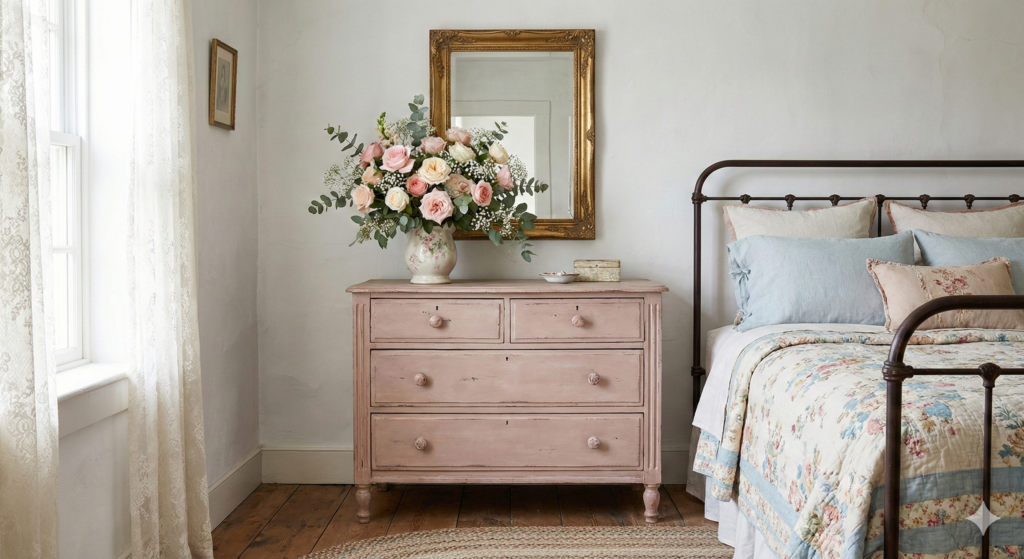
The foundation of any shabby chic bedroom starts with light, neutral walls. Pure white or cream creates that airy, open feeling that defines the style. These soft base colors let your furniture and accessories shine without feeling cramped or busy.
Think of it like a blank canvas. Light walls help your whole room feel bigger and calmer, which is exactly what you want in a bedroom. When natural light bounces off white or cream walls, the entire space glows. This simple backdrop makes it easy to add texture and interesting pieces without things looking messy.
Chalky white paint—the kind that looks a little powdery and aged—works perfectly for shabby chic. It gives walls that hint of old-fashioned charm without looking too formal.
Pale Pastels for Calm Feelings
Pale pastels are the true signature colors of shabby chic. These soft, washed-out versions of colors create a soothing space that helps your mind and body relax when you come home.
The best pale pastel choices include dusty rose (soft pink with gray undertones), soft coral (peachy pink that’s not too bright), mint green (very pale green, almost whisper-soft), duck egg blue (that soft blue-green color), sky blue (light, dreamy blue), lavender (pale purple), and champagne (creamy beige with a hint of warmth).
Interior designers often skip warm colors like bold orange or hot red in bedrooms because they can make you feel energized rather than calm. Cool colors—the blues, greens, and soft purples—help your body know it’s time to wind down. If you want a little warmth, throw blankets and pillows in warmer tones work perfectly for adding balance.
Modern Color Trends in Shabby Chic
The 2025 version of shabby chic is moving toward what experts call “muddied” colors. These are complex tones with earthy bases that feel calming and grounded. Instead of bright pink, think dusty rose with gray mixed in. Instead of bright green, try soft sage. These refined pastels feel less obviously “shabby chic” and more grown-up and timeless.
Warm dusky pinks, soft greys, and pale sage greens are having a big moment right now. They create calm, inviting spaces that still feel romantic but not overly girly.
Choosing and Arranging Furniture
Your furniture is where shabby chic really comes to life. The key is mixing old with new, matching with mismatched, and always choosing comfort over perfection.
Finding and Preparing Distressed Pieces
Authentic shabby chic means furniture that looks aged and worn. You don’t need to buy expensive antiques. Instead, hunt for pieces at thrift stores, yard sales, auctions, or salvage yards. The dents, scratches, and faded finish are exactly what you want.
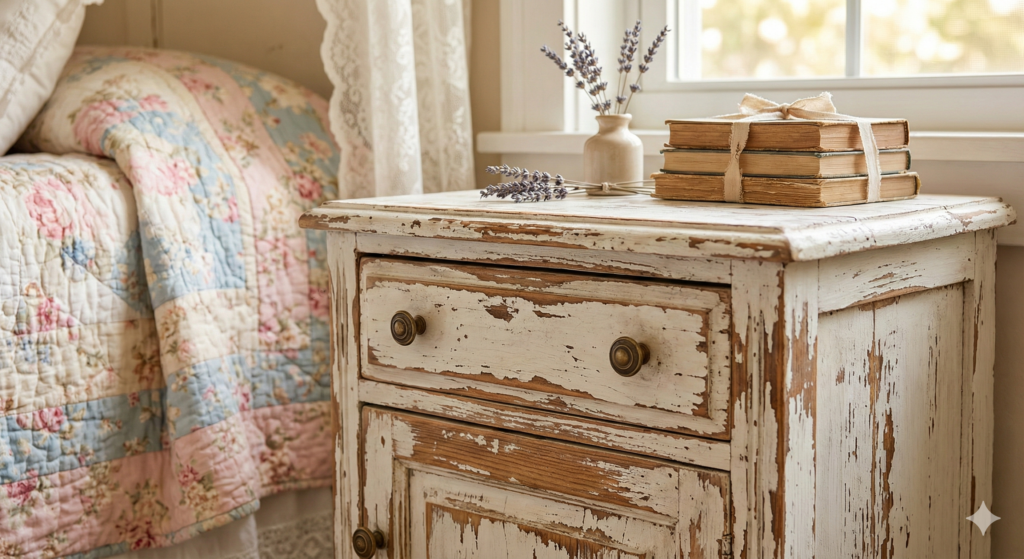
If you find a solid piece that’s in decent shape, you can make it look distressed yourself. Paint it with pastel colors, then sand or distress the edges so the older finish shows through underneath. This makes it look like it’s been loved for years, even if it’s brand new.
Many furniture companies now make pieces that are already distressed, so you can buy them ready-made if DIY isn’t your thing. These factory-distressed pieces give you the shabby chic look without hunting through secondhand shops.
The Power of Mixing Styles
One of the best parts of shabby chic is that it’s okay to not match. A wrought iron bed pairs beautifully with wooden nightstands. A painted Hungarian chest can sit right next to a fancy Italian dresser. This mix of styles creates character and keeps the room from feeling boring.
Pick one statement piece—maybe a fancy chandelier or an ornate dresser—and let that be your “fancy” element. Everything else can be simpler. This keeps the room from feeling too busy or over-decorated.
Bed Design as Your Focal Point
Your bed is the most important piece of furniture in your bedroom, so it deserves special attention. A four-poster bed, iron bed frame, or antique-style bed works perfectly for shabby chic. Using antique doors or shutters as a headboard is a clever way to add character and save money.
If you can’t find the perfect vintage bed, modern beds with an antique-inspired finish work just as well. Many stores sell new beds designed to look old and loved.
The Magic of Bedding and Textiles
Linens and textiles bring shabby chic to life more than anything else. This is where you layer softness and tell your bedroom’s story.
Creating a Beautiful Bed
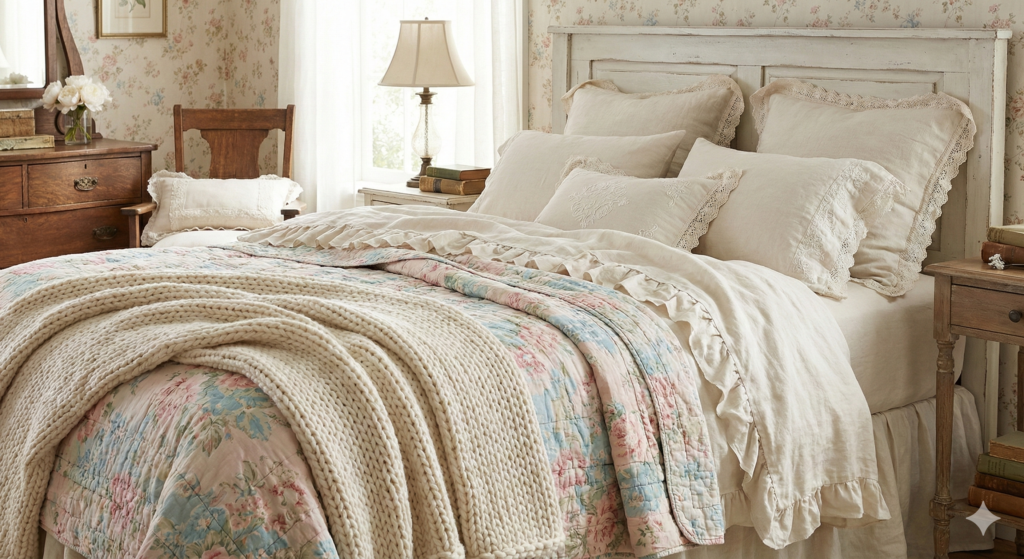
Start by choosing your bedding as your first step. The simplest way to make a shabby chic bed is to balance patterns and plain designs. If you go with plain walls, add patterned bedding with small florals. If you want bold wallpaper, keep your sheets and duvet plain.
Dainty florals—the kind with tiny flowers scattered across the fabric—work beautifully for shabby chic bedding. Layer your sheets in a reversed pattern or plain color underneath patterned covers to add depth without chaos.
Consider these bedding combinations: white or cream sheets under a floral duvet cover, pale blue sheets with a mint green duvet, or soft pink sheets under a cream coverlet with tiny flowers.
Don’t forget a soft bed throw across the foot of the bed and several decorative pillows. These finishing touches add coziness and help tie your color scheme together.
Fabrics That Work Best
Shabby chic celebrates natural materials. Cotton, linen, and muslin are perfect because they feel soft, look authentic, and actually breathe. Avoid stiff, shiny fabrics that look plastic or manufactured.
Layering different light fabrics creates texture without looking busy. Try combining cotton sheets with linen pillowcases and a muslin throw. These variations in texture add interest while keeping everything soft and gentle.
Modern 2025 trends focus on tactile styling—fabrics like bouclé, velvet, and linen bring subtle depth. These materials feel wonderful to touch and create a bed that’s as cozy as it is pretty.
Window Treatments
Keep your curtains light and feminine. Soft roller blinds work well when you need to darken the room for sleep. Vintage floral curtains are perfect, but plain cream or white works great too. The goal is to let light and air flow through while maintaining that soft, delicate feeling.
Accessories and Final Touches
Accessories tie everything together and add personality to your shabby chic space.
Lighting That Sets the Mood
Lighting is super important in a bedroom, and shabby chic gives you lots of options. You can find old lamps at thrift stores, paint them, and update the shades. Crystal chandeliers work beautifully as a statement piece above the bed. Bedside table lamps or wall sconces provide soft, relaxing light.
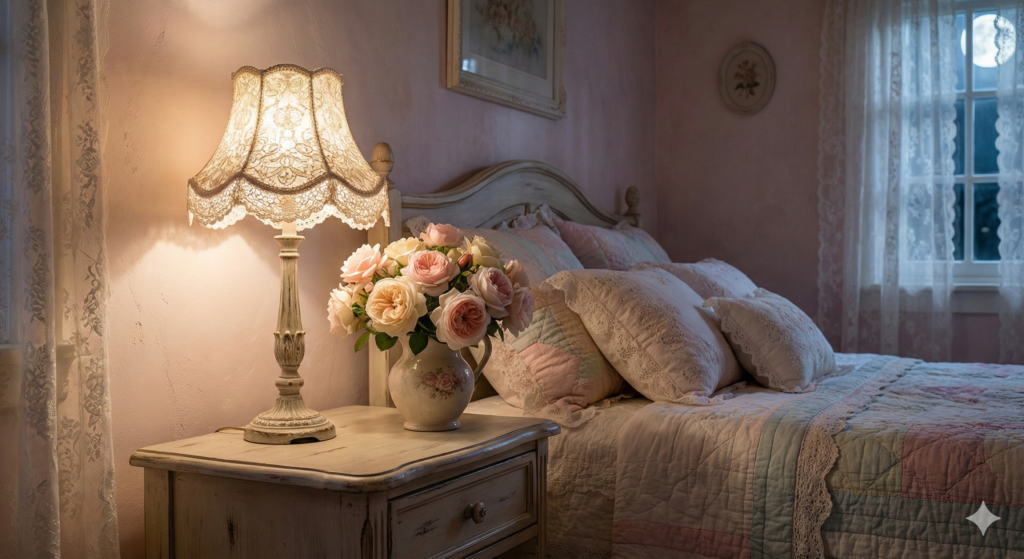
In 2025, dimmable lights are trending because they let you control the mood. Hard-wired sconces on the wall or ceiling pendants are replacing traditional table lamps as people want cleaner, more spacious-looking nightstands.
Vintage and Recycled Decorations
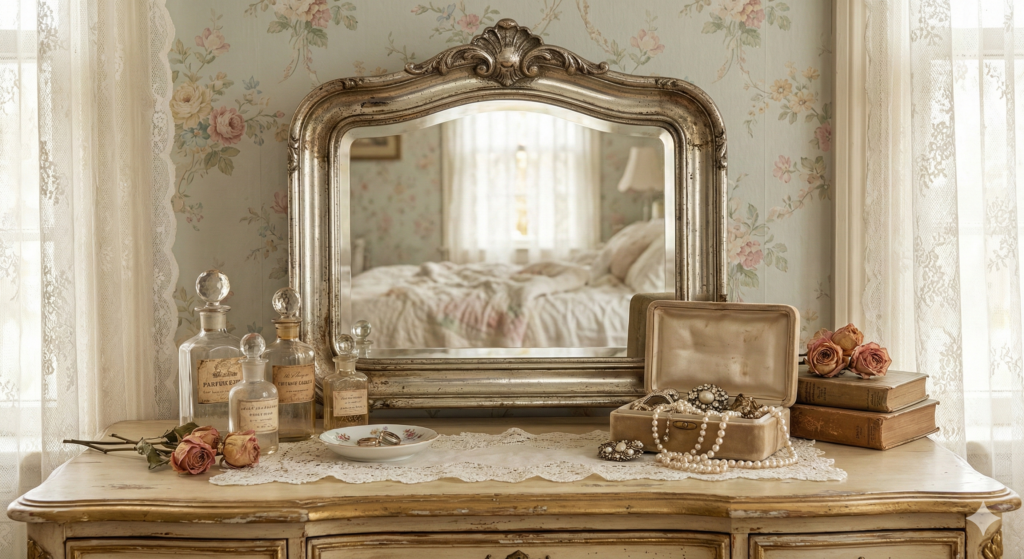
Complete your shabby chic bedroom with vintage mirrors, old perfume bottles, frosted glass jars, distressed jewelry boxes, and flower vases with silk flowers. A rug (especially if you have wood floors) adds softness and helps define the space.
Bed skirts are having a comeback because they evoke nostalgia and were popular in the early 1900s. Plus, they hide storage under your bed and reduce dust, which means fewer allergens in your bedroom.
Soft blankets draped over chairs or the end of the bed add coziness. Cotton blankets in cream, gold, gray, pink, taupe, or soft blue shades fit perfectly with the aesthetic.
Creating a Personal Story
The best shabby chic bedrooms tell your story through collected pieces. Your mismatched items shouldn’t look random; they should feel like you’ve gathered things you love over time. A quilted throw might have belonged to your grandmother. A mirror could be from an antique store in a town you love. These pieces make your bedroom truly yours.
Making Shabby Chic Work in Modern Spaces
Modern shabby chic looks different from the 1990s version that inspired it. Today’s shabby chic mixes vintage pieces with contemporary style and focuses on authenticity over obvious distressing.
Balancing Old and New
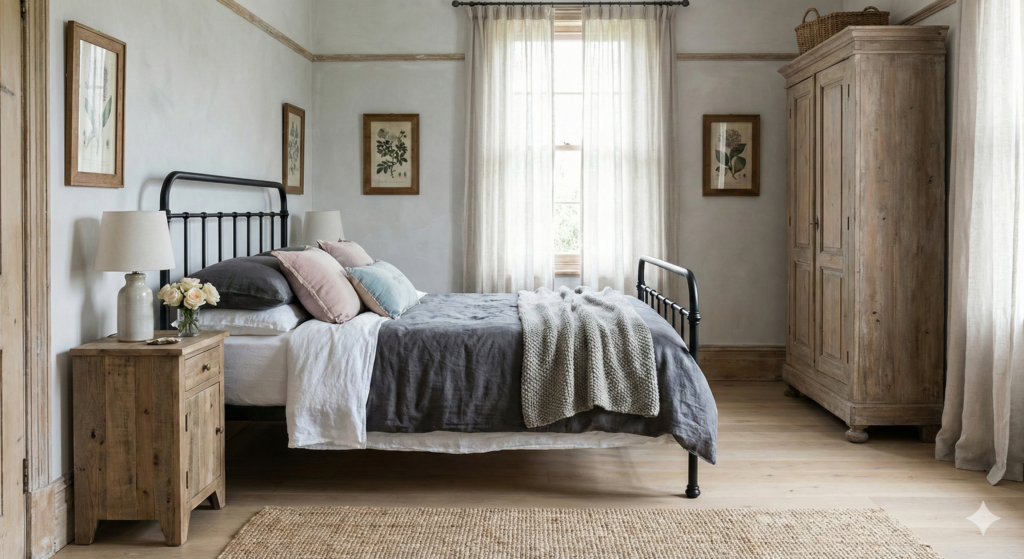
You don’t have to fill your room with actual antiques. Mix secondhand furniture finds with new pieces from stores. New beds and dressers are made to look aged, giving you options beyond hunting at yard sales.
The key is keeping colors consistent—usually sticking to one or two main paint colors for your furniture. This makes the room feel more spacious and put together, even though you’re mixing styles.
Real, intentional wear looks better than obviously fake distressing. Modern shabby chic values pieces that genuinely show age and use rather than furniture that’s artificially roughed up.
Gender-Neutral Shabby Chic
You can create shabby chic that doesn’t feel overly feminine. Skip the excessive ruffles and lace. Instead, focus on soft textures, quality fabrics, and neutral colors. A mix of refined linen, natural wood, and soft metallics creates shabby chic that feels sophisticated and works for anyone.
Storage and Organization
Clutter works against shabby chic’s peaceful feeling. Use under-bed storage baskets, floating shelves, and nightstands with drawers to keep things organized. Built-in wardrobes and concealed storage make your room feel calm and grounded, not chaotic.
Step-by-Step Guide to Creating Your Space
Ready to transform your bedroom? Follow these steps to create your own shabby chic sanctuary.
Step 1: Paint Your Walls – Start with a clean slate. Choose white, cream, or a pale pastel. Let this base color set the mood.
Step 2: Find Your Key Furniture Piece – Hunt for a vintage or distressed bed, dresser, or chest. This becomes your anchor piece. Paint it if needed.
Step 3: Add Bedding – Layer your bedding with sheets, duvet covers, and blankets in soft colors. Include patterned and plain elements.
Step 4: Include Textiles and Throws – Add blankets, pillows, and window treatments in natural fabrics like cotton and linen.
Step 5: Choose Lighting – Select a statement light (chandelier or elegant lamp) and add bedside lighting that you can dim.
Step 6: Gather Accessories – Collect vintage mirrors, small furniture pieces, and decorative items that make you happy. Don’t over-do it—less is more.
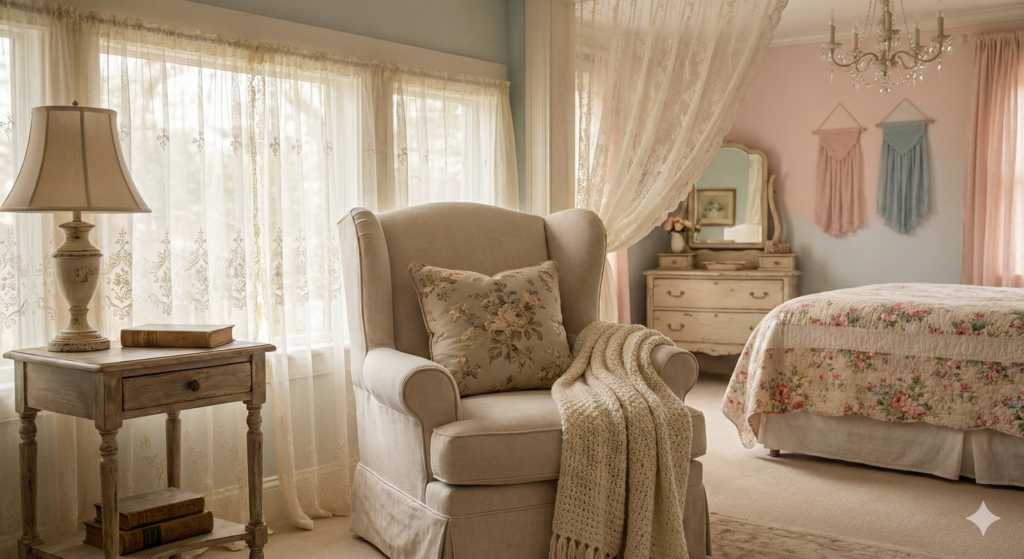
Step 7: Create Cozy Nooks – Add a comfortable chair with a throw, a small table for a lamp, or a shelf for displayed items.
Avoiding Common Shabby Chic Mistakes
While shabby chic is forgiving, a few things can make it feel chaotic instead of charming.
Overdoing Patterns – Too many patterns create chaos rather than calm. Pick one wall or one large piece of patterned fabric and keep everything else simple.
Choosing Too Much Furniture – A cramped room doesn’t feel romantic or relaxing. Give your pieces space to breathe and let your eyes rest.
Using Fake Distressing – Authentic aged pieces feel better than obviously painted-on wear. If you distress furniture yourself, make it look natural.
Ignoring Organization – Shabby chic can look cluttered if you don’t have good storage. Keep your space organized even though your style is relaxed.
Being Too Feminine – Modern shabby chic doesn’t require ruffles, lace, and pink everything. Embrace the style with neutral tones and quality fabrics instead.
Why Shabby Chic Works So Well for Bedrooms
Shabby chic fits bedrooms naturally because bedrooms are personal, intimate spaces. This style celebrates imperfection and authenticity, which feels honest in a place where you rest and recharge.
The style is also affordable compared to other design trends. You can use secondhand furniture, paint it yourself, and collect pieces over time. There’s no pressure to get everything perfect at once.
Most importantly, shabby chic prioritizes comfort and feeling at home. It’s not about impressing anyone or following strict rules. It’s about creating a space that makes you feel calm, safe, and happy at the end of each day.
Final Thoughts
Creating a shabby chic bedroom is about honoring the beauty in worn, loved things and building a space that tells your story. Start with soft colors and natural materials. Mix old and new pieces. Layer textures and textiles. Add vintage touches that make you smile. Most importantly, let your space feel like home rather than a showroom.
Your bedroom should be the place where you rest deepest and feel most yourself. Shabby chic gives you permission to embrace imperfection, celebrate what you love, and create a sanctuary that’s uniquely yours. Whether you’re starting from scratch or gradually transforming your space, shabby chic offers a timeless, forgiving style that only gets better as you live in it.