Luxury Master Bathroom Ideas
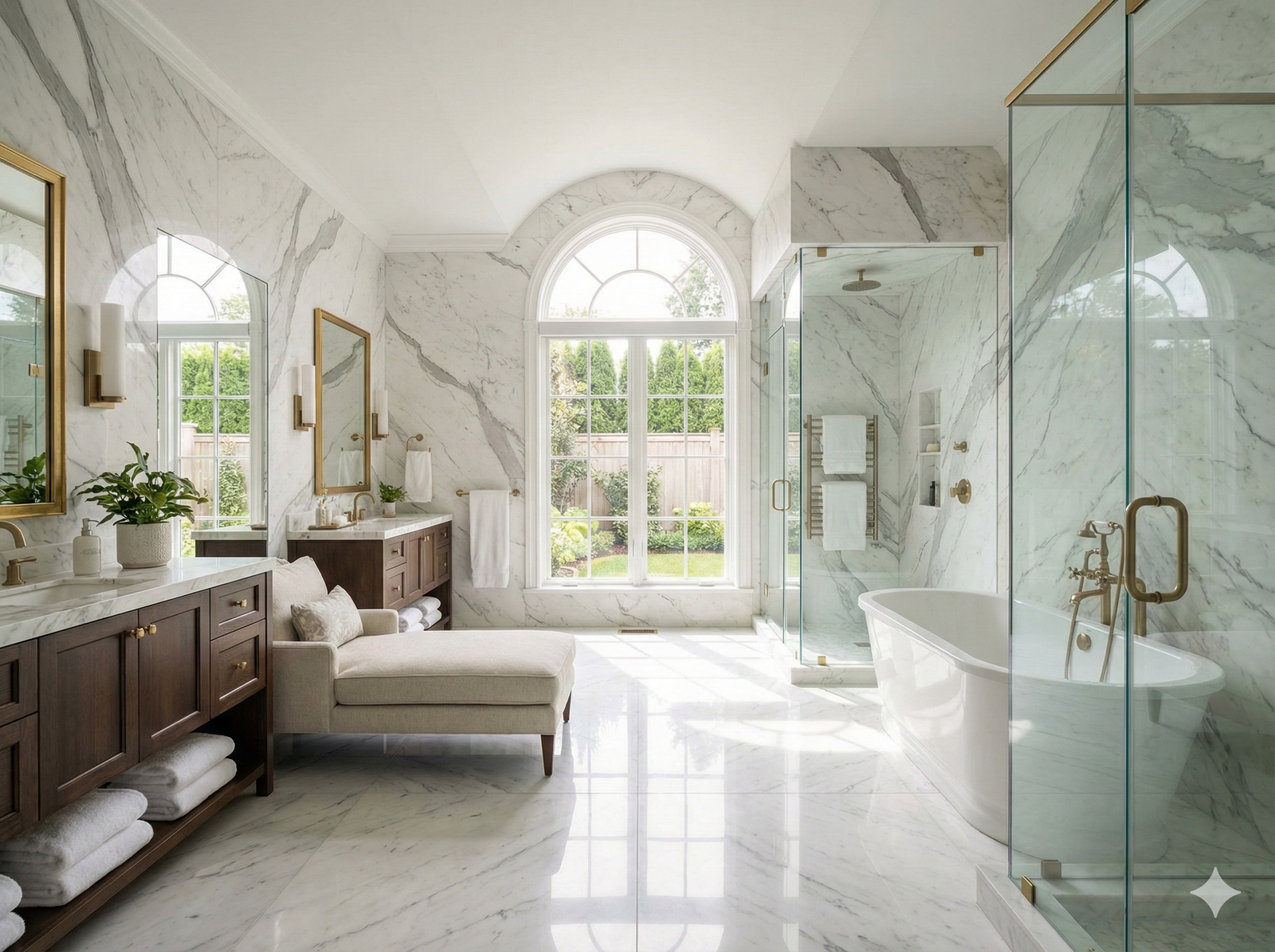
A luxury master bathroom turns your daily routine into a spa-like escape. Think heated floors under your feet, a deep soaking tub by the window, and soft lighting that makes you look and feel amazing. These aren’t just pretty upgrades—they add real value to your home and make every morning better.
In this guide, you’ll discover 30+ luxury bathroom ideas that work for different budgets and spaces. We’ll cover everything from statement bathtubs and walk-in showers to smart storage solutions and mood lighting. Whether you’re planning a full remodel or just want to add some high-end touches, you’ll find ideas that fit your style and space.
Creating a Spa-Like Atmosphere
The Power of Natural Light
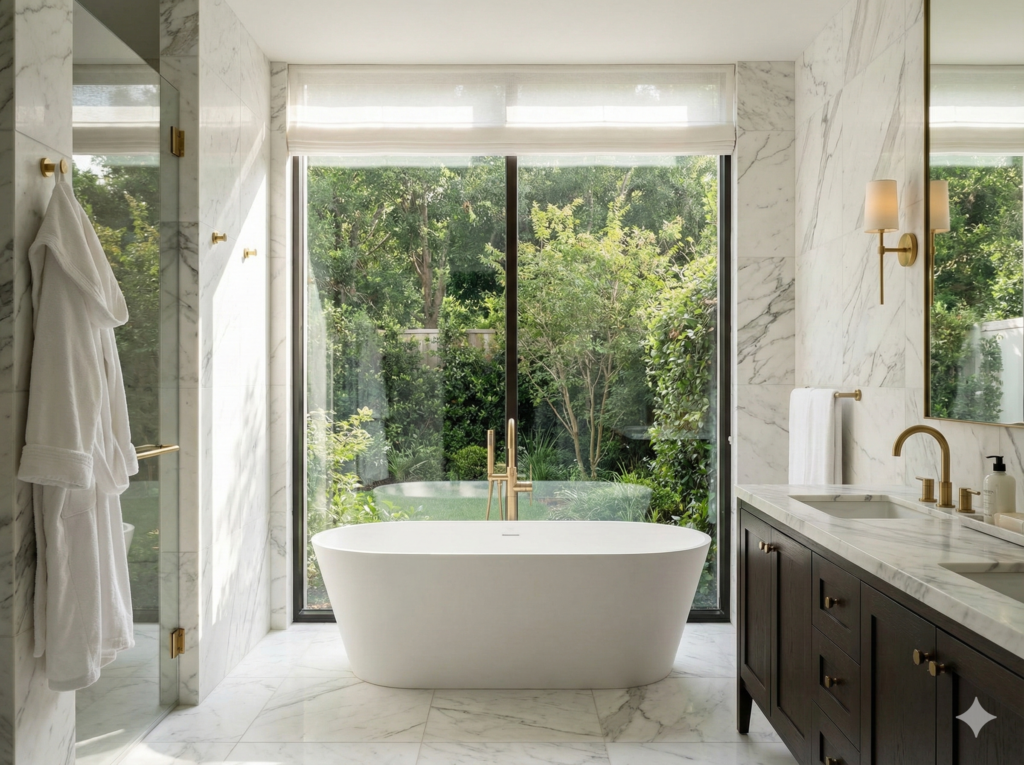
Natural light makes any bathroom feel bigger and more peaceful. Large windows, skylights, or glass doors bring the outdoors in and create that airy spa feeling.
Place your bathtub near a window so you can soak while watching the sky. Frosted or textured glass gives you privacy without blocking light. If you have a small window, consider adding a skylight above your shower or tub area.
According to the National Association of Home Builders, bathrooms with natural light sources rank among the top features homebuyers want. Skylights work great in bathrooms without exterior walls. They bring in light from above and make the ceiling feel higher.
Choosing Calming Color Palettes
Soft, neutral colors help your mind relax. White, cream, beige, gray, and soft blue create a calm space that never goes out of style.
White bathrooms feel clean and bright. They also make small spaces look bigger. Add warmth with wood tones or brass fixtures. Gray works well with both cool and warm accents. Pair it with white marble or black details for a modern look.
Soft blues and greens remind us of water and nature. These colors lower stress and help you unwind after a long day. Use them on walls, tiles, or in your towels and decor. For more neutral color inspiration, check out our guide on warm modern interior design.
Adding Plants and Natural Elements
Plants bring life and fresh air into your bathroom. They also help remove toxins and add a pop of color. Choose plants that love humidity like ferns, orchids, pothos, or snake plants.
Put small plants on your counter or window sill. Hang larger plants from the ceiling or place them in floor planters. Just make sure they get enough light.
Natural materials like wood, stone, and bamboo add texture and warmth. A wooden stool, stone countertop, or bamboo bath mat connects your space to nature. These elements make your bathroom feel less clinical and more inviting.
Statement Bathtubs That Wow
Freestanding Soaking Tubs
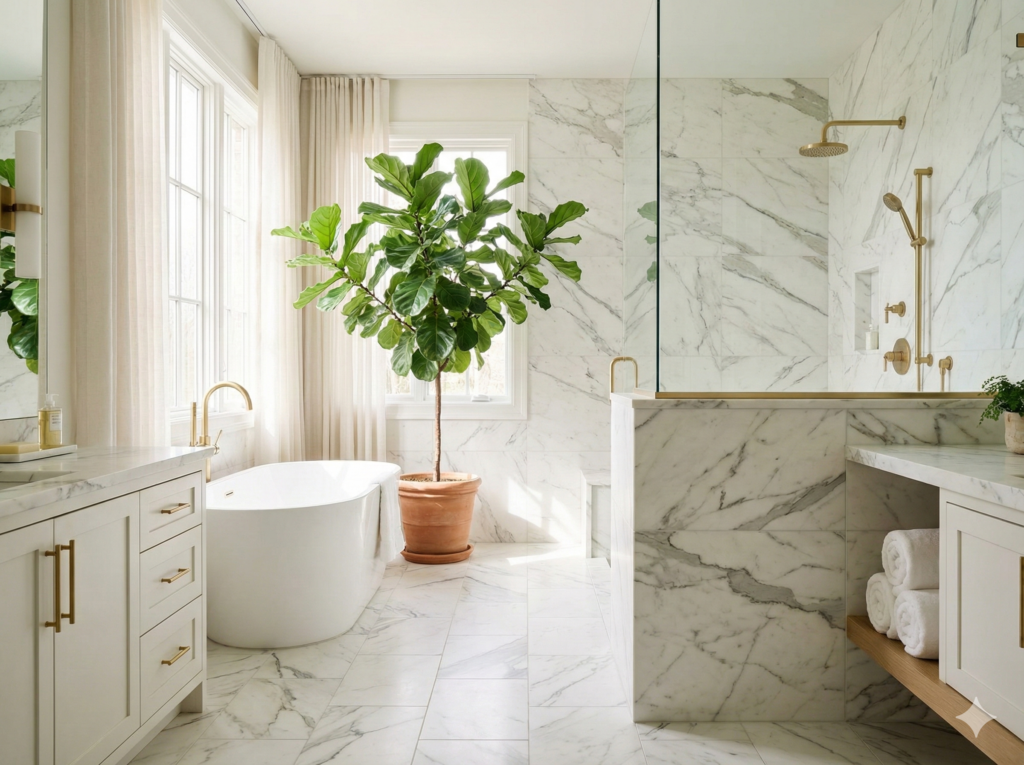
A freestanding tub becomes the star of your bathroom. These tubs sit away from the walls and work as both function and art. They come in oval, round, rectangular, and even egg shapes.
Place your freestanding tub in the center of the room or near a window. Make sure you have enough space to walk around it—at least two feet on all sides works best. Deep soaking tubs hold more water and let you sink in up to your shoulders.
Modern freestanding tubs use materials like acrylic, cast iron, or stone resin. Acrylic tubs cost less and stay warm longer. Cast iron tubs last forever and hold heat well, but they’re heavy. Stone resin tubs look like real stone but weigh less.
Clawfoot and Vintage Styles
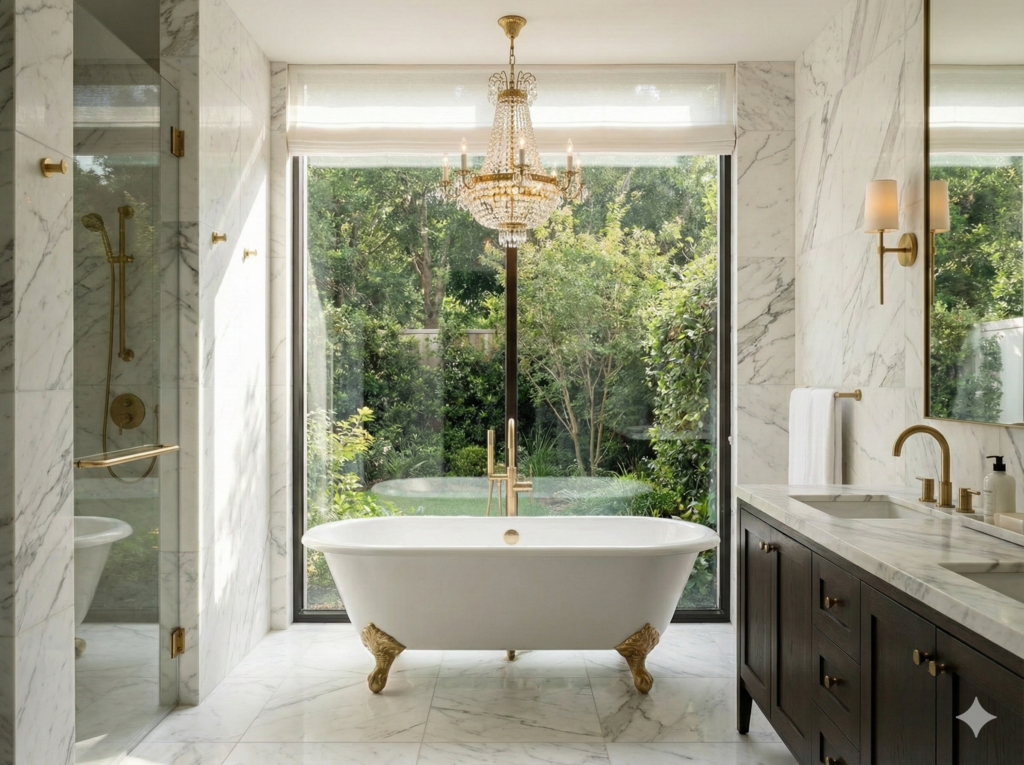
Clawfoot tubs add old-world charm to any bathroom. The raised feet create an elegant look that works in both traditional and modern spaces. Roll-top clawfoot tubs have rounded edges that feel comfortable and look softer.
Paint the outside of your clawfoot tub in a bold color like navy, black, or forest green. Keep the inside white for contrast. Or go classic with an all-white tub and polished chrome or brass feet.
Vintage-style tubs pair well with exposed plumbing, subway tiles, and traditional fixtures. Add a small chandelier or wall sconces for extra drama. These tubs work great in rooms with high ceilings where they won’t feel cramped.
Japanese Soaking Tubs (Ofuro)
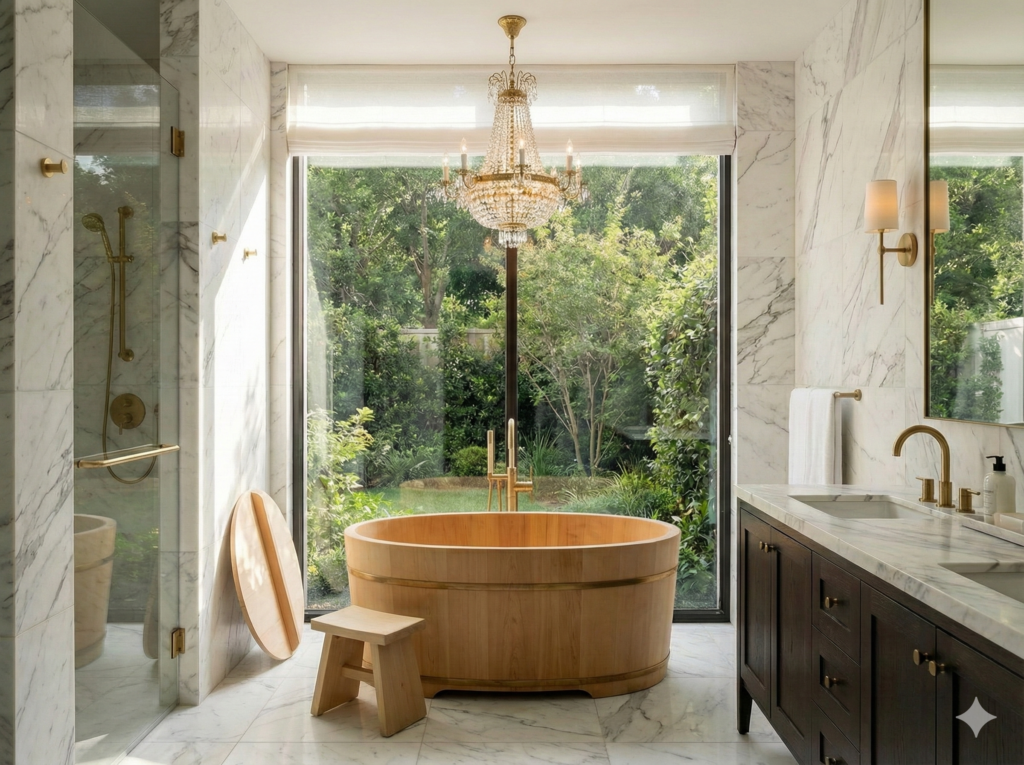
Japanese soaking tubs are deeper and shorter than regular tubs. You sit upright with water up to your chin. This design uses less water but still gives you a full-body soak.
Ofuro tubs originally used hinoki wood, which smells amazing when wet. Today, you can find them in acrylic or stone. The deep soak helps relax sore muscles and clears your mind.
Place your Japanese tub near a window with a simple view. Keep the area around it minimal—maybe just a small wooden stool and a plant. The simple design helps you focus on relaxation.
Walk-In Showers with High-End Features
Rainfall and Waterfall Showerheads
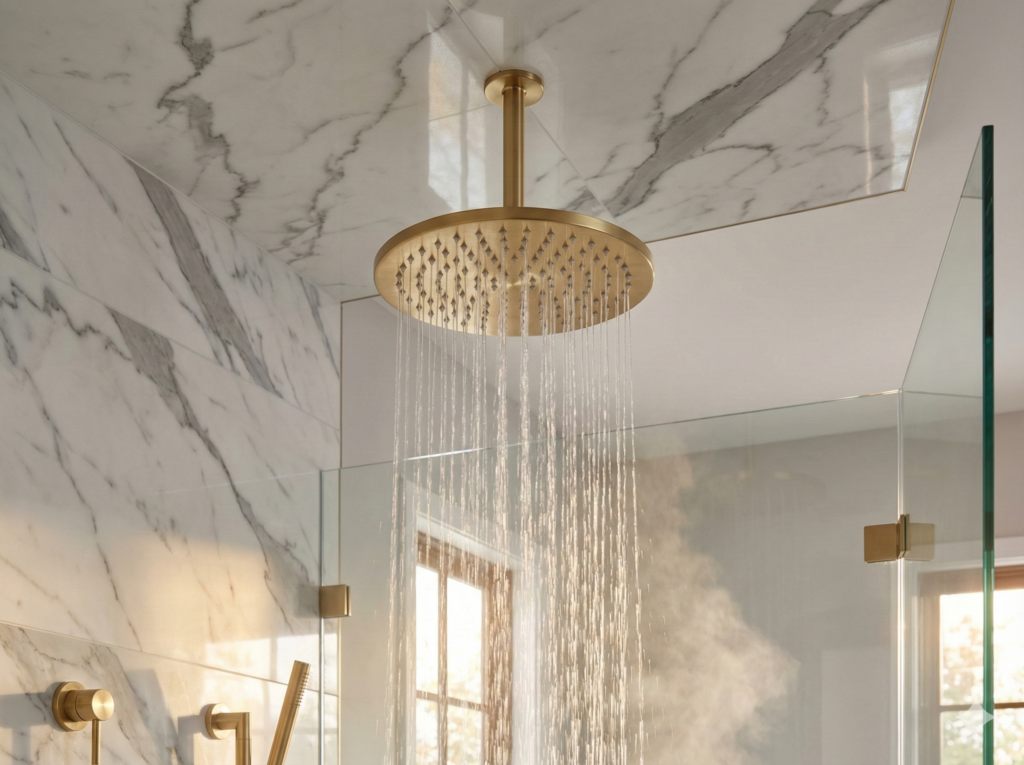
Rainfall showerheads mount on the ceiling and create a gentle, wide spray. The water falls straight down like warm rain. This feels more relaxing than a regular showerhead that sprays from the side.
Choose a rainfall showerhead at least 8 inches wide. Bigger heads cover more of your body at once. Mount it high enough so the water has room to spread out—about 7 feet works for most people.
Waterfall showerheads create a strong sheet of water. They work great as a second showerhead in large walk-in showers. Combine a ceiling-mounted rainfall head with a wall-mounted waterfall head for the ultimate shower experience.
Multiple Shower Jets and Body Sprays
Body spray jets hit you from the sides at different heights. They target your shoulders, back, and legs all at once. This creates a spa-like massage feeling right in your shower.
Install 3-6 body spray jets along the walls of your shower. Place them at different heights to cover your whole body. You’ll need good water pressure for multiple jets to work well—check with a plumber before installing.
Adjustable jets let you control the spray pattern. Choose pulse, massage, or gentle spray settings based on your mood. Some systems let you save your favorite settings so you get the perfect shower every time.
Frameless Glass Enclosures
Frameless glass showers use thick glass panels with minimal hardware. No bulky frames means a clean, open look that makes your bathroom feel bigger.
The glass should be at least 3/8 inch thick for safety and durability. Half-inch glass looks even more high-end. Clear glass shows off your beautiful tile work. Frosted glass gives more privacy.
Frameless showers work in any size bathroom. In small spaces, they make the room feel less cramped. In large bathrooms, they create a seamless flow from the shower to the rest of the space. Easy-clean glass coatings help prevent water spots and soap scum.
Steam Shower Systems
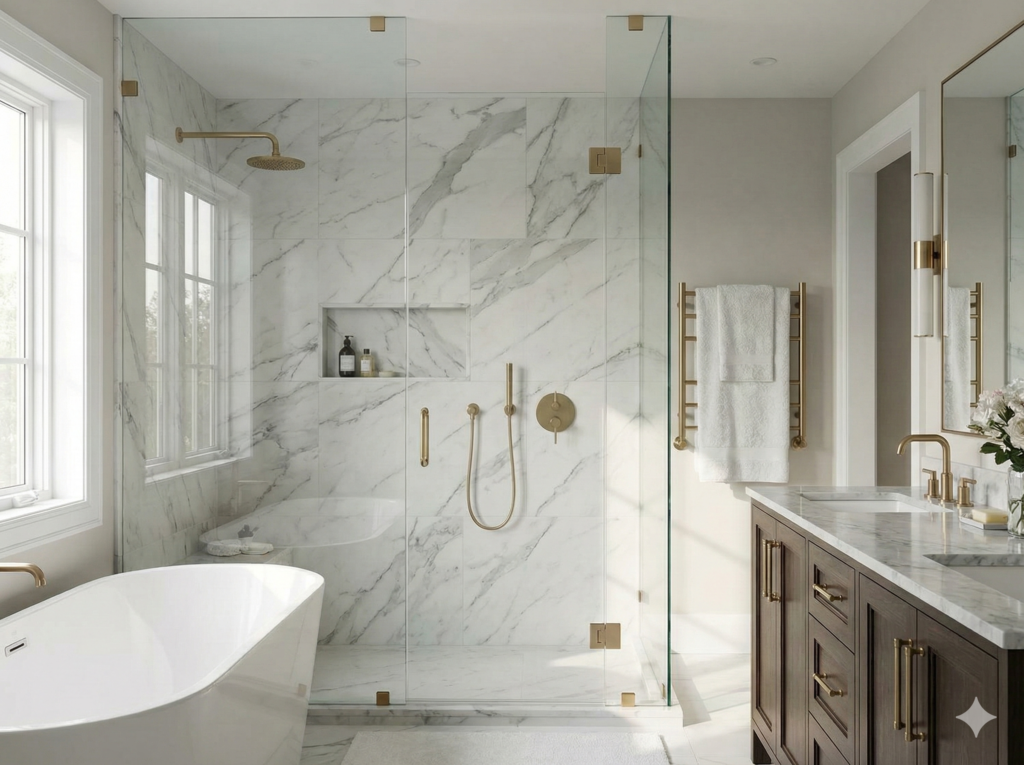
Steam showers turn your regular shower into a home steam room. A generator heats water and sends steam into your enclosed shower. The warm, moist air opens your pores, relaxes muscles, and helps you breathe easier.
You need a fully enclosed shower with a ceiling for steam to work. The generator usually installs in a nearby closet or under a cabinet. Most systems reach full steam in about 5-10 minutes.
According to Harvard Health, regular steam sessions may improve circulation and help with respiratory issues. Add eucalyptus oil to the steam for an even more spa-like experience. Digital controls let you set your preferred temperature and time.
Elegant Vanity and Sink Options
Double Vanities for Couples
Double vanities give you and your partner separate spaces. No more fighting over counter space or waiting to brush your teeth. Each person gets their own sink, mirror, and storage.
Plan for at least 60 inches of width for a basic double vanity. Luxury double vanities run 72-96 inches wide with plenty of counter space between the sinks. Each person should have at least 30 inches of personal space.
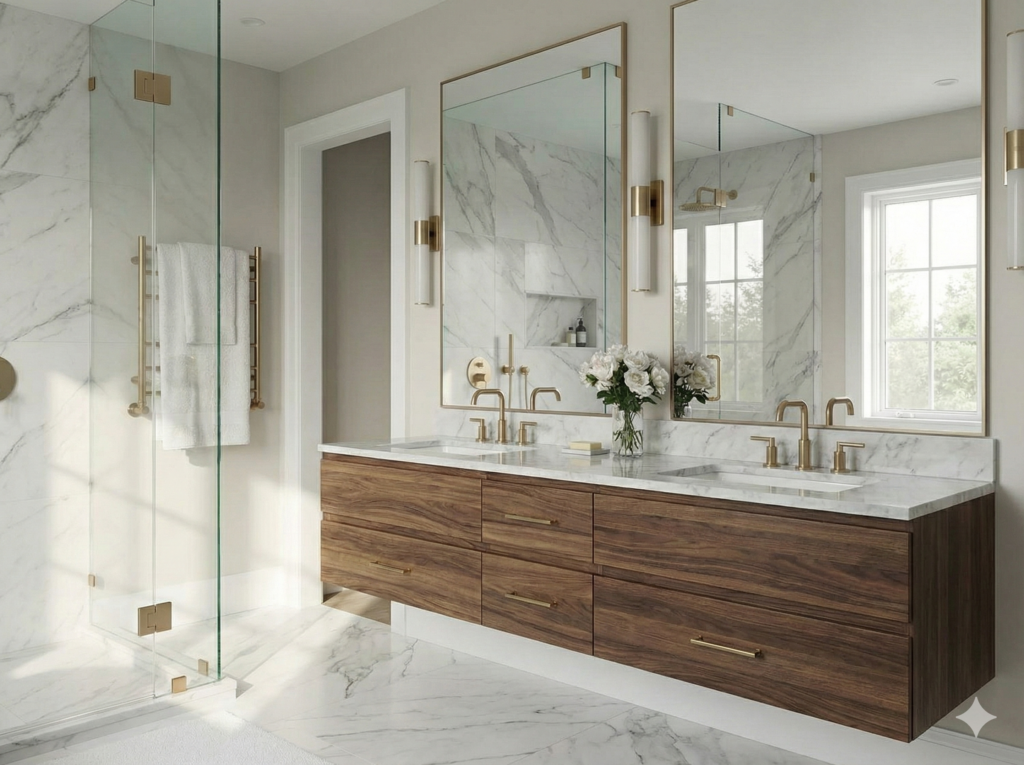
Floating double vanities look modern and make cleaning the floor easier. Traditional cabinet-style vanities offer more storage. Choose drawers over doors—they’re easier to organize and access. For more vanity ideas, explore our post on master bedroom sitting area ideas.
Vessel Sinks as Art Pieces
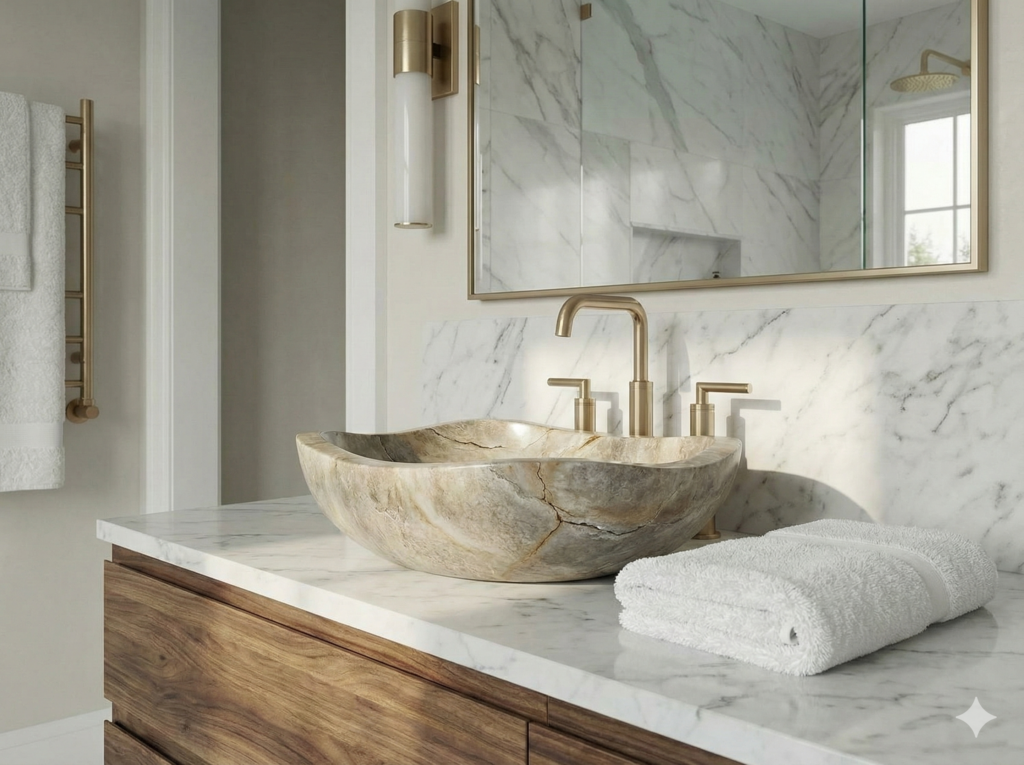
Vessel sinks sit on top of the counter like a bowl. They come in glass, stone, copper, concrete, and ceramic. Each sink becomes a piece of art that adds personality to your bathroom.
Glass vessel sinks catch and reflect light beautifully. Choose clear, frosted, or colored glass. Stone vessel sinks like marble or granite bring natural texture. Copper sinks develop a patina over time that adds character.
Mount your faucet on the counter or wall beside the vessel sink. Wall-mounted faucets give you more counter space and look sleek. Make sure the faucet is tall enough to reach over the rim of the sink comfortably.
Integrated Countertop and Sink Designs
Integrated sinks form one smooth piece with the countertop. No seam between the sink and counter means no place for dirt or water to collect. These sinks look incredibly clean and modern.
Quartz, solid surface, and concrete work best for integrated sinks. The material runs from the counter down into the sink basin without any joints. This design costs more than a regular sink but lasts longer and cleans easier.
Integrated trough sinks work great for double vanities. One long sink basin serves two people. Add two separate faucets for function. The streamlined look makes small bathrooms feel less cluttered.
Custom Cabinetry with Smart Storage
Custom cabinets fit your exact space and needs. Add pull-out organizers for hair tools, built-in outlets inside drawers, and dividers that keep everything tidy.
Deep drawers work better than cabinets for storing towels and toiletries. You can see everything at once without digging. Add drawer organizers for makeup, jewelry, and small items.
Include these smart storage features:
- Pull-out hampers for dirty clothes
- Built-in hair dryer holders
- Electrical outlets inside drawers for charging
- Drawer dividers that adjust to fit your items
- Soft-close hinges and slides for a quiet, luxury feel
Vertical storage near your sink keeps daily items within reach. Small shelves or narrow cabinets work for toothbrushes, soap, and hand towels.
Luxury Flooring Choices
Heated Floors for Comfort
Heated floors feel amazing under your feet, especially on cold mornings. Electric or hydronic heating systems warm the floor from below. The heat rises gently and warms the whole room.
Electric systems use heating cables under your tile or stone floor. They cost less to install and work well in single rooms. Hydronic systems pump hot water through tubes in the floor. They cost more upfront but use less energy if you heat your whole house this way.
Install heated floors during a remodel when you’re already replacing the flooring. They add about $10-20 per square foot to your project. The U.S. Department of Energy notes that radiant floor heating is more efficient than baseboard heating and most forced-air systems.
Marble and Natural Stone
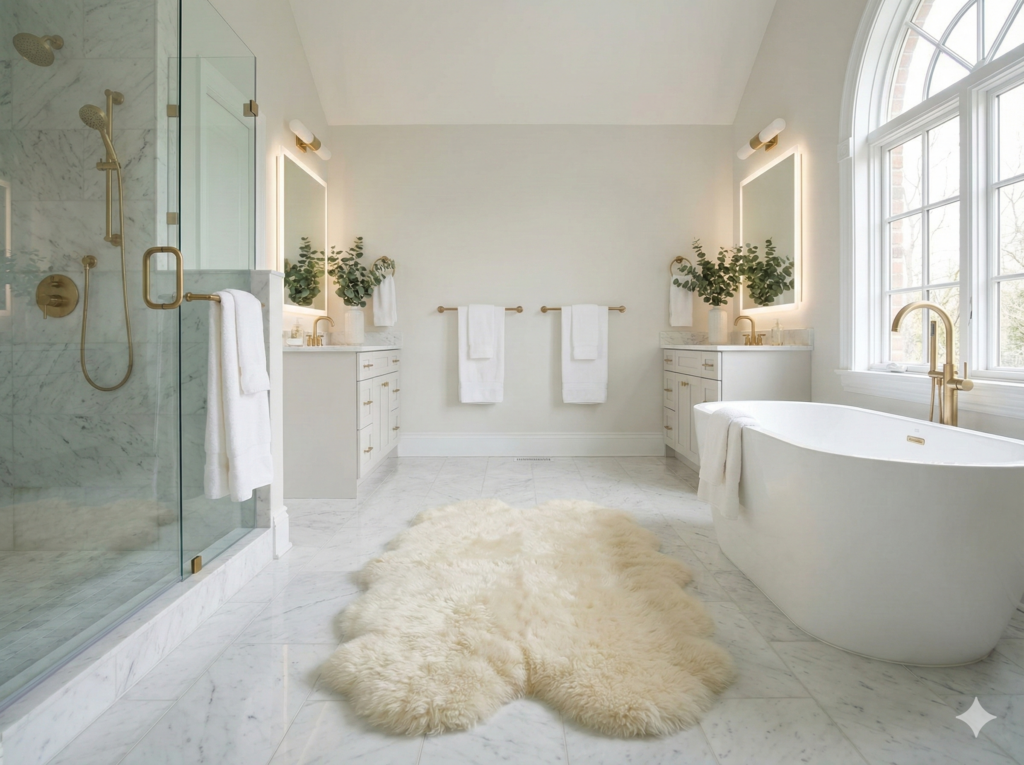
Marble floors scream luxury. The natural veining makes each tile special. Carrara marble has gray veining, Calacatta has bold dark veins, and Statuario is bright white with gold or gray veins.
Seal marble floors to protect against stains and water damage. Reseal every 6-12 months in high-use bathrooms. Honed marble has a matte finish that hides scratches better than polished marble.
Other luxury stones include:
- Travertine: Earthy tones with a textured surface
- Slate: Dark, dramatic, and naturally slip-resistant
- Limestone: Soft, neutral, and affordable
- Granite: Extremely durable and comes in many colors
Natural stone stays cool in summer and holds heat in winter (especially with floor heating). Mix different stone types—marble on the floor and slate on the walls—for visual interest.
Large Format Tiles
Large tiles (12×24 inches or bigger) have fewer grout lines. This creates a smooth, seamless look that makes spaces feel bigger. Less grout also means less cleaning.
24×48 inch tiles look incredibly high-end. Install them vertically on walls to make the ceiling look higher. On floors, large tiles work best in medium to large bathrooms. Very small bathrooms need more cuts, which breaks up the seamless effect.
Rectified tiles have perfectly straight edges. This lets you use smaller grout lines (1/16 inch) for an almost grout-free look. Choose a grout color that matches your tile to make grout lines disappear even more.
Wood-Look Porcelain
Wood-look porcelain tiles give you the warmth of hardwood without water damage worries. Modern printing technology makes these tiles look incredibly real—complete with wood grain texture.
These tiles come in every wood color from light oak to dark walnut. Wide plank sizes (8-10 inches wide and 48 inches long) look most realistic. Arrange them in the same patterns as real hardwood—straight, herringbone, or chevron.
Wood-look porcelain is:
- 100% waterproof
- Scratch-resistant
- Easy to clean
- Safe for heated floors
- Less expensive than real hardwood
This flooring works great in bathrooms that connect to bedrooms with hardwood floors. The seamless look flows from room to room.
Statement Walls and Tile Work
Floor-to-Ceiling Marble Slabs
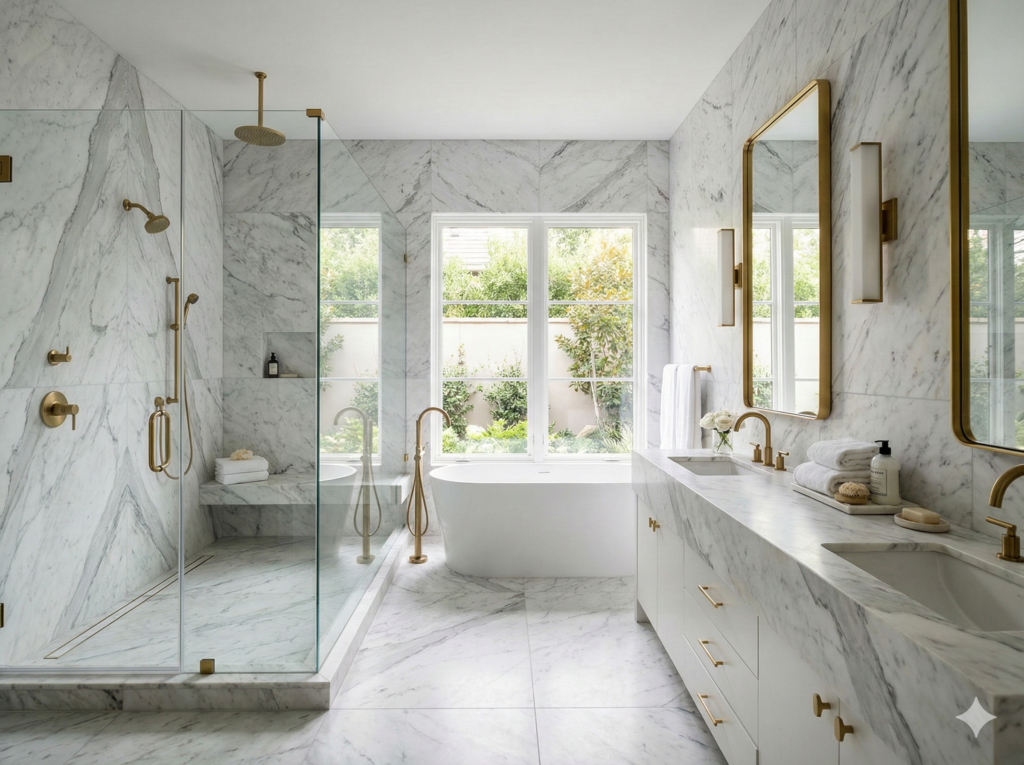
Large marble slabs installed floor-to-ceiling create a dramatic, seamless look. Book-matched slabs mirror each other’s veining pattern like an open book. This creates a symmetrical design that looks intentional and luxurious.
Use marble slabs behind your tub, in your shower, or as an accent wall. The fewer seams, the better. Each slab is heavy and expensive, but the impact is worth it for a true luxury bathroom.
Mix polished and honed marble for texture. Use polished marble on walls where it won’t get slippery. Choose honed or textured marble on floors and shower walls for safety.
Textured 3D Wall Tiles
3D tiles add depth and shadows to your walls. They come in wave patterns, geometric shapes, hexagons, and more. These tiles catch light differently throughout the day, creating movement on your walls.
Use 3D tiles on one accent wall—usually behind the vanity or tub. Too much texture overwhelms the space. Pair textured walls with smooth floors for balance.
White 3D tiles work in any bathroom style. They add interest without color commitment. Or choose colored 3D tiles to make a bold statement. Lighting matters—install wall sconces or LED strips to highlight the texture.
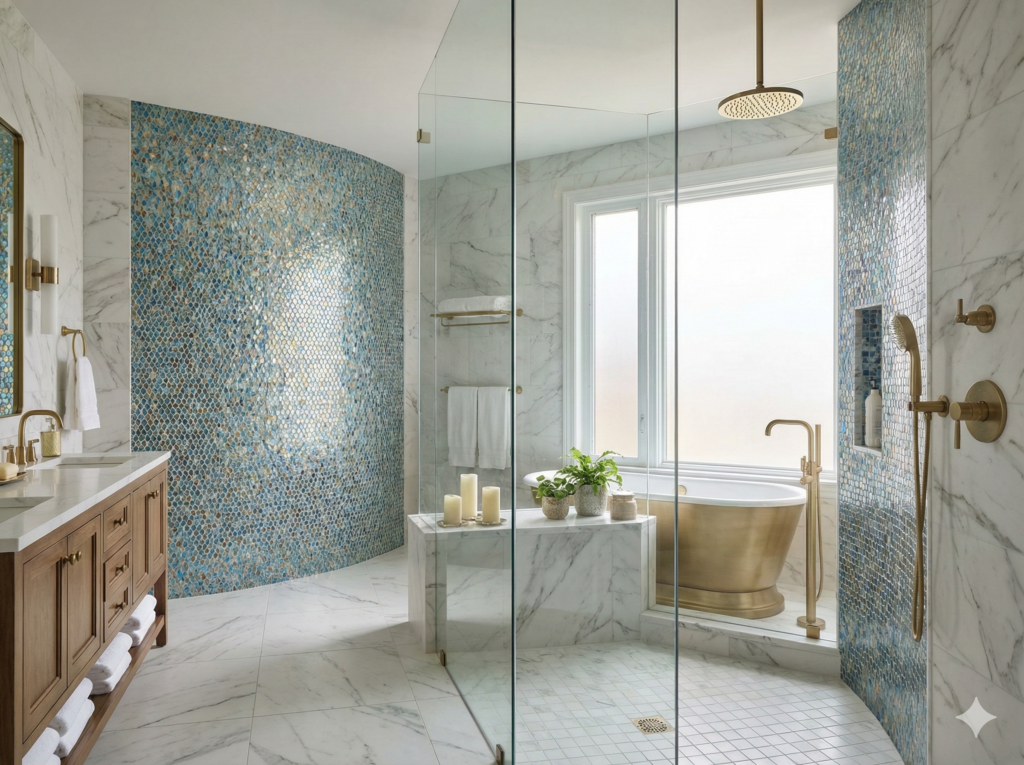
Mosaic Accent Walls
Mosaic tiles use small pieces (usually 2 inches or smaller) to create patterns. Use them in your shower, behind your tub, or as a border between different tile types.
Modern mosaics come in glass, stone, metal, and ceramic. Glass mosaics reflect light and add sparkle. Stone mosaics bring natural texture. Metal mosaics in gold, copper, or silver add warmth.
Common mosaic patterns include:
- Penny rounds: Small circular tiles packed together
- Hexagons: Six-sided tiles in various sizes
- Subway tile: Small rectangular tiles in herringbone or stacked patterns
- Fish scale: Overlapping scales that look like a mermaid tail
- Basketweave: Tiles arranged to look woven
Choose a neutral field tile for most of your bathroom. Then add a mosaic accent in one special spot. This keeps costs down while adding luxury.
Bold Patterned Tiles
Patterned tiles bring color and personality to your bathroom. Cement tiles with Moroccan or Spanish patterns work great on floors or accent walls. Encaustic tiles have patterns that go through the entire tile, so they never wear off.
Keep patterned tiles to one area—usually the floor or one accent wall. Balance busy patterns with solid, neutral tiles everywhere else. Too much pattern makes a space feel smaller and chaotic.
Black and white geometric patterns never go out of style. Colorful patterns make a bolder statement but might date faster. Choose patterns you’ll love for years, not just what’s trendy now.
Lighting That Sets the Mood
Layered Lighting Design
Good bathroom lighting combines three types: ambient (overall light), task (for specific jobs), and accent (for mood and drama). You need all three for a functional, beautiful space.
Ambient lighting comes from ceiling fixtures or recessed lights. This provides overall brightness for the whole room. Task lighting focuses on your mirror and vanity where you need clear light for grooming. Accent lighting highlights architectural features, artwork, or creates atmosphere.
Never rely on just one overhead light. That creates harsh shadows on your face. Layer different light sources at different heights for the best results.
Chandelier or Statement Light Fixtures
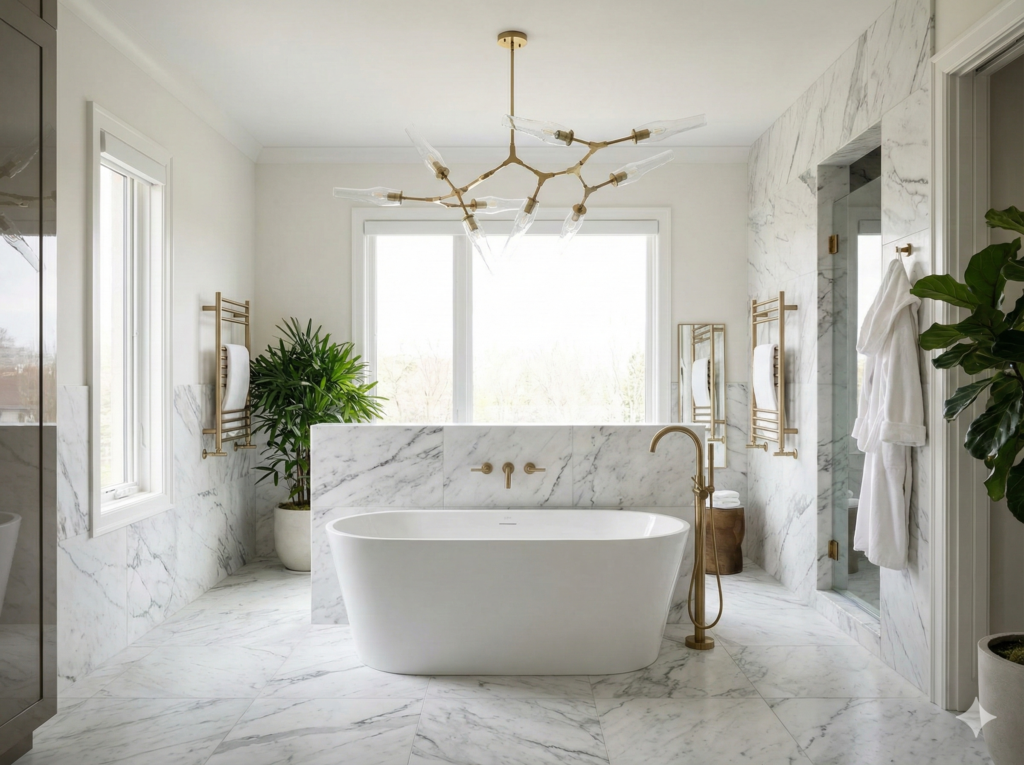
A chandelier adds instant glamour to your bathroom. Hang it centered over your freestanding tub for a dramatic focal point. Make sure it’s rated for damp or wet locations depending on where you install it.
Crystal chandeliers bring classic elegance. Modern geometric chandeliers work in contemporary spaces. Mini chandeliers (12-20 inches wide) work in smaller bathrooms. Large chandeliers (24+ inches) need high ceilings and bigger rooms.
Pendant lights work great over vanities. Use two matching pendants for a double vanity. Hang them 30-36 inches above the counter. Choose pendants with diffused or frosted glass to avoid harsh shadows on your face.
Backlit Mirrors
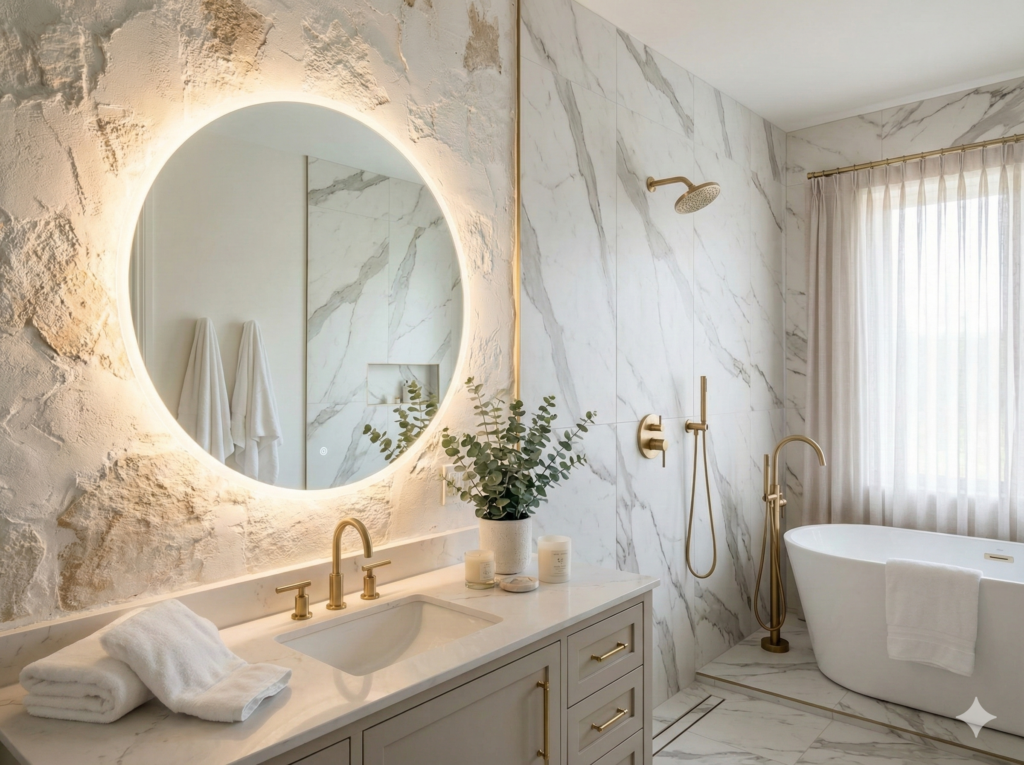
LED mirrors light your face from behind the mirror. This creates even, shadow-free light perfect for makeup and shaving. The light wraps around your face from all angles.
Some LED mirrors include:
- Dimmer controls to adjust brightness
- Color temperature settings (warm to cool light)
- Defogger pads that keep steam away
- Built-in outlets for hair tools
Install LED mirrors at eye level. The light should hit your face, not shine down from above or up from below. This eliminates unflattering shadows.
Dimmer Switches and Smart Controls
Dimmer switches let you adjust lighting based on the time of day and your mood. Bright light wakes you up in the morning. Dim light helps you relax before bed.
Install dimmers on all your bathroom lights—overhead, vanity, and accent lights. Smart dimmers connect to your phone or voice assistant. Set schedules or scenes for different times of day.
Smart lighting systems remember your preferences. Create a “morning routine” scene with bright white light. Set a “relaxing bath” scene with dim warm light. Some systems even change color to match your mood. For more smart home ideas, see our guide on small cozy bedroom ideas.
Accent Lighting for Ambiance
Accent lights create mood and highlight special features. Install LED strips under floating vanities, inside niches, or along toe kicks. This creates a soft glow that makes your bathroom feel like a spa.
Recessed lights in your shower ceiling provide task light where you need it. Add a small accent light in a display niche to showcase a plant or sculpture. Wall sconces on either side of your mirror add warmth and eliminate shadows.
Use warm white light (2700-3000K) for relaxing spaces. Cool white light (4000-5000K) works for task areas where you need to see clearly. Mix both types in different fixtures for a balanced lighting scheme.
High-Tech Bathroom Features
Smart Toilets
Smart toilets offer features that regular toilets can’t match. Heated seats warm up in seconds. Built-in bidets clean better than toilet paper. Automatic lids open when you approach and close when you leave.
Top smart toilet features include:
- Night lights that guide you in the dark
- Deodorizers that eliminate odors automatically
- Self-cleaning functions
- Water-saving dual flush systems
- Warm air dryers
- Adjustable water temperature and pressure
Smart toilets cost $1,000-$8,000 depending on features. They save water and reduce toilet paper use. The bidet function uses just a fraction of the water of a single flush.
Digital Shower Controls
Digital shower systems let you set your perfect temperature before you step in. No more testing the water with your hand. Pre-program different settings for each family member.
Control water temperature, flow rate, and which showerheads activate—all from a digital panel. Some systems connect to your phone so you can start your shower from bed. The water reaches perfect temperature by the time you walk in.
Digital valves also prevent sudden temperature changes when someone flushes a toilet or runs water elsewhere. This keeps you safe from scalding water or freezing cold surprises.
Bluetooth Speakers and Sound Systems
Built-in bathroom speakers let you listen to music, podcasts, or the news while you get ready. Waterproof Bluetooth speakers mount to walls or ceilings and connect to your phone.
Install speakers throughout your bathroom for even sound. One speaker above the shower, one near the tub, and one at the vanity creates full coverage. Make sure all speakers are rated for humid environments.
Some LED mirrors include built-in speakers. Others hide speakers behind mirror frames or in ceiling ventilation fans. Voice-controlled speakers let you adjust volume and change songs without touching anything.
Heated Towel Racks
Heated towel racks warm your towels before use and dry them between uses. No more damp, smelly towels. Warm towels feel luxurious and help you dry off faster after a bath or shower.
Choose between plug-in electric models or hardwired versions. Hardwired racks look cleaner with no visible cords. They connect to your home’s electrical system. Plug-in models cost less and work as a DIY upgrade.
Towel warmers come as wall-mounted racks, freestanding units, or drawer-style warmers. Wall-mounted racks save floor space. Freestanding units move anywhere you need them. Drawer warmers hide inside cabinetry and hold multiple towels.
Luxurious Materials and Finishes
Mixing Metals for Visual Interest
Gone are the days of matching every metal finish in your bathroom. Mixing metals adds depth and personality. The key is choosing a dominant metal (60-70% of fixtures) and accent metals (30-40%).
Popular metal combinations:
- Brass and black: Warm and dramatic
- Chrome and gold: Classic and bright
- Bronze and nickel: Rich and traditional
- Matte black and brass: Modern and bold
Use your dominant metal on large fixtures like faucets and shower hardware. Add accent metals in lighting, cabinet hardware, or accessories. Keep at least two feet between different metal finishes so they feel intentional, not random.
Stick to either all warm metals (brass, gold, bronze, copper) or all cool metals (chrome, nickel, silver). Mixing warm and cool usually doesn’t work as well, though brass and black is an exception.
High-Quality Fixtures and Hardware
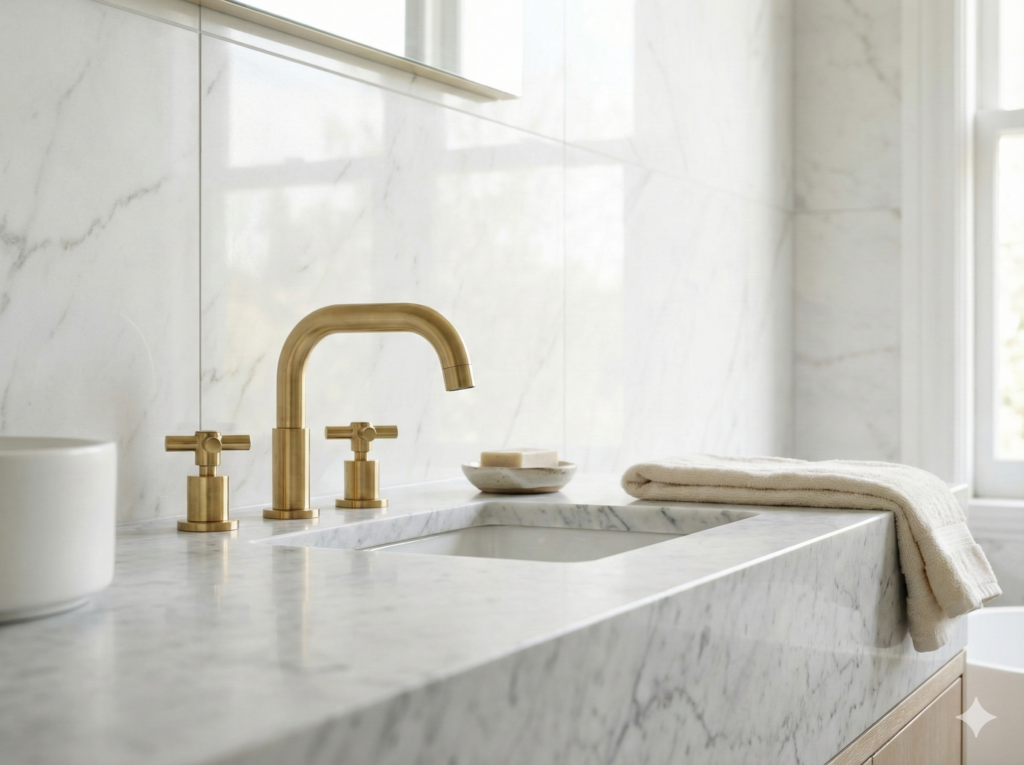
Quality fixtures last decades and operate smoothly every single day. Cheap faucets drip, handles break, and finishes wear off. Investing in quality saves money and frustration long-term.
Look for solid brass construction in faucets and shower valves. Brass resists corrosion better than zinc or plastic. Ceramic disc valves control water flow better than rubber washers and rarely drip.
Premium hardware features:
- Living finishes that patina beautifully over time
- Solid metal (not plated) that won’t chip
- Smooth operation with no wiggling or sticking
- Limited lifetime warranties
- Water-efficient certifications (EPA WaterSense)
Handles and knobs make a big difference too. Solid metal cabinet hardware feels substantial in your hand. Crystal or lucite knobs add elegance. Leather or wood pulls bring warmth.
Specialty Countertop Materials
Your countertop material affects both function and style. Each option has different benefits for bathroom use.
Quartz countertops resist stains and never need sealing. They come in colors that look like marble or granite but work better in bathrooms. Non-porous quartz won’t harbor bacteria or mold.
Marble countertops offer timeless beauty but need more care. Seal them regularly to prevent stains from toothpaste, makeup, and water. Honed marble hides scratches better than polished.
Concrete countertops create a modern industrial look. Custom concrete can include any color, texture, or embedded material. Each countertop is completely different. Seal concrete properly to prevent water damage.
Soapstone countertops darken over time to a rich charcoal color. This soft stone feels smooth and warm. Minor scratches sand out easily. No sealing required.
Quartzite countertops look like marble but are much harder and more durable. Real quartzite (not quartz) is a natural stone that resists etching from acidic products better than marble.
Custom Glass and Mirror Work
Custom mirrors transform boring bathrooms into designer spaces. Cut mirrors to fit your exact wall dimensions. Add beveled edges for a classic look or keep edges clean and square for modern style.
Antiqued mirrors have a vintage patina that adds character. These work great in traditional or eclectic bathrooms. Tinted mirrors in bronze, gray, or gold add subtle color. Frameless mirrors make small bathrooms feel bigger by blending with the wall.
Install mirrors behind floating shelves for depth. This makes the shelves look like they’re floating in space. Mirror an entire wall to double the visual size of your bathroom. Just avoid placing mirrors opposite toilets or in awkward sightlines.
Custom glass includes:
- Frosted glass privacy walls between toilet and vanity
- Glass shelves for display
- Glass shower walls instead of tile
- Colored glass accents
Work with a local glass shop for custom sizes and special features. They can add built-in lighting, defoggers, or magnification zones to your mirrors.
Creating Spa-Like Storage Solutions
Hidden Storage Behind Mirrors
Medicine cabinets hide behind mirrors to save space. Modern medicine cabinets include interior lighting, outlets for electric razors, and adjustable shelves.
Full-wall medicine cabinets store more than small ones. They hide behind the entire mirror above your vanity. You get tons of storage without sacrificing any wall space or style.
Some high-end medicine cabinets include:
- Interior LED lighting that turns on when you open the door
- Built-in outlets and USB ports
- Magnifying mirrors inside
- Adjustable glass shelves
- Soft-close doors
Choose medicine cabinets deep enough for your products. Standard depth is 4 inches. Deeper cabinets (5-6 inches) hold larger bottles and jars.
Built-In Wall Niches
Wall niches keep shower products off the floor and within easy reach. Build them right into your shower walls during construction or remodeling. Frame them with the same tile as your walls or use contrasting tile to make them pop.
Place niches at shoulder height for easy access. Multiple smaller niches work better than one large niche. Create separate niches for shampoo, soap, and razors.
Light your niches with waterproof LED strips. This creates a soft glow and makes your niches into design features. Tile the inside of niches in a different color or pattern than the walls for extra interest.
Niches don’t have to live only in showers. Add them to walls near your tub for bath salts and candles. Build them above toilets for extra storage. Install them between wall studs anywhere you need to store small items.
Linen Closets and Freestanding Cabinets
A linen closet inside your bathroom stores towels, toilet paper, and cleaning supplies. No more dripping water across the hall to get a towel. Build a closet into unused corner space or along one wall.
Include these in your linen closet:
- Adjustable shelves for different size items
- Pull-out hampers for dirty towels
- Deep shelves for bulk toilet paper and paper towels
- Narrow shelves for bottles and extra toiletries
Freestanding cabinets add storage when you can’t build in a closet. Choose cabinets that match your vanity style. Tall narrow cabinets fit in tight spaces. Wide low cabinets work under windows.
Open storage looks light and airy. Display pretty towels, plants, and decorative items. Closed storage hides clutter and keeps dust off your items. Mix both types for function and beauty.
Drawer Organizers and Custom Dividers
Organized drawers make morning routines faster and less stressful. You’ll never dig for your toothbrush or favorite lipstick again. Custom dividers keep like items together and prevent drawer chaos.
Use drawer organizers for:
- Makeup and cosmetics
- Hair tools and accessories
- Jewelry
- Shaving supplies
- First aid items
- Medicine (in a locked box if you have kids)
Adjustable dividers adapt as your needs change. Acrylic dividers let you see everything at a glance. Bamboo dividers bring natural warmth. Velvet-lined dividers protect delicate items.
Add drawer organizers after your cabinets are installed. Measure your drawers carefully and buy organizers that fit snugly. Custom drawer inserts fit perfectly but cost more than standard organizers.
Adding Comfort and Convenience
Seating Areas and Vanity Stools
A place to sit in your bathroom adds comfort and function. Vanity stools or chairs let you sit while doing makeup or drying your hair. Bench seating in large showers gives you a place to shave or just relax under the water.
Built-in shower benches should be at least 15 inches deep and 17-19 inches high (standard chair height). Tile them to match your shower walls or use a contrasting stone slab. Add a teak mat on top for warmth and texture.
Vanity stools work in bathrooms with enough floor space. Choose backless stools that tuck under the counter when not in use. Upholstered stools add softness. Lucite or metal stools look light and modern.
A small chair or bench near your tub gives you a place to set a towel or robe. It also provides seating for soaking your feet or reading while someone else showers.
Spa-Quality Towels and Robes
Luxury towels feel thick, soft, and absorbent. Look for towels made from long-staple cotton like Egyptian or Turkish cotton. These fibers make stronger, softer towels that last years.
Premium towels weigh 600-900 GSM (grams per square meter). Heavier towels feel more plush but take longer to dry. Mid-weight towels (600-700 GSM) balance softness and quick drying.
Choose white or light neutral towels for a spa feeling. Dark colors fade faster and show lint. All-white towels look crisp and clean, plus you can bleach them to remove stains.
Bathrobes add that final touch of luxury. Choose waffle-weave robes for warm weather and plush terry robes for cold months. Hang robes on heated towel racks so they’re warm when you step out of the bath or shower.
Aromatherapy and Scent Diffusers
Scent affects your mood more than you might think. The right smell can wake you up, help you focus, or help you relax before bed.
Essential oil diffusers disperse scent through water vapor. They also add humidity to dry bathroom air. Choose diffusers designed for bathrooms with extra moisture protection.
Best essential oils for bathrooms:
- Eucalyptus: Clears sinuses and feels refreshing
- Lavender: Calms and promotes relaxation
- Peppermint: Energizes and wakes you up
- Citrus: Uplifts mood and smells clean
- Tea tree: Natural antibacterial properties
Reed diffusers work without electricity. Bamboo reeds soak up scented oil and release fragrance slowly. These look pretty on counters or shelves.
Scented candles create ambiance through both scent and soft light. Place candles around your tub for a spa-like soak. Always blow out candles before you fall asleep or leave the room.
Entertainment Systems
A small TV or tablet mount lets you watch shows while soaking in the tub. Waterproof TV enclosures protect electronics from moisture. Mount TVs across from your tub at eye level when you’re reclining.
Wireless charging stations built into your vanity counter keep devices powered up. These work through the counter surface—just set your phone down to charge. No cords cluttering your counter.
Waterproof e-readers or tablet holders suction to shower walls. Catch up on news or read books while you shower. Clear waterproof cases protect devices from direct water spray.
Keep electronics away from direct water contact. Even waterproof items should mount outside the shower spray zone. Install GFCI outlets near water sources for safety.
Budget-Friendly Luxury Updates
Paint and Hardware Upgrades
Fresh paint instantly updates any bathroom. Choose colors that make you feel good. Paint is the cheapest way to completely change your bathroom’s look.
Update cabinet hardware for another low-cost transformation. Swap basic knobs for designer pulls and handles. This small change makes old cabinets look custom. Choose one finish and stick with it throughout the room.
Paint or refinish your existing vanity instead of replacing it. Clean it thoroughly, sand lightly, prime, and paint with bathroom-safe paint. Update the countertop with a concrete overlay or contact paper that looks like marble.
Replace your basic mirror with a framed mirror. Buy a frame separately and attach it around your existing mirror. Or remove the old mirror completely and hang a stylish new one.
Luxury Shower Curtain and Fixtures
A hotel-quality shower curtain costs much less than remodeling your whole shower. Choose heavy fabric or thick vinyl that hangs smoothly. White curtains with subtle texture look clean and expensive.
Replace your basic showerhead with a rainfall or handheld model. These cost $50-200 and install easily without a plumber. Chrome or brushed nickel finishes look timeless. A new showerhead changes your whole shower experience.
Update your faucet for another affordable upgrade. Modern faucets in trendy finishes like matte black or brushed gold instantly modernize old sinks. Single-handle faucets look sleeker than separate hot and cold handles.
Peel-and-Stick Tile Updates
Peel-and-stick tiles let renters and budget-conscious homeowners update bathrooms temporarily. These adhesive tiles stick right over existing tile or drywall. Remove them later without damage.
Use peel-and-stick tiles:
- As a backsplash behind your sink
- On one accent wall
- To cover dated tile temporarily
- Inside medicine cabinets or on shelves
Choose designs that look like real marble, subway tile, or cement tile. Quality peel-and-stick tiles fool most people. They cost $1-3 per square foot versus $5-25 for real tile plus installation.
Clean your walls thoroughly before applying. Press tiles firmly and use a roller to remove air bubbles. Start in a corner and work your way out for best results.
Better Lighting on a Budget
Good lighting transforms any bathroom. Replace your basic builder-grade light fixture with something stylish. Wall sconces on either side of your mirror eliminate shadows and look high-end.
Install dimmer switches for under $20 each. This lets you adjust brightness throughout the day. Bright light wakes you up in the morning. Dim light helps you relax at night.
Add battery-operated LED strips under cabinets or inside medicine cabinets. These cost $10-30 and need no wiring. The soft glow adds ambiance and makes finding things easier.
Replace all your light bulbs with warm white LEDs (2700-3000K). Good lighting makes everything in your bathroom look better, including you.
Planning Your Luxury Bathroom Remodel
Setting a Realistic Budget
Luxury bathroom remodels range from $25,000-100,000+ depending on size and finishes. According to the 2025 Cost vs. Value Report, a midrange bathroom remodel offers an 80% return on investment, making it one of the best home improvement projects.
Break your budget into categories:
- Labor: 40-50% of total cost
- Fixtures and fittings: 20-25%
- Tile and flooring: 15-20%
- Countertops and vanity: 10-15%
- Unexpected costs: 10-15% buffer
High-end features like heated floors and steam showers typically recoup about 50-60% of their cost, so add them only if you’ll enjoy using them daily.
Get quotes from at least three contractors. Ask to see photos of completed bathrooms similar to what you want. Check references and read online reviews.
Choosing the Right Contractor
A skilled contractor makes the difference between a dream bathroom and a nightmare. Look for contractors who specialize in bathrooms, not general handymen.
Check that they have:
- Proper licenses and insurance
- Experience with luxury materials
- References from recent projects
- Clear written contracts
- Realistic timelines
Ask contractors these questions:
- How many bathroom remodels do you complete per year?
- Can I see examples of your tile work?
- Who will be on site daily?
- How do you handle unexpected issues?
- What’s your payment schedule?
Never pay the full amount upfront. A typical payment schedule is 10% deposit, 40% when materials arrive, 40% at substantial completion, and 10% when everything is finished.
Timeline Expectations
Most master bathroom remodels take 4-6 weeks, though complex renovations can extend to 3 months depending on material availability and structural changes.
Week 1-2: Demolition and rough plumbing/electrical work. This is the messiest phase. Your contractor removes old fixtures, tiles, and damaged materials.
Week 3-4: Installing new shower/tub, tile work, and drywall. The bathroom starts looking like a bathroom again. Tile work takes time to complete properly.
Week 5-6: Installing vanity, fixtures, lighting, and finishing touches. Your contractor connects everything and makes final adjustments.
Add extra time if you’re:
- Moving plumbing or electrical
- Waiting for custom materials
- Dealing with structural issues discovered during demolition
- Installing complex tile patterns
Plan to use another bathroom during construction. Contractors can’t work effectively with you in the space.
Maximizing Your Investment
Focus your budget on permanent elements that buyers notice. The 80/20 principle suggests allocating 80% of your budget to permanent elements like plumbing, tile, and fixtures, and 20% to easily updatable features like accessories and paint.
Best investments for resale value:
- Updated shower with quality tile work
- Double vanity in master bathrooms
- Good lighting throughout
- Heated floors in cold climates
- Quality fixtures that won’t break
Lower-return investments:
- Very high-end fixtures that cost 3-4x standard quality
- Extremely personalized color schemes
- Whirlpool tubs (hard to maintain)
- Over-the-top luxury features
Choose timeless designs over trendy ones. Neutral colors and classic materials appeal to more buyers. You can always add personality through accessories and decor.
Common Luxury Bathroom Design Mistakes
Ignoring Ventilation
Poor ventilation ruins even the most beautiful bathrooms. Moisture causes mold, peeling paint, and damaged materials. Install a quality exhaust fan rated for your bathroom size.
Calculate the right fan size: Multiply your bathroom’s length x width x height, then divide by 7.5. This gives you the CFM (cubic feet per minute) rating you need. For bathrooms over 100 square feet, add 50 CFM for each toilet, shower, and tub.
Run your exhaust fan during showers and for 20 minutes after. Some fans include humidity sensors that turn on automatically. This prevents moisture damage without you remembering to flip a switch.
Add a window that opens if possible. Natural ventilation works with your exhaust fan to keep air fresh and dry.
Insufficient Storage
Beautiful bathrooms still need practical storage. Plan for these items:
- Daily toiletries and cosmetics
- Hair tools and styling products
- Cleaning supplies
- Medications
- Extra towels and toilet paper
- Dirty laundry
Build storage into your design from the start. Adding it later looks like an afterthought. Include a mix of:
- Closed cabinets for hiding clutter
- Open shelves for pretty items
- Drawer organizers for small things
- Hooks and bars for towels and robes
Measure your tallest bottles before designing cabinets. Nothing’s worse than storage that doesn’t fit what you own.
Poor Lighting Placement
One overhead light creates terrible shadows on your face. Layer three types of lighting:
- Ambient: Overhead lights for general brightness
- Task: Lights beside or above mirrors for grooming
- Accent: Lights that highlight features or create mood
Place mirror lights at eye level, not above. Lights mounted 60-65 inches from the floor eliminate shadows under eyes and chin. If mounting lights above the mirror, place them 75-80 inches high.
Add lighting inside showers and above tubs. Nothing ruins a relaxing soak faster than trying to read in dim light. Waterproof recessed lights work great.
Use dimmers on all circuits so you can adjust brightness. Bright light wakes you up. Dim light helps you wind down.
Choosing the Wrong Tile Size
Very large tiles look odd in very small bathrooms. Very small tiles create too many grout lines to clean in large bathrooms. Match tile size to room size:
- Small bathrooms (under 50 sq ft): 12×12 or 12×24 inch tiles
- Medium bathrooms (50-100 sq ft): 12×24 or 18×18 inch tiles
- Large bathrooms (over 100 sq ft): 24×24, 24×48, or larger tiles
Small mosaics work great as accents but not for entire walls or floors. The grout lines become a cleaning nightmare. Use mosaics in shower niches, behind tubs, or as border strips.
Maintaining Your Luxury Bathroom
Daily Care Tips
Keeping your luxury bathroom looking new takes just a few minutes daily. Wipe down shower walls after each use with a squeegee. This prevents water spots and soap scum buildup on glass and tile.
Hang towels to dry completely between uses. Damp towels breed mildew and smell musty. Use your towel warmer or multiple towel bars so each towel has space to dry.
Run your exhaust fan during and after showers. This removes moisture before it can damage walls, ceilings, or cabinets. Make it a habit like turning off the lights.
Keep counters clear of products. Store items in drawers and cabinets. This makes cleaning faster and keeps surfaces looking neat. Your beautiful countertops should show, not hide under bottles.
Weekly Cleaning Routine
Deep clean your bathroom once a week to maintain that spa-like feeling. Clean toilets, sinks, and tubs with appropriate cleaners for your materials.
Different materials need different care:
- Marble: pH-neutral cleaner only (no vinegar or acidic cleaners)
- Quartz: Mild soap and water
- Tile and grout: Grout cleaner or baking soda paste
- Glass: Glass cleaner or vinegar solution
- Chrome fixtures: Mild soap, dry immediately to prevent water spots
- Matte black fixtures: Microfiber cloth with water only
Wash bath mats, shower curtains, and towels weekly. These harbor bacteria and develop odors quickly in humid bathrooms.
Clean exhaust fan covers monthly. Dust buildup reduces their effectiveness. Most covers pop off for easy cleaning.
Protecting Your Investment
Seal natural stone counters and tile every 6-12 months. Water droplets should bead up on properly sealed stone. If water soaks in, it’s time to reseal.
Check caulk around tubs, showers, and sinks every six months. Reapply caulk when it cracks or pulls away from surfaces. Bad caulk lets water damage walls and floors.
Fix leaks immediately. A small drip wastes water and causes big damage over time. Leaks under sinks rot cabinets. Shower leaks damage floors and ceilings below.
Have your plumber check everything annually. They can spot small problems before they become expensive repairs. This includes checking shut-off valves, drain function, and water pressure.
Test GFCI outlets monthly. Press the test button – the outlet should stop working. Press reset to restore power. These outlets prevent electrical shocks near water.
Final Thoughts
A luxury master bathroom combines beautiful design with smart function. The best bathrooms make your daily routine feel special while adding real value to your home.
Start by deciding which features matter most to you. Maybe it’s a deep soaking tub where you can unwind. Or a massive walk-in shower with multiple jets. Perhaps it’s heated floors that greet your feet every morning. Focus your budget on the features you’ll actually use.
Remember that luxury doesn’t always mean expensive. Sometimes it’s the thoughtful details that matter most – perfect lighting that makes you look great, storage that keeps everything organized, or a simple color palette that helps you relax.
Whether you’re planning a complete remodel or just adding a few high-end touches, the ideas in this guide give you a solid starting point. Take your time with decisions, choose quality over quantity, and create a space that works for your life.
Ready to start your luxury bathroom project? Begin with one change that excites you most. That new showerhead, those beautiful tiles, or that perfect light fixture can kickstart your transformation. Before you know it, you’ll have a bathroom that feels like a five-star retreat.
For more home design inspiration, explore our guides on cozy living room ideas and modern kitchen designs.