
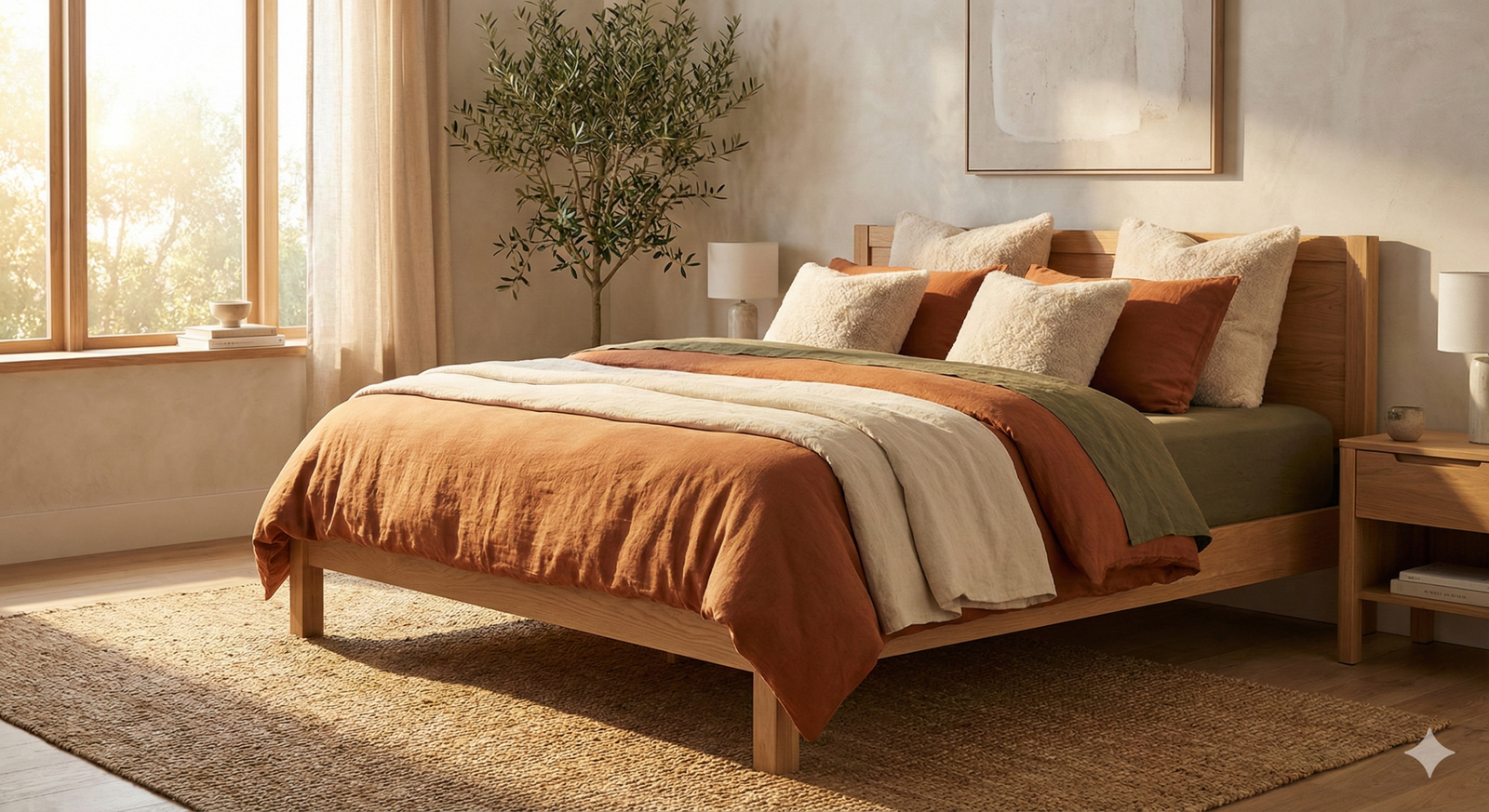
A king size bed measures 76 inches wide and 80 inches long. That’s 16 inches wider than a queen bed, giving couples tons of space to sleep comfortably without bumping into each other at night.
If you’re tired of feeling cramped or waking up because your partner moved, a king bed might be exactly what you need. This guide covers everything from measurements to room size needs, so you can decide if a king bed is right for your home.
What Are King Size Bed Dimensions?
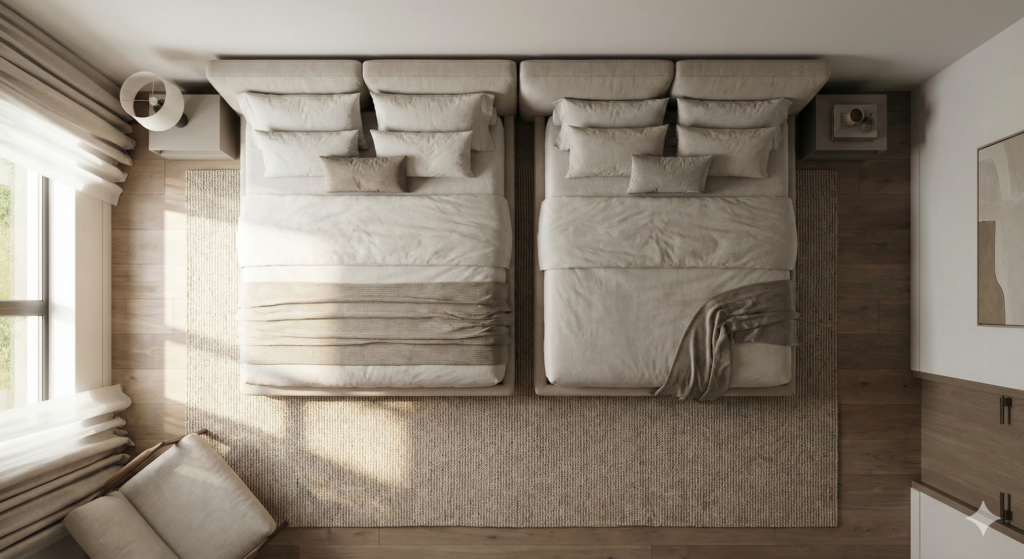
A standard king bed is 76 inches wide by 80 inches long. To picture this, imagine having two twin beds side by side. Each person gets about 38 inches of personal space—that’s like having your own twin bed!
The total sleep area is 6,080 square inches. Compare that to a queen bed at only 4,800 square inches. You gain 1,280 extra square inches of space. That’s a big difference for your sleep quality.
How King Beds Compare to Other Sizes
Here’s how a king stacks up against other popular bed sizes:
- Twin Bed: 38 inches x 75 inches (great for kids)
- Full Bed: 54 inches x 75 inches (tight for two adults)
- Queen Bed: 60 inches x 80 inches (most popular for couples)
- King Bed: 76 inches x 80 inches (roomiest standard option)
The 16-inch difference between queen and king matters more than you think. Those extra inches mean each partner has more room to stretch, turn, and move without disturbing the other person.
Understanding Bed Frame Dimensions
When you shop for a bed frame, remember it’s slightly larger than the mattress. Most king bed frames measure 78 to 81 inches wide and 82 to 85 inches long. This extra space holds your bedding and keeps your mattress snug.
Different Types of King Beds
Not all king beds are the same. Let’s look at the main types you’ll find when shopping.
Standard King Bed
The regular king bed is the widest standard size at 76 inches x 80 inches. It’s perfect for couples who want maximum width to spread out. This size fits well in square or rectangular bedrooms that are big enough.
California King Bed
A California king (or Cal king) measures 72 inches wide and 84 inches long. It trades 4 inches of width for 4 extra inches of length.
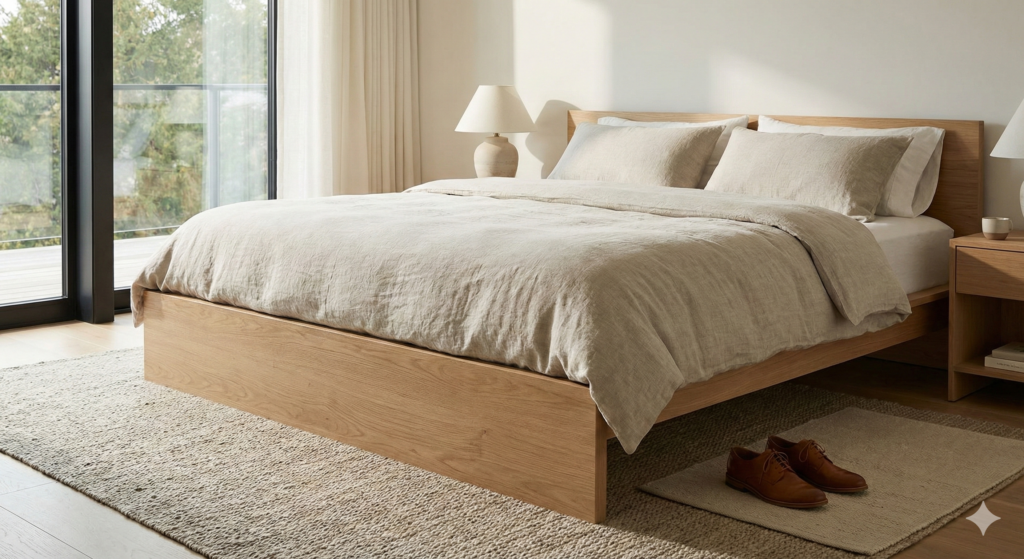
Who should get a Cal king? Tall people over 6 feet 2 inches love this bed. The extra length means your feet won’t hang off the edge. It also works great in longer, narrower rooms where a standard king feels too wide.
According to the Sleep Foundation, Cal kings and standard kings have similar total surface areas. Your choice depends on whether you need more length or more width.
Split King Bed
A split king is two twin XL mattresses (each 38 inches x 80 inches) placed side by side. Together, they equal a standard king size.
This option is a game-changer for couples with different sleep needs. You can each pick your own mattress firmness. One person might want a soft mattress while the other prefers firm support. Split kings also work perfectly with adjustable bed bases.
The downside? Split kings cost 10 to 30% more than regular king mattresses. You’re basically buying two separate mattresses plus special bedding.
Texas King and Other Oversized Options
For people who want even more space, oversized king beds exist. A Texas king measures 80 inches x 98 inches. That’s massive!
Other extra-large options include:
- Wyoming King: 84 inches x 84 inches
- Alaskan King: 108 inches x 108 inches
These beds need custom-made mattresses and bedding. Expect to pay $2,500 to $7,000 or more. Your bedroom also needs to be really big—at least 14 feet x 16 feet for a Texas king.
Why Choose a King Size Bed?
King beds offer some amazing benefits that can totally change how you sleep. Let’s dig into why so many people upgrade to this size.
More Personal Space for Couples
When you share a queen bed, each person gets only 30 inches of width. On a king bed, you each get 38 inches. That’s 8 extra inches per person!
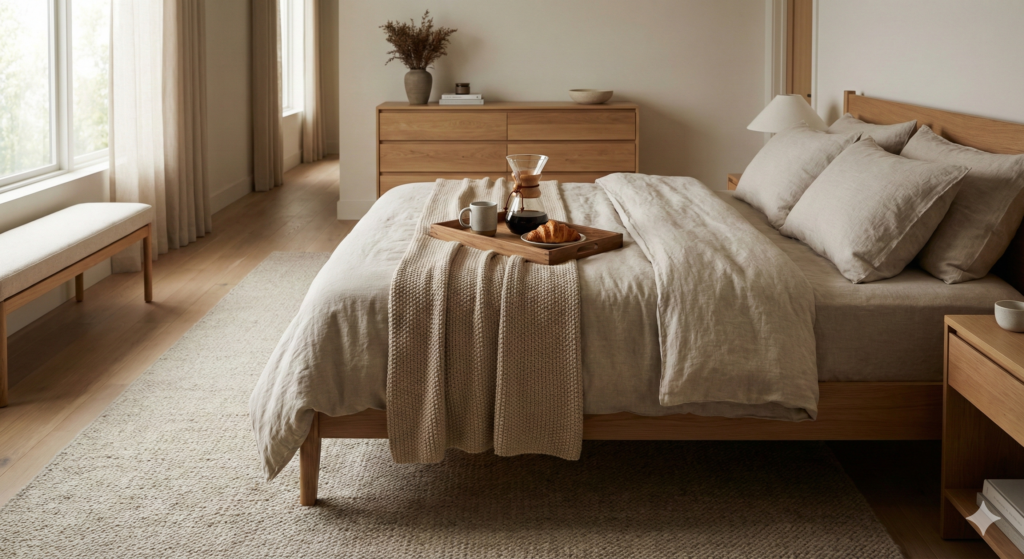
This extra space means fewer fights over the blankets. You can stretch out fully without kicking your partner. And if you like to sleep far apart, there’s plenty of room to do that too.
Research shows that couples on queen mattresses experience 30 to 50% more sleep problems compared to those on king beds. Better sleep means better health and a happier relationship.
Perfect for Families and Pets
Do your kids crawl into bed with you in the morning? Does your dog insist on sleeping between you and your partner? A king bed makes room for everyone.
You can fit two adults, a child, and maybe even a medium-sized pet without feeling squished. Weekend mornings become more relaxing when the whole family piles in for cuddles and cartoons.
Less Sleep Disruption
If your partner tosses and turns at night, you probably wake up a lot. King beds fix this problem. The extra width acts like a buffer zone between you.
When your partner moves, you’re less likely to feel it. This means deeper, more restful sleep for both of you. You wake up feeling refreshed instead of tired and cranky.
Freedom to Move
Some people sleep still as a statue. Others flop around like a fish. Whatever your style, a king bed gives you freedom to move however you need.
Side sleepers can curl up without their knees hanging off the edge. Back sleepers can spread their arms wide. Stomach sleepers have room to adjust without bumping their partner. Everyone wins.
Great for Taller People
Standard king beds are 80 inches long. That’s enough for most people up to about 6 feet 4 inches tall. If you’re taller than that, a California king with its 84-inch length works better.
No more waking up with your feet dangling off the end. No more feeling cramped and uncomfortable. Just good, solid sleep.
Things to Consider Before Buying
King beds are awesome, but they’re not perfect for everyone. Here are some important things to think about before you buy.
Room Size Requirements
Your bedroom needs to be big enough to hold a king bed comfortably. The minimum recommended size is 12 feet x 12 feet. But bigger is better.

Why so much space? You need room to walk around the bed. Design experts suggest leaving at least 24 to 30 inches of clearance on each side and at the foot of the bed.
If your room is only 10 feet x 10 feet, a king bed will make it feel cramped and crowded. You won’t have space for nightstands, dressers, or easy movement. In smaller bedrooms, stick with a queen.
For the best experience, aim for a bedroom that’s 12 feet x 14 feet or larger. This gives you plenty of space for the bed plus other furniture.
Moving and Transport Challenges
King mattresses are heavy and awkward to move. If you live in an apartment with narrow stairs or tight hallways, getting a king bed to your bedroom can be tough.
Here’s what you need to check:
- Doorways should be at least 32 inches wide
- Hallways need 40 inches of clearance for diagonal maneuvering
- Stairways must be wide enough to angle the mattress
If you move often, a king bed makes things harder. Queens are much easier to transport. Some people choose a queen just because they know they’ll relocate in a few years.
Pro tip: Many modern mattresses come in a box. These compressed mattresses are way easier to move than traditional ones.
Higher Cost
King beds cost more than smaller sizes. The mattress itself typically runs $800 to $2,000 or more, depending on quality and materials.
But that’s not all. You also need to buy:
- A king bed frame ($200 to $1,500+)
- King sheets and bedding
- King comforters and blankets
- Possibly a new foundation or box spring
All these extras add up. Expect to spend at least $100 to $300 more for a king compared to a queen of the same quality. Budget for this before you shop.
Limited Room for Other Furniture
A king bed takes up a lot of floor space. Once it’s in your room, you might not have room for that reading chair you wanted. Or maybe your dresser has to go in the closet.
Think about what furniture matters most to you. If you need lots of storage and a big vanity, a smaller bed might work better. If the bed is your priority, then go for the king.
Measure your room and plan your furniture layout before buying. This helps avoid buyer’s remorse later.
How to Choose the Right King Bed
Shopping for a king bed can feel overwhelming. Here’s how to narrow down your options and find the perfect fit.
Measure Your Bedroom First
Before you do anything else, grab a tape measure. Measure your bedroom’s length and width. Write it down.
Then measure doorways, hallways, and any tight corners between your front door and bedroom. Make sure a king bed can actually fit through all these spaces.
Use painter’s tape on your floor to outline where a 76-inch x 80-inch bed would sit. This visual helps you see how much space remains for other furniture.
Consider Your Sleep Style
How do you sleep? Your sleeping position matters when choosing a mattress firmness:
- Side sleepers need softer mattresses that cushion shoulders and hips
- Back sleepers do best with medium-firm support
- Stomach sleepers need firmer mattresses to keep their spine aligned
If you share the bed and have different preferences, a medium-firm mattress works as a compromise. Or consider a split king so you each get what you want.
Think About Your Partner
Do you sleep alone or with someone? If you have a partner, involve them in the decision.
Talk about:
- How much space each of you needs
- Whether you sleep hot or cold
- If one person moves a lot at night
- Your budget for the bed
Making this choice together prevents arguments later. Plus, you’re both more likely to love the bed you pick.
Check the Bed Frame Style
King bed frames come in many styles:
- Platform beds have a low profile and don’t need a box spring
- Upholstered beds feature padded fabric headboards for comfort
- Sleigh beds have curved head and footboards for a classic look
- Storage beds include drawers underneath for extra space
Pick a style that matches your bedroom decor. Also think about practical features like storage if you need it.
Look for Quality Materials
A good mattress lasts 7 to 10 years. Don’t cheap out on materials. Look for:
- High-density foam that won’t sag quickly
- Quality coils (at least 1,000 count for king size)
- Breathable covers that regulate temperature
- Good edge support so you can use the whole mattress
Read reviews from real customers. Check what they say about durability and comfort after owning the bed for a year or more.
Test Motion Isolation
If you’re buying for two people, motion isolation matters. This means when one person moves, the other person doesn’t feel it.
Memory foam and hybrid mattresses usually have the best motion isolation. Innerspring mattresses transfer more movement.
Try the “bounce test” in the store. Have one person move around while the other stays still. See if you can feel the movement. Less feeling = better sleep for both of you.
Setting Up Your King Size Bed
Once you buy a king bed, you need to set it up properly. Here’s what you need to know.
What You Need
To set up a king bed, gather these items:
- King mattress
- King bed frame
- Foundation or box spring (if needed)
- King sheets (flat and fitted)
- King pillows and pillowcases
- King comforter or duvet
Make sure everything is actually king size. Don’t try to use queen bedding on a king mattress—it won’t fit right.
Assembly Tips
Follow the bed frame instructions carefully. Most frames need two people to assemble safely because of their size and weight.
Place the frame where you want it before putting the mattress on. Moving a fully assembled king bed is really hard.
If you bought a mattress in a box, let it expand fully before sleeping on it. This usually takes 24 to 48 hours.
Making the Bed Look Great
A king bed is often the focal point of your bedroom. Make it look inviting:

- Start with a good quality fitted sheet
- Add a flat sheet and tuck it in
- Layer on a comforter or duvet
- Add decorative pillows (but don’t go overboard)
- Consider a bed runner or throw blanket at the foot
Keep it simple. Too many pillows and layers just mean more stuff to move every night.
King Size Bed Buying Mistakes to Avoid
Don’t make these common mistakes that buyers often regret:
Not Measuring the Room
This is the biggest mistake. People fall in love with a king bed at the store, buy it, and then realize their bedroom is too small. Always measure first.
Forgetting About Doorways
Your king mattress has to get from the delivery truck to your bedroom. If it can’t fit through doorways or up stairs, you’re stuck. Measure everything along the path.
Buying the Wrong Sheets
King and California king sheets are different sizes. Make sure you know which type of king bed you have before buying bedding. Otherwise, your sheets won’t fit.
Ignoring Mattress Thickness
Fitted sheets have different depths. A 12-inch deep mattress needs different sheets than an 18-inch pillow-top. Check your mattress height and buy sheets that match.
Choosing Style Over Comfort
A bed might look amazing, but if it’s not comfortable, you’ll regret it. Always prioritize how the mattress feels over how it looks.
Skipping the Trial Period
Many mattress companies offer sleep trials (usually 90 to 365 nights). Use this! If the bed doesn’t work after a few weeks, return it. Don’t suffer with an uncomfortable bed.
Caring for Your King Bed
Taking care of your king bed helps it last longer and stay comfortable.
Rotate Your Mattress
Rotate your king mattress every 3 to 6 months. This means turning it 180 degrees so the head becomes the foot. This prevents sagging in one spot.
Most modern mattresses shouldn’t be flipped (they have specific top and bottom sides). Check your mattress manual.
Use a Mattress Protector
A waterproof mattress protector guards against spills, stains, and dust mites. It also keeps your mattress warranty valid (many require using a protector).
Wash the protector every month or two. This keeps your sleeping surface clean and fresh.
Clean Regularly
Vacuum your mattress every few months to remove dust and allergens. Use the upholstery attachment on your vacuum.
If you spill something, blot it immediately with a clean towel. Don’t scrub or use harsh chemicals. Let the spot air dry completely before putting sheets back on.
Replace When Needed
Even the best king mattress won’t last forever. Replace your mattress if:
- It’s more than 7 to 10 years old
- You wake up with pain or stiffness
- You see visible sagging or lumps
- You sleep better in hotels than at home
Good sleep is worth the investment in a new mattress.
King vs. Queen: Which Should You Choose?
Still torn between a king and queen bed? Here’s a quick comparison.
Choose a King if:
- You have a bedroom that’s 12 x 12 feet or larger
- You share the bed with a partner, kids, or pets
- One or both of you move a lot at night
- You value personal space while sleeping
- You can afford the higher price
Choose a Queen if:
- Your bedroom is smaller than 12 x 12 feet
- You sleep alone or close to your partner
- You move frequently
- You’re on a tighter budget
- You need room for other bedroom furniture
Both sizes are great. Your choice depends on your specific situation and needs.
Frequently Asked Questions
Is a King Bed Too Big for Two People?
No, a king bed is not too big for most couples. It gives each person plenty of space while still allowing you to sleep close when you want to. The extra room actually improves sleep quality and reduces disturbances.
Can a King Bed Fit in a 12×12 Room?
Yes, a king bed can fit in a 12 x 12 foot room. However, this is the minimum size. You’ll have limited space for other furniture. A 12 x 14 foot room or larger is more comfortable.
How Much Do King Size Sheets Cost?
King sheets typically cost $30 to $150 for a basic set. Higher quality materials like Egyptian cotton or bamboo can run $150 to $300 or more. Shop sales to get good deals.
Do I Need a Box Spring for a King Bed?
It depends on your bed frame. Platform beds don’t need a box spring. Traditional frames usually do. Check your frame’s requirements before buying.
How Heavy Is a King Mattress?
King mattresses weigh between 90 and 180 pounds, depending on materials. Memory foam tends to be lighter. Innerspring and hybrid mattresses are heavier. Always get help when moving one.
Can Two People Carry a King Mattress?
Yes, two strong people can usually carry a king mattress. But it’s awkward and heavy. Having three people makes it much easier and safer, especially on stairs.
What’s the Difference Between King and California King?
A standard king is 76 x 80 inches (wider, shorter). A California king is 72 x 84 inches (narrower, longer). Pick standard king for width or Cal king for length.
Are King Beds Good for Small Bedrooms?
No, king beds don’t work well in small bedrooms. They make the room feel cramped and leave little space for other furniture. Stick with a queen or full size in small rooms.
Final Thoughts
A king size bed can transform your sleep and your bedroom. With 76 inches of width and 80 inches of length, it gives couples and families tons of room to spread out and sleep comfortably.
Before you buy, make sure your bedroom is at least 12 x 12 feet. Measure your doorways and hallways. Set a budget that includes the mattress, frame, and bedding. Think about your sleep style and what matters most to you.
The right king bed is an investment in better sleep for years to come. Take your time, do your research, and choose the bed that fits your life perfectly.
Ready to upgrade your bedroom? Start by measuring your space and exploring different king bed options that match your style and needs. Sweet dreams await!