
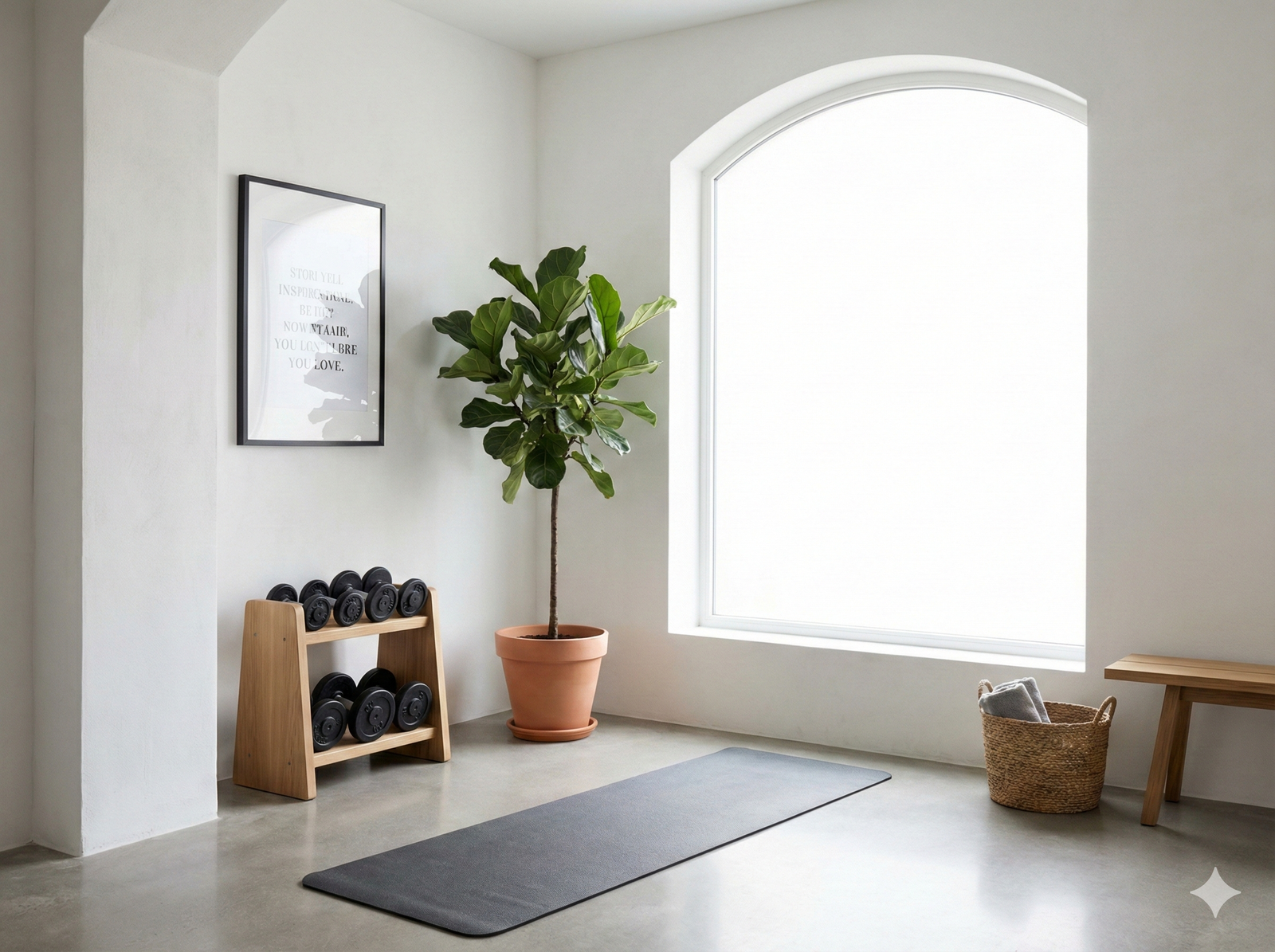
Yes, you can create an amazing home gym no matter how much space or money you have! A home gym is any area where you can exercise comfortably. It can be a spare room, garage, basement corner, or even a small spot in your bedroom. The best part is that you don’t need fancy equipment to get started.
This guide will show you how to turn any space into a workout zone you’ll love. You’ll find ideas for small spaces, tight budgets, and different workout styles. Plus, you’ll learn how to make your gym look good and feel motivating.
Why People Love Home Gyms
Home gyms have become super popular. Right now, 61% of fitness fans have a home gym. That’s more than half! And it makes sense when you think about it.
Working out at home saves time. No more driving to the gym or waiting for machines. You can exercise anytime you want, even at midnight if that’s your thing.
Money is another big reason. Gym memberships cost around $50 each month. Over one year, that’s $600. Over five years, it’s $3,000! With that money, you could buy great equipment for your home instead.
According to recent data, 29% of Americans bought fitness equipment for home use after the pandemic. People realized they could stay fit without leaving their house.
The Real Benefits You’ll Feel
Home workouts give you privacy. No one is watching or judging. You can try new moves, make mistakes, and learn at your own speed.
Your workout space is always clean. You don’t have to wipe down equipment that strangers just used. Everything is yours.
47% of gym-goers say working out helps them feel stronger and boosts their energy. Another 42% report feeling less stressed and having better mental health. These benefits happen whether you’re at a fancy gym or in your basement.
Family members can use your home gym too. Kids, partners, and roommates all have access. This makes it easier for everyone to stay healthy together.
Small Space Home Gym Ideas That Actually Work
Don’t have a whole room? No problem! You can create a gym almost anywhere.
Corner Workouts
Pick any empty corner in your home. A bedroom corner, living room spot, or hallway end works great. You need about 6 feet by 6 feet of floor space.
Put down a yoga mat when you exercise. Roll it up and store it when you’re done. This keeps your space neat and tidy.
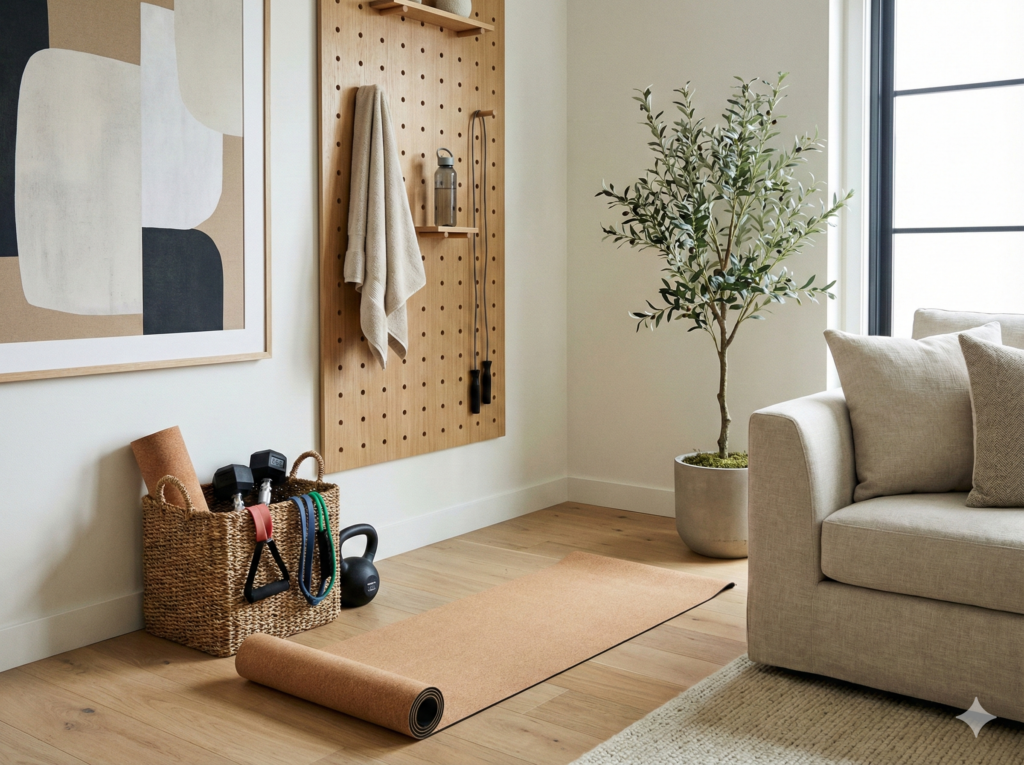
Add a small basket or bin nearby. Use it to hold resistance bands, jump rope, and small weights. Everything stays organized and ready to use.
The Closet Gym
Empty closets make perfect mini gyms. Take out the hanging clothes and add a pull-up bar to the doorframe. Store yoga blocks and bands on the closet floor.
Some people keep a folding exercise bike in their closet. They roll it out for workouts and tuck it away after. This works great in small apartments.
Garage Gym Setup
Garages are popular workout spaces. They usually have good floor space and you don’t worry about noise or sweat.
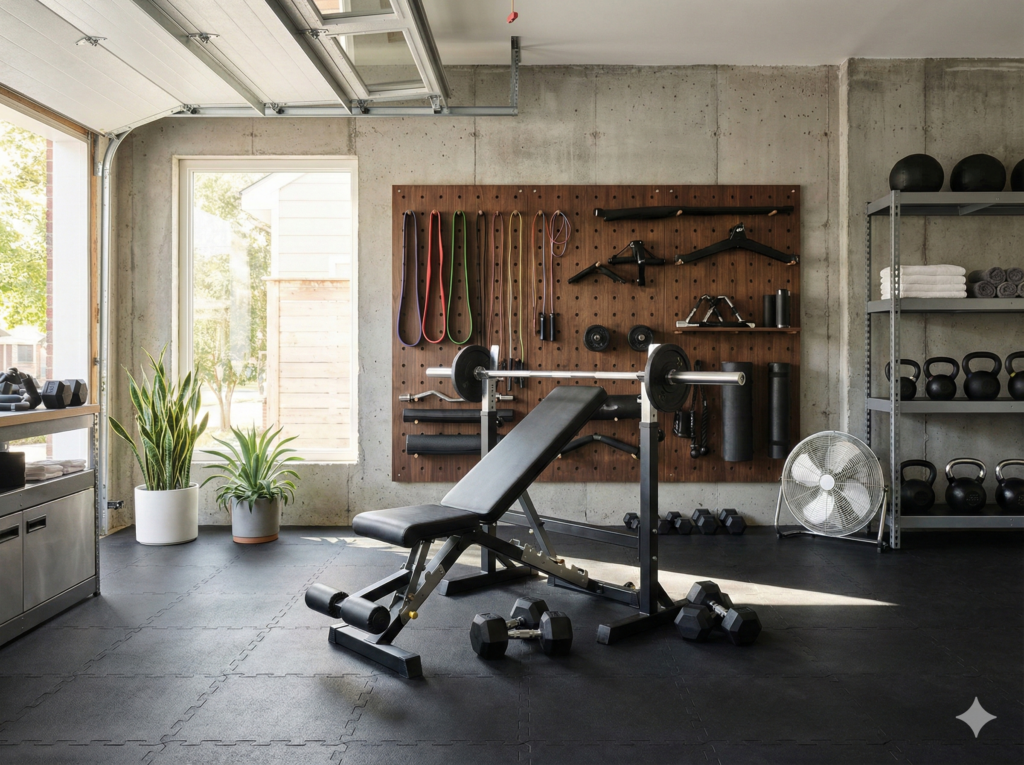
Start with rubber floor mats. These protect your garage floor and feel better under your feet. They cost about $30-50 for a small area.
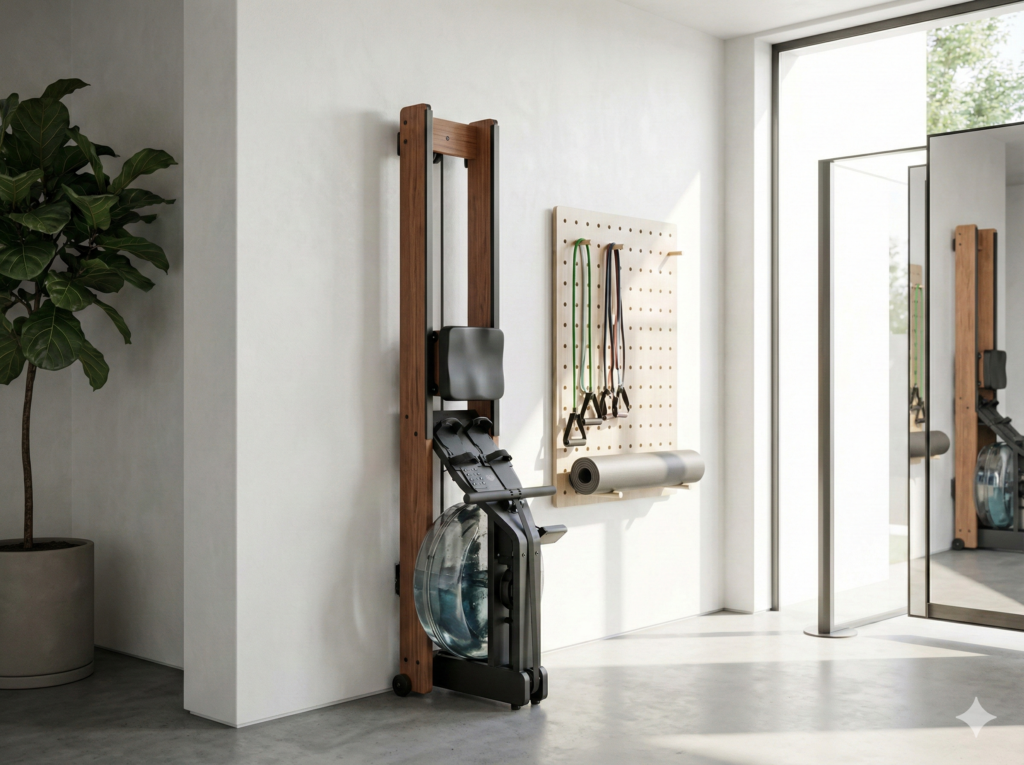
Mount a pegboard on the garage wall. Hang resistance bands, jump ropes, and lifting gloves. This keeps tools off the floor and makes them easy to grab.
Add a fan or small heater depending on your weather. Garages can get hot in summer and cold in winter. Staying comfortable helps you stick with your workouts.
Basement Gym Ideas
Basements work well because they’re usually private and quiet. Even unfinished basements can become great gyms.
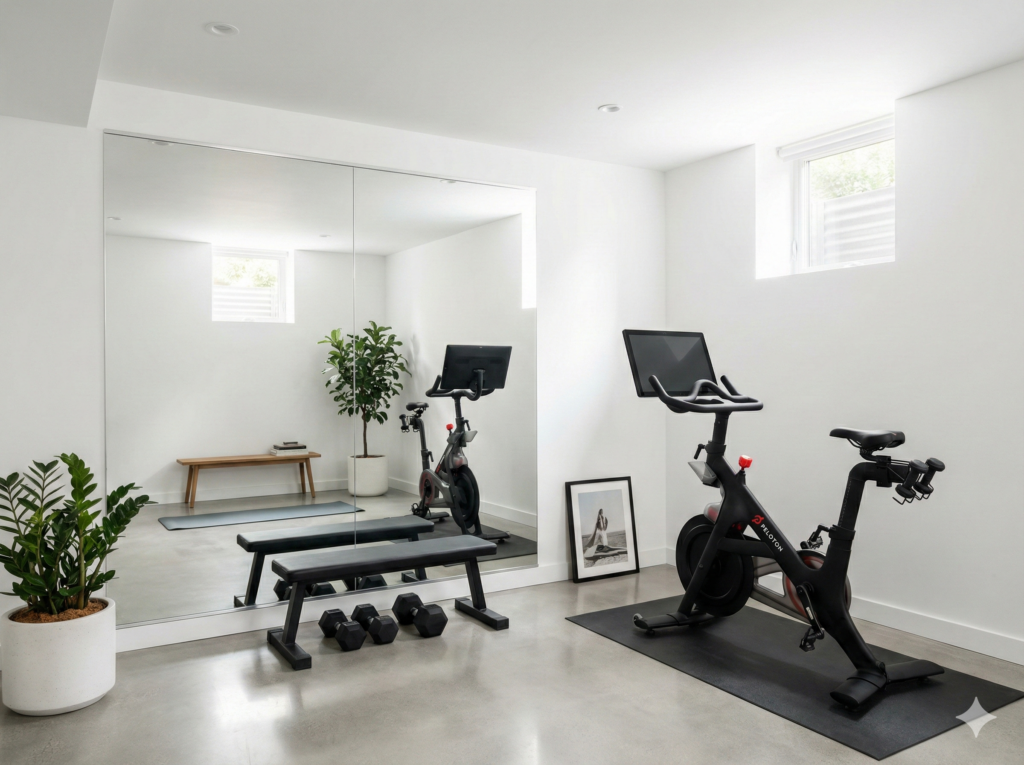
Paint the walls a bright color. This makes the space feel happier and more energetic. White, light blue, or soft yellow work well in basements with less natural light.
Put up some mirrors. They make the space look bigger and help you check your form during exercises. You can find cheap mirrors at hardware stores for about $6 each.
If your basement has a window, put your exercise equipment near it. Natural light makes workouts more enjoyable.
Budget-Friendly Home Gym Ideas
You don’t need thousands of dollars to start working out at home. Many people create amazing gyms for under $300.
Start With Bodyweight Exercises
The cheapest gym costs zero dollars. Your body is the best piece of equipment you already own.
Push-ups, squats, lunges, planks, and burpees work your whole body. You can do hundreds of different exercises without any equipment at all.
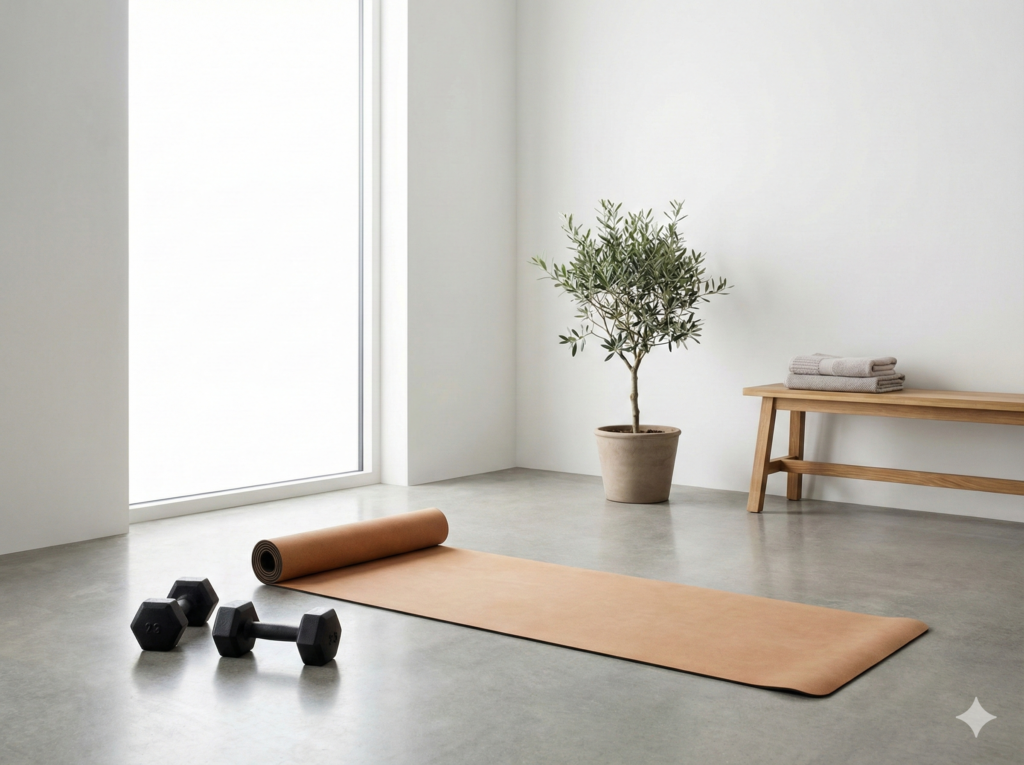
Add a simple yoga mat for comfort. A basic mat costs $15-30. That’s your entire gym right there!
Smart Equipment Choices
Buy items that do many jobs. This saves money and space.
Resistance bands cost $10-20 and work for dozens of exercises. They’re light, small, and easy to store. You can work your arms, legs, back, and core with one set of bands.
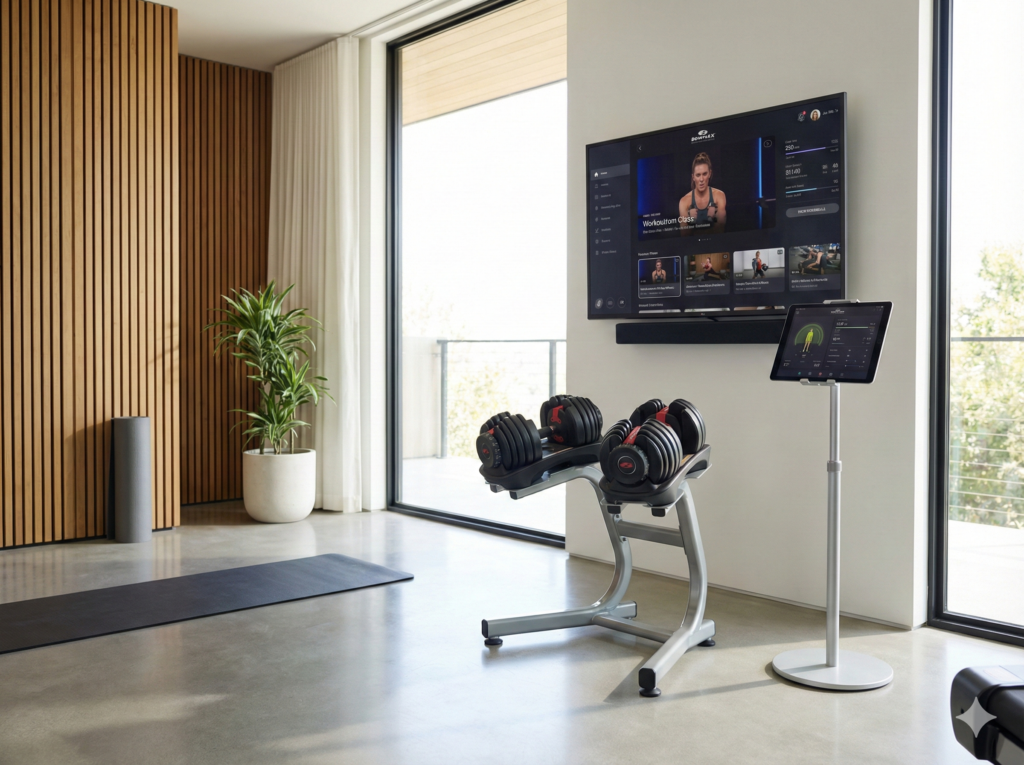
Adjustable dumbbells are worth the investment. Instead of buying 10 separate weights, you get one set that changes from 5 to 50 pounds. They cost more upfront (around $200-400) but save money long-term.
A jump rope costs just $5-15. It gives you an amazing cardio workout in a tiny space. Professional athletes use jump ropes to stay in shape.
Free and Cheap Alternatives
Use water bottles or soup cans as small weights. Fill old milk jugs with water or sand for heavier weights. A sturdy chair becomes a workout bench.
Check Facebook Marketplace, Craigslist, and garage sales. People sell used gym equipment for 30-50% less than new prices. Sometimes you can find free equipment from folks who want it gone.
Thrift stores sometimes have weights, yoga mats, and resistance bands. Visit them regularly to find good deals.
DIY Storage Solutions
Don’t spend money on fancy gym storage. Use what you have at home.
Baskets and bins hold small equipment. Label them so you know what’s inside. Stack them on a bookshelf or in a closet.
Hang a shoe organizer on your door. Put hand weights, resistance bands, and workout gloves in the pockets. This costs about $10 and saves tons of space.
Build a simple weight rack from wood. Two-by-four boards and some basic tools create storage for barbells and weights. YouTube has free tutorials for DIY gym storage projects.
Different Types of Home Gyms
Your perfect gym depends on what exercises you enjoy. Here are some popular options.
Strength Training Zone
Strength training builds muscle and makes you stronger. You need some basic equipment.
Start with dumbbells or adjustable weights. Add a workout bench if you have space and budget. A pull-up bar mounts in any doorway for about $25-40.
If you have more room, consider a squat rack or power rack. These let you do serious strength work safely at home. The home gym equipment market is expected to reach $19.6 billion by 2035, showing how many people invest in quality gear.
Cardio Workout Space
Cardio exercise is great for your heart and burns calories. You have lots of options for cardio at home.
A jump rope gives you intense cardio in just 10 minutes. It’s perfect for small spaces. Jumping jacks, high knees, and burpees also get your heart pumping without equipment.
If you want a cardio machine, think about your goals. Treadmills are popular but take up lots of space. Stationary bikes are smaller and quieter. Rowing machines work your whole body and fold up for storage.
Many people now use online workout videos for cardio. You just need floor space and follow along with the instructor on your phone or TV.
Yoga and Stretching Studio
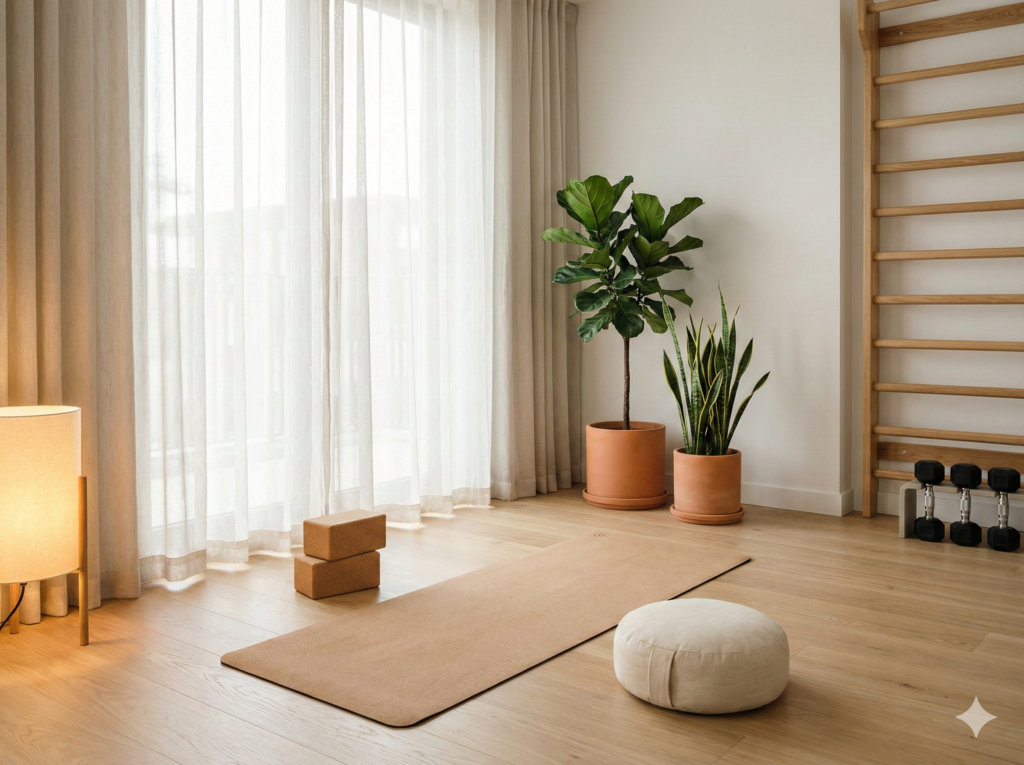
Yoga and stretching help you stay flexible and calm. These workouts need very little equipment.
A good yoga mat is your main tool. Spend $30-60 on a quality mat that won’t slip. Cheap mats can be dangerous when you’re holding poses.
Add yoga blocks and a strap. These help you do poses correctly, especially when you’re learning. They cost about $10-20 for a set.
Keep this space peaceful and simple. Soft lighting, a plant, and calming colors make it feel like a real yoga studio. Some people add a small speaker for relaxing music.
Multi-Purpose Gym
Most home gyms do several things. You might want cardio, strength, and stretching all in one space.
Choose equipment that does multiple jobs. A weight bench can be used for strength exercises and stretching. Resistance bands work for cardio and strength training.
Keep the space flexible. Use folding or rolling equipment that moves easily. This lets you change your workout area based on what you’re doing that day.
Making Your Home Gym Look Great
Your gym should make you want to work out. Good design helps you stay motivated.
Colors That Energize You
Bright colors give you energy. Red, orange, and yellow make you feel pumped up. They’re great for cardio and high-intensity workouts.
Cool colors help you focus. Blue and green feel calm and peaceful. They work well for yoga, stretching, and meditation spaces.
Gray, black, and white look modern and clean. These neutral colors work for any type of workout. Add colorful equipment or posters for pops of color.
You don’t have to paint a whole room. Try one accent wall or removable wallpaper. This adds personality without lots of work.
Mirrors Make a Big Difference
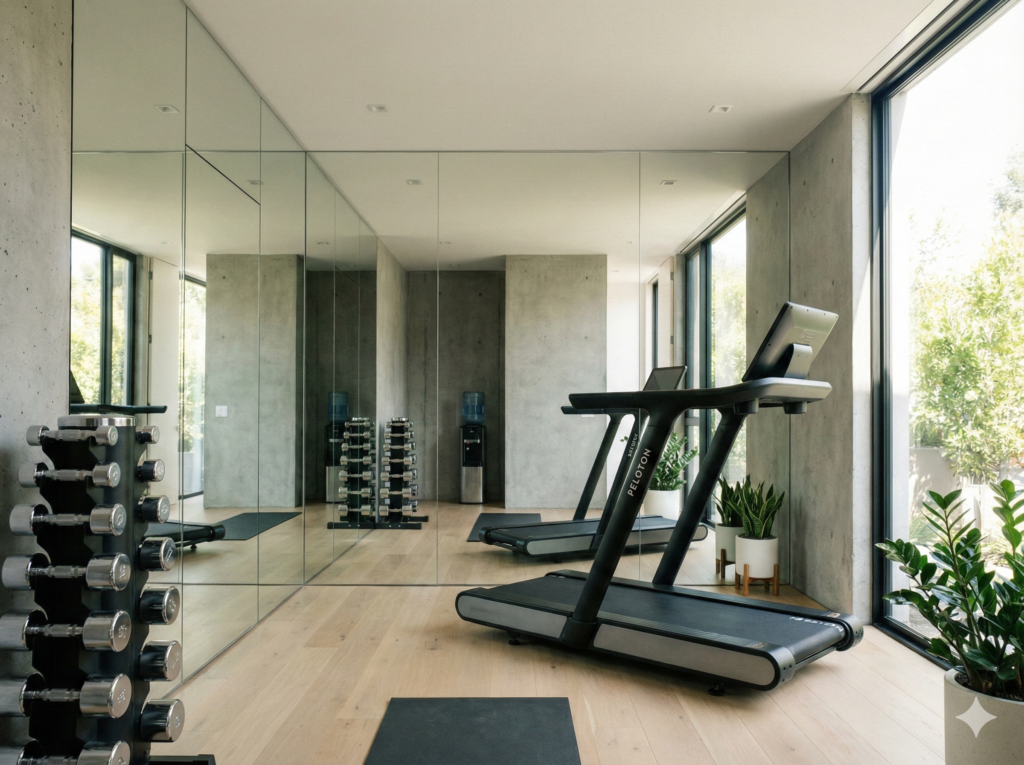
Mirrors are the secret trick that makes gyms look professional. They make small spaces feel twice as big.
Wall mirrors help you watch your form during exercises. This keeps you safe and makes workouts more effective. Proper form prevents injuries.
You can buy cheap door mirrors for $6-15 each. Line up several mirrors to create a mirror wall. This looks great and costs way less than one giant mirror.
Leaning mirrors work too. You can move them around or take them away if you want to change your space.
Smart Lighting Choices
Good lighting changes everything. Natural light is best if you can get it. Put your equipment near windows when possible.
Add extra lighting if your space is dark. LED bulbs are bright and save energy. You can buy LED shop lights for garages and basements for about $20-30.
Some people install dimmer switches. This lets you make the light brighter for intense workouts or softer for yoga and stretching.
Add Personal Touches
Make your gym feel like YOUR space. This helps you actually want to use it.
Hang motivational posters or quotes. Pick words and images that inspire you personally. Don’t just copy what you see in commercial gyms.
Add a plant or two. Plants make any space feel better. They’re especially nice in basements and garages that don’t have much life.
Play music you love. A small Bluetooth speaker costs $20-50. Music makes workouts way more fun. Create playlists for different types of exercise.
Put up a whiteboard or chalkboard. Write your workout goals, track your progress, or just doodle motivational messages. This costs about $10-15.
Essential Equipment for Beginners
If you’re just starting out, you don’t need much. Here’s what to buy first.
The Basics Under $100
Start with these five things:
- Yoga mat ($20-30)
- Resistance bands ($10-15)
- Jump rope ($5-10)
- Set of dumbbells ($30-50)
- Workout towel ($10-15)
That’s less than $100 total. You can do full-body workouts with just these items.
Next Level Equipment
After you’ve been working out for a few months, consider adding:
- Adjustable dumbbells ($200-400)
- Weight bench ($100-200)
- Stability ball ($20-30)
- Pull-up bar ($25-40)
- Kettlebell ($30-60)
These items let you try more exercises and challenge yourself as you get stronger.
Dream Equipment
When you’re ready to invest more money:
- Squat rack or power rack ($300-800)
- Barbell and weight plates ($200-400)
- Cardio machine like a bike or treadmill ($300-2,000)
- Cable machine ($500-1,500)
Remember, you don’t need all this stuff to get fit. Many people stay healthy for years with just the basics.
How to Stay Motivated With Your Home Gym
Creating a gym is easy. Using it regularly is harder. Here’s how to stick with it.
Make It Convenient
Put your gym in a spot you pass every day. Seeing your equipment reminds you to work out. Out of sight means out of mind.
Keep everything organized and ready to use. If you have to dig through boxes or move furniture before each workout, you’ll skip it.
Lay out your workout clothes the night before. When everything is ready, there’s no excuse to skip your session.
Set a Schedule
Pick specific days and times for workouts. Treat these like important appointments. Write them in your calendar or set phone reminders.
Start small. Three 20-minute workouts per week is better than planning hour-long sessions you never do. You can always add more time later.
Morning workouts work great for many people. You finish your exercise before the day gets busy. But any time that works for YOU is the right time.
Track Your Progress
Keep a workout journal or use a fitness app. Write down what exercises you did and how you felt. Seeing improvement keeps you motivated.
Take before and after photos. You see yourself every day, so changes seem slow. Photos show the real progress you’re making.
Celebrate small wins. Did you do one more push-up than last week? That’s awesome! Acknowledge every step forward, no matter how small.
Mix Things Up
Don’t do the same workout every single day. Your body gets used to it and you get bored. Try different exercises, change the order, or adjust the intensity.
Follow online workout videos for variety. There are thousands of free videos on YouTube for every fitness level and workout style.
Challenge yourself with new goals. Can you hold a plank for 60 seconds? Do 50 squats without stopping? Small challenges keep workouts interesting.
Common Mistakes to Avoid
Learn from others’ mistakes. Here’s what NOT to do.
Buying Too Much Too Soon
The biggest mistake is buying tons of equipment before you start working out. Many people spend $1,000 on gear, use it twice, then let it collect dust.
Start small. Buy one or two items. Use them regularly for a month. Then add more equipment if you’re still working out consistently.
Ignoring Safety
Home gyms need to be safe. Check that equipment is stable and installed correctly. Read instruction manuals and follow weight limits.
Give yourself enough space to move freely. You need room to extend your arms and legs without hitting anything. Measure your space before buying large equipment.
Put rubber mats under heavy weights. This protects your floor and prevents equipment from sliding during use.
Skipping Form for Speed
When you work out alone, there’s no trainer to correct your form. But bad form leads to injuries. Take time to learn proper techniques.
Watch tutorial videos that show correct form. Practice movements slowly at first. Perfect form matters more than doing lots of reps badly.
Giving Up Too Fast
Most people quit new workout routines within a month. They expect fast results and give up when they don’t see immediate changes.
Real fitness takes time. You won’t see major changes in two weeks. Give yourself at least three months of consistent workouts before judging results.
Remember, some days you won’t feel motivated. That’s normal! Work out anyway, even if it’s just for 10 minutes. Showing up matters more than perfect performance.
Home Gym Ideas for Families
Family gyms work for everyone in the house.
Kid-Friendly Workout Zones
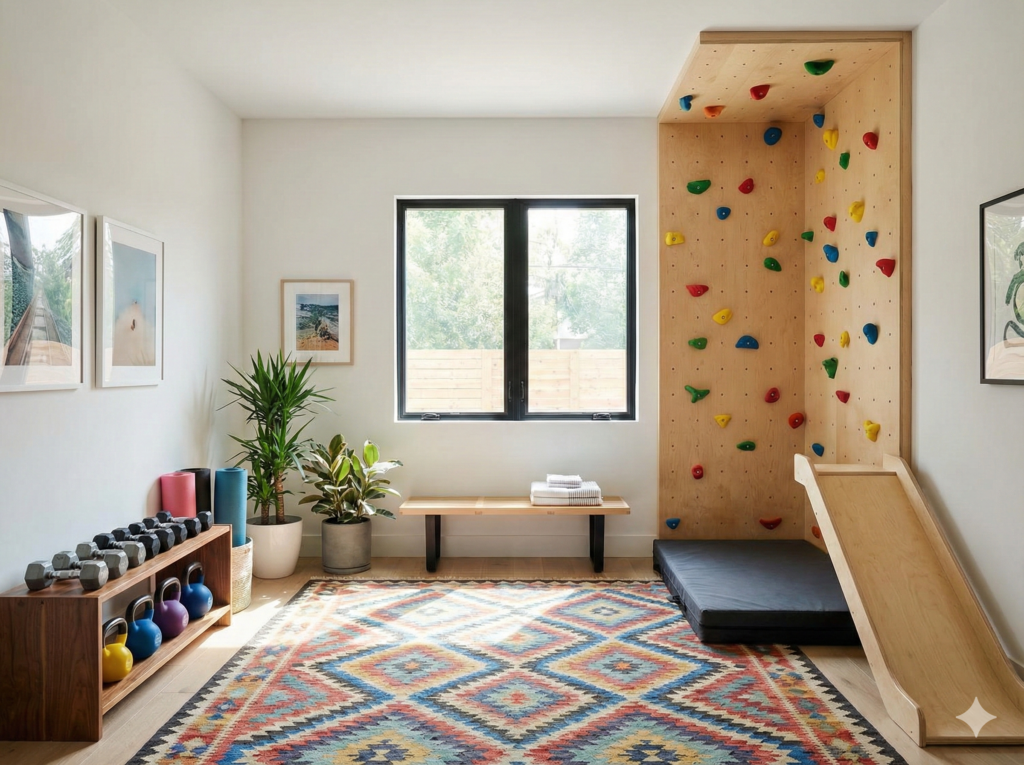
Kids need different equipment than adults. Add monkey bars, climbing holds, or a small trampoline for children.
Keep kid equipment separate from adult weights and machines. This prevents accidents and makes it clear what’s safe for kids to use.
Make family workout time fun. Put on music and do exercises together. Kids copy what they see, so working out as a family builds healthy habits.
Equipment for All Ages
Choose adjustable equipment that works for different people. Adjustable dumbbells go from light to heavy. Resistance bands come in various strengths.
A yoga mat and body weight exercises work for everyone. Kids, teenagers, parents, and grandparents can all do modified versions of the same movements.
Safety First
Lock heavy weights in a storage area. Keep small equipment like resistance bands out of reach when not supervised. Kids can choke on small items or misuse equipment.
Set clear rules about gym use. Maybe kids need adult supervision, or teenagers can use certain equipment alone. Clear rules prevent injuries.
Maximizing Small Spaces
Every inch counts when space is tight. Use these tricks to fit more into less space.
Vertical Storage
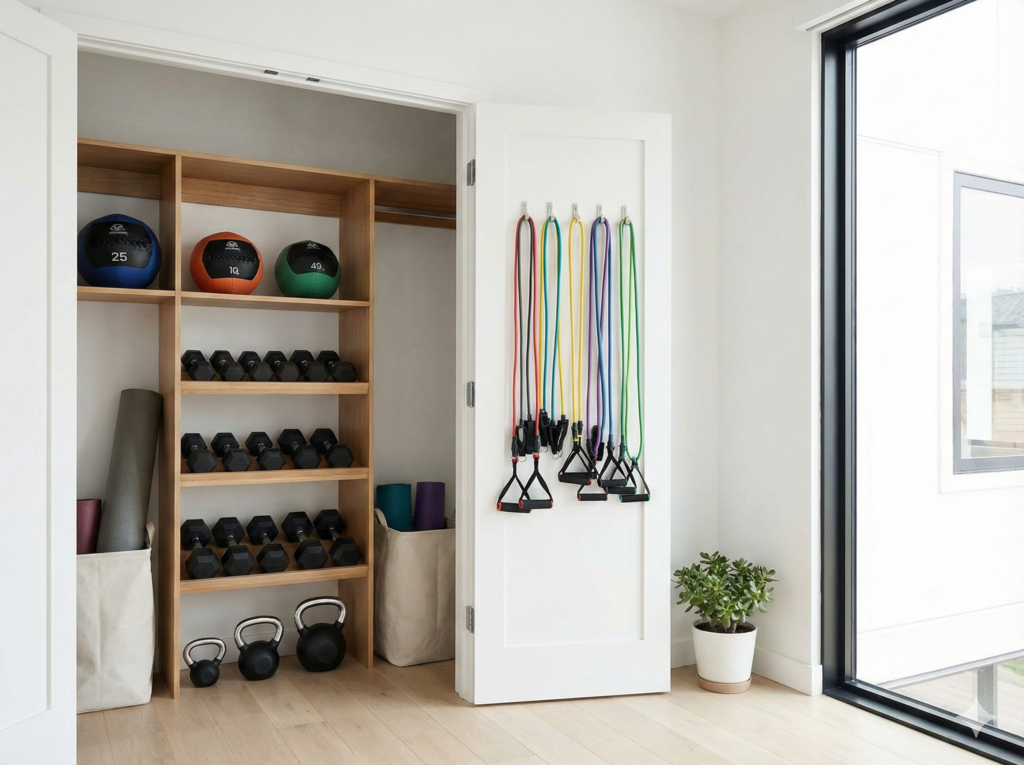
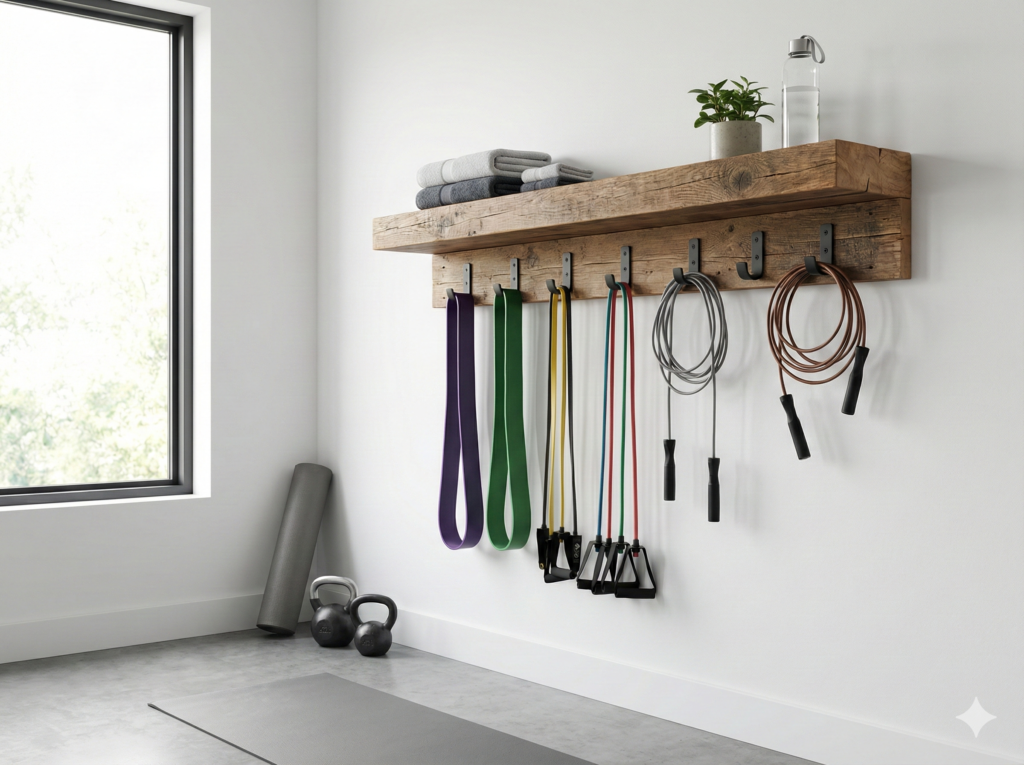
Look up! Your walls have tons of unused space. Install shelves, pegboards, or wall-mounted racks.
Hang resistance bands, jump ropes, and yoga mats on hooks. Store dumbbells on wall-mounted shelves. This keeps floor space open for actual workouts.
Foldable and Rolling Equipment
Buy gear that folds up or rolls away. Folding weight benches flip up against the wall. Rolling carts hold equipment and move between rooms.
Some bikes and treadmills fold for storage. They cost more than regular machines but save tons of space. This is worth it in small homes.
Multi-Use Furniture
A storage ottoman holds workout gear and provides a place to sit. A bookshelf divides your gym from the rest of a room while storing equipment.
Use furniture you already have in new ways. A coffee table becomes a step platform. A sturdy chair helps with tricep dips and step-ups.
Home Gym Styles and Themes
Your gym can match your personality. Pick a style you love.
Modern and Minimal
Clean lines, simple colors, and no clutter. Modern gyms use black, white, and gray with metal and glass.
Keep equipment sleek and minimal. Hide storage behind cabinet doors. Everything has a purpose and place.
Industrial Gym Vibe
Exposed brick, metal fixtures, and raw finishes. Industrial gyms look tough and serious.
Use metal storage racks and black equipment. Add some Edison bulb lights. This style works great in garages and unfinished basements.
Bright and Colorful
Bold colors, fun patterns, and energetic vibes. Colorful gyms feel playful and happy.
Paint walls in bright colors or add colorful wallpaper. Choose equipment in fun colors instead of all black. Add colorful art and posters.
Natural and Calming
Wood tones, plants, and soft colors. Natural gyms feel peaceful and grounding.
Add lots of plants, use bamboo or wood storage, and choose earth-tone colors. This style is perfect for yoga and meditation spaces.
Technology for Your Home Gym
Tech can make home workouts better. You don’t need expensive gadgets, but some tools help.
Free Workout Apps and Videos
YouTube has thousands of free workout videos. You can find everything from yoga to boxing to strength training. New videos get uploaded every day.
Many fitness apps offer free versions. Nike Training Club, FitOn, and Daily Burn all have free workouts. You can follow structured programs without paying.
Fitness Trackers
Simple fitness trackers cost $30-50. They count steps, track heart rate, and monitor sleep. This helps you see your progress over time.
Smartwatches do more but cost more ($150-400). They track specific workouts, show your stats in real-time, and connect to fitness apps.
Music and Speakers
Music makes workouts more fun. A basic Bluetooth speaker costs $20-50. Put on your favorite playlist and get moving.
Create different playlists for different workouts. Upbeat music for cardio, calmer tunes for yoga, motivational songs for strength training.
Smart Equipment
Some new equipment connects to apps and tracks your workouts automatically. Smart bikes, treadmills, and strength machines cost more but offer guided workouts.
The smart home gym equipment market was valued at $3.2 billion in 2024 and is expected to reach $4.0 billion by 2030. This shows growing interest in connected fitness tech.
Only buy smart equipment if you’ll actually use the connected features. Basic equipment works just fine for most people.
Garage Gym Specific Tips
Garages need special consideration. They’re not climate-controlled like your house.
Temperature Control
Garages get hot in summer and cold in winter. A fan helps in warm weather. A space heater works for cold days.
Insulate your garage door if possible. This helps keep temperature more stable year-round. Better temperature control means you’ll actually use your gym.
Flooring Matters
Garage floors are hard concrete. Add rubber mats or interlocking foam tiles. These protect the floor and feel better on your joints.
Good gym flooring costs $1-3 per square foot. For a 100-square-foot gym space, expect to spend $100-300 on flooring.
Keeping It Clean
Garages collect dust and dirt. Sweep regularly to keep your workout space clean. Consider getting a small shop vacuum ($30-60).
Wipe down equipment after use. Sweat and moisture can cause rust on metal equipment. A quick wipe keeps everything in good shape.
Security
Lock expensive equipment or your garage door when not using it. Gym equipment gets stolen from garages more often than from inside homes.
Install motion sensor lights outside your garage. This deters thieves and makes evening workouts safer.
Final Thoughts
Creating a home gym is one of the best investments you can make. It doesn’t matter if you have a whole room or just a corner. Every space can become a place to get stronger and healthier.
Start small and simple. You don’t need to buy everything at once or create a perfect setup before you begin. Get a yoga mat and some resistance bands. Start working out. Add more equipment as you figure out what you enjoy.
The best home gym is one you actually use. Focus on making your space comfortable, convenient, and motivating. Pick colors you like, play music you love, and choose equipment that matches your fitness goals.
Remember, over 40% of American children face chronic health conditions from poor diet and lack of activity. By creating a home gym, you’re not just helping yourself. You’re setting a good example for your family and showing them that staying active matters.
Working out at home saves you time and money while giving you privacy and convenience. No more gym commutes or crowded facilities. Your home gym is always open, always clean, and always ready when you are.
Start your home gym journey today. Pick one corner of your home. Get one piece of equipment. Do one workout. That’s how every great home gym begins—with a single small step toward better health.
Ready to transform your space? Browse more home ideas and inspiration at My Cozy Nest Ideas for tips on creating a home you’ll love.