
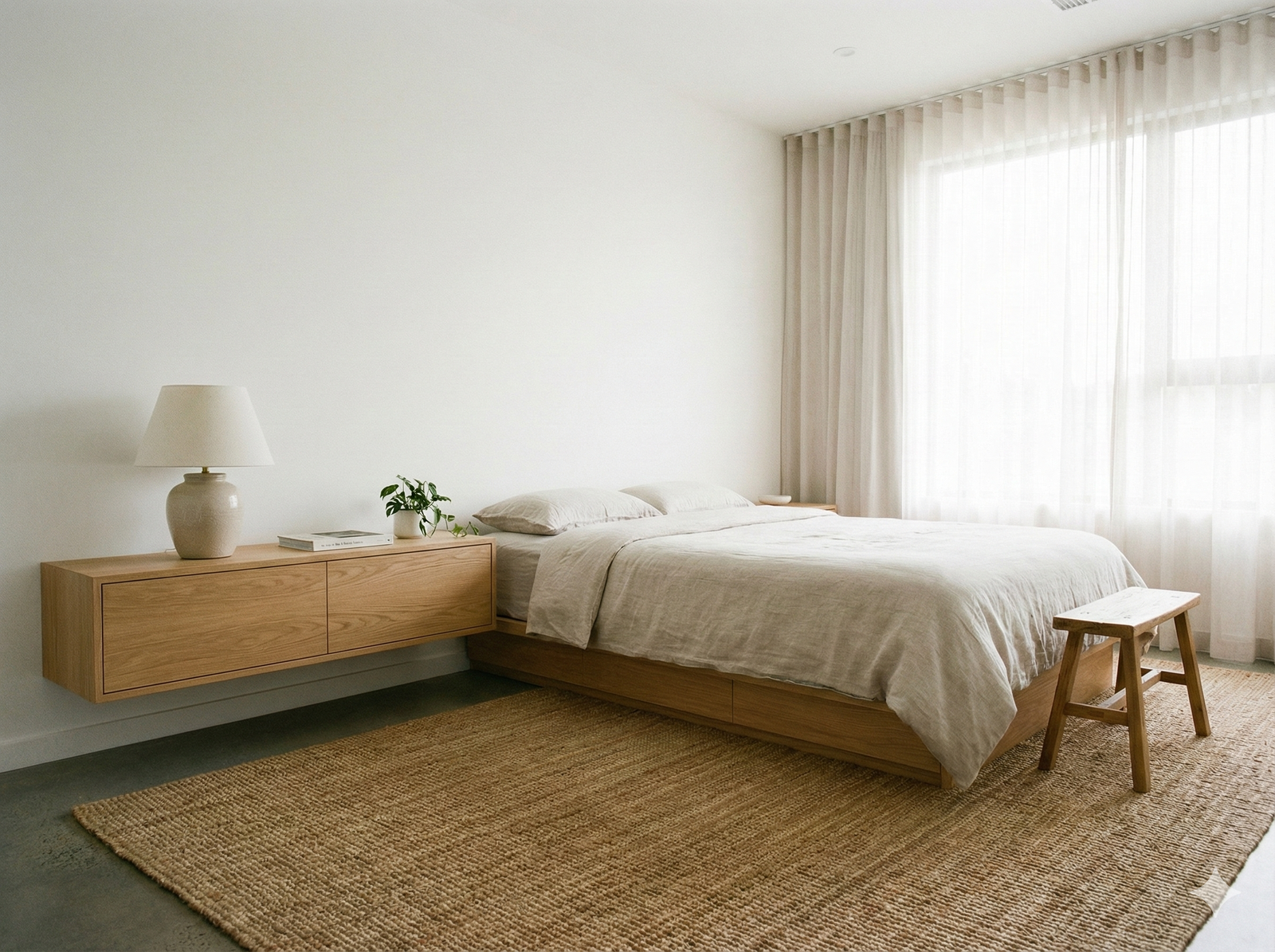
Floating Nightstand Ideas for Small Bedrooms
Floating nightstands are wall-mounted shelves or small tables that hang on your bedroom wall instead of sitting on the floor. They’re perfect for small bedrooms because they save floor space, make your room look bigger, and give you a spot for your phone, lamp, and bedtime book.
This guide will show you the best floating nightstand ideas for tiny spaces. You’ll learn about different styles, how to pick the right one, easy ways to install them, and smart storage tricks that work in any small bedroom.
Why Floating Nightstands Work Great in Small Bedrooms
They Make Your Room Feel Bigger
When you hang a nightstand on the wall, you can see more floor space. This simple trick makes your bedroom look and feel larger than it really is. Your eyes travel across the open floor, and your brain thinks “more room!”
Regular nightstands take up about 2 to 3 square feet of floor space. That might not sound like much, but in a small bedroom, every inch counts. According to the U.S. Census Bureau, the average bedroom size in new homes is about 11 feet by 12 feet, so saving floor space really matters.
You Can Clean Under Them Easily
Dust bunnies love hiding under furniture. With floating nightstands, there’s nothing touching the floor. You can sweep, vacuum, or mop right under them without moving anything around. This saves you time and keeps your small space cleaner.
They Look Modern and Stylish
Floating furniture gives your bedroom a fresh, up-to-date look. The clean lines and open space below create a sleek style that works with almost any bedroom design. Plus, they come in so many styles that you can find one that matches your taste perfectly.
You Pick the Perfect Height
Unlike regular nightstands that come at a set height, you can hang floating ones exactly where you need them. Most people like their nightstand at mattress height or just a bit lower. This makes it easy to reach your alarm clock or glass of water without stretching.
Best Floating Nightstand Ideas for Tiny Spaces
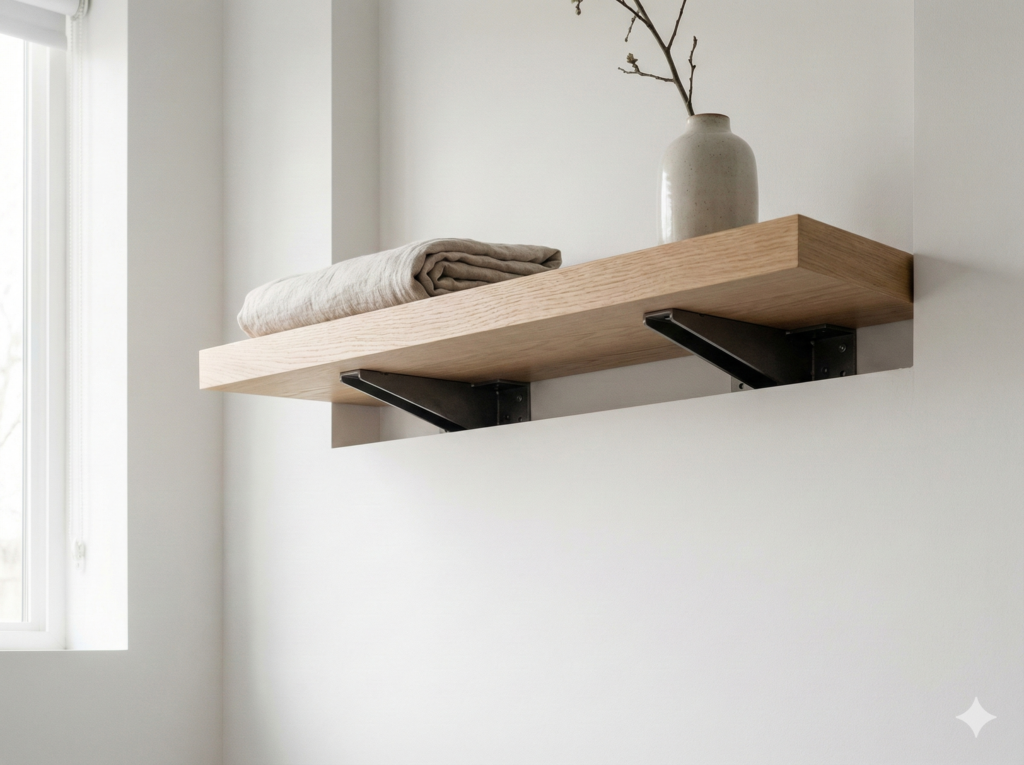
Simple Floating Shelves
The easiest floating nightstand is just a single shelf. You can find these at any home store, and they come in wood, metal, or even glass. A shelf that’s 10 to 12 inches deep works great for most bedside needs.
Put your lamp on one end and keep the other side for your phone and a book. If you pick a shelf with a lip on the front, things won’t slide off easily.
What makes them great:
- Cost between $15 and $50
- Install in about 15 minutes
- Come in tons of colors and materials
- Work in really tight spaces
Corner Floating Shelves
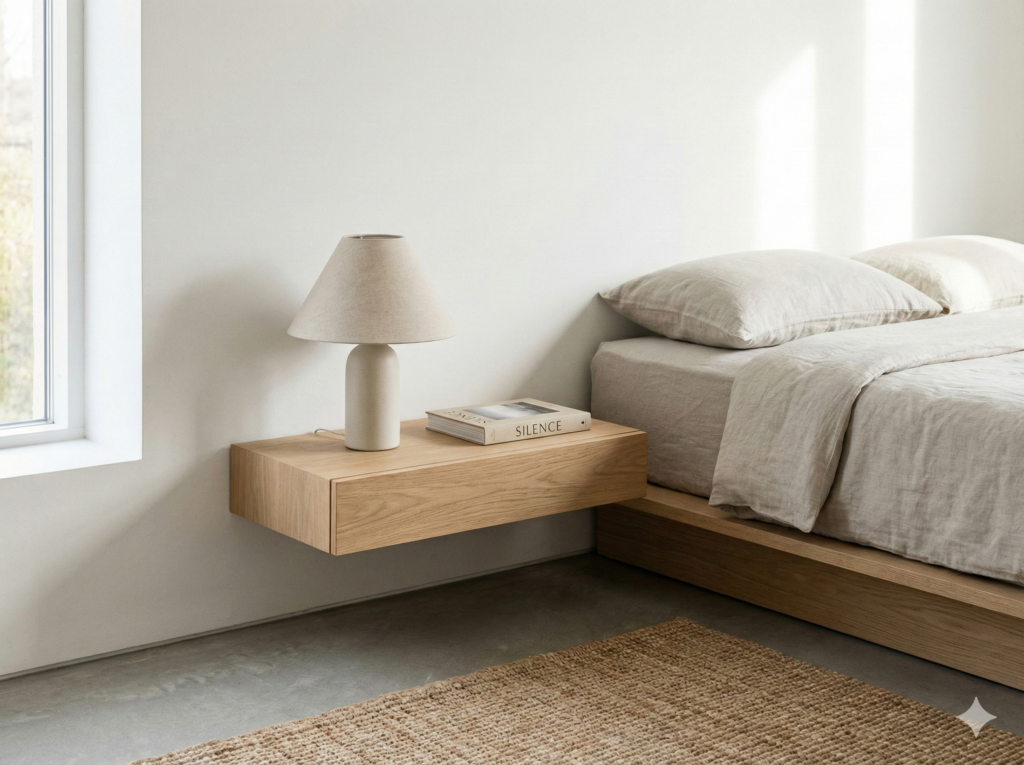
If your bed sits in a corner or your room has an odd shape, corner shelves are your best friend. They use space that would otherwise go to waste. Triangle-shaped corner shelves fit perfectly in that awkward spot.
These work especially well in studio apartments or dorm rooms where every square inch matters. You can stack two corner shelves for extra storage without taking up more wall width.
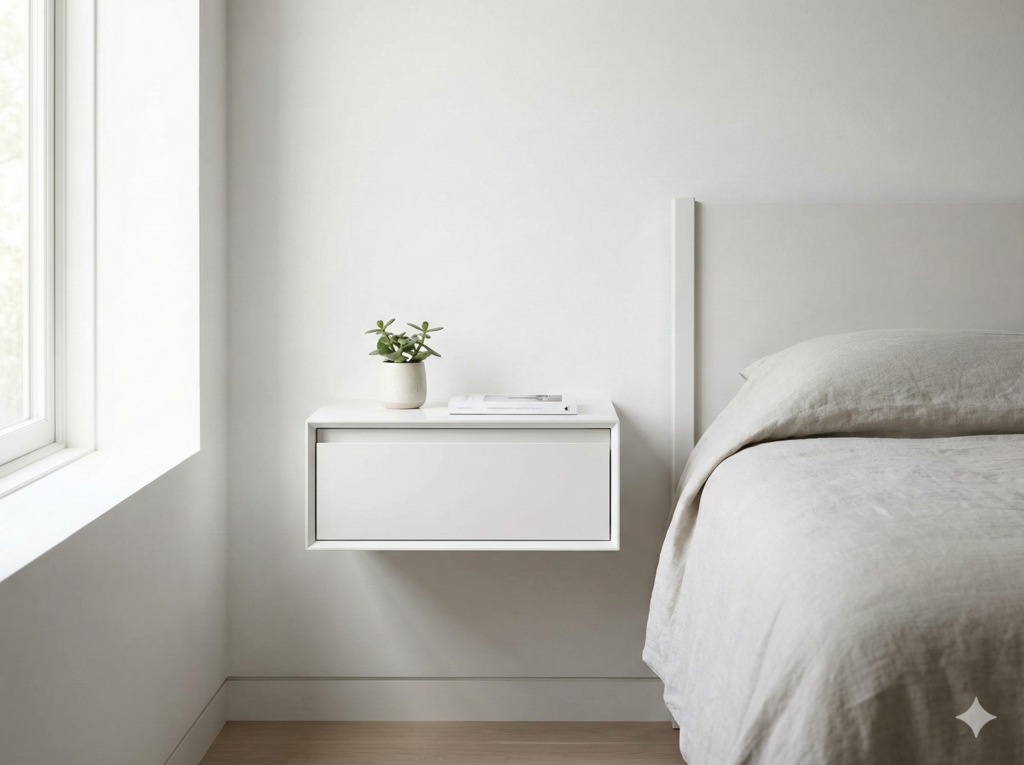
Floating Nightstands with Drawers
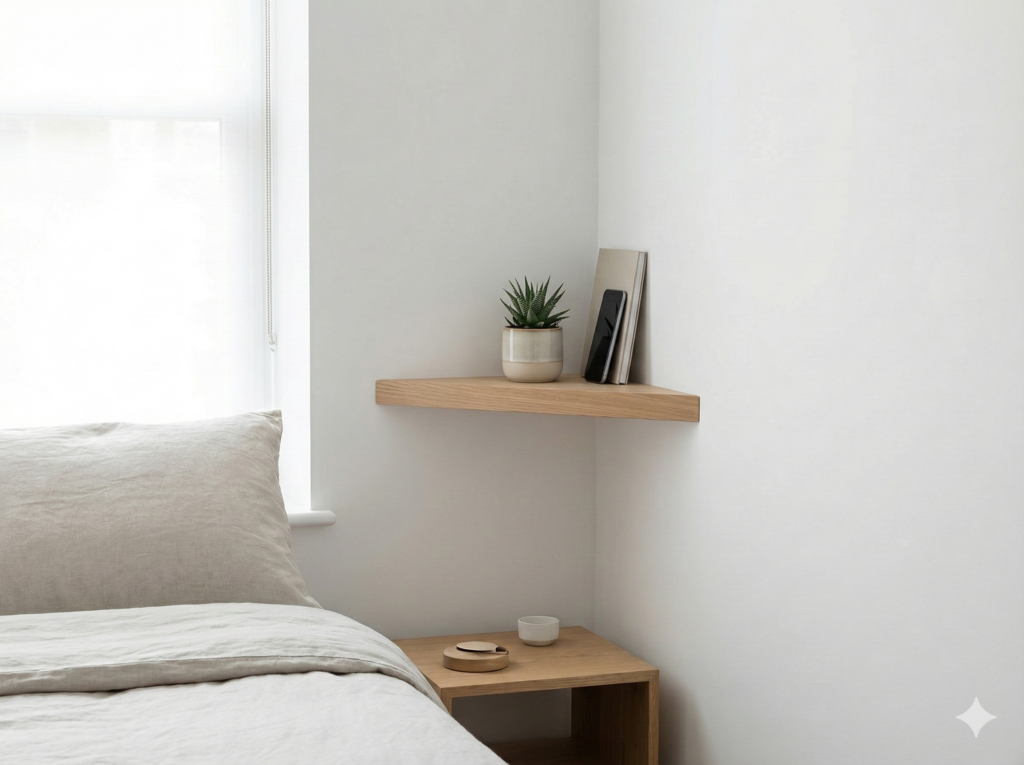
Want hidden storage? Look for floating nightstands that have one or two drawers. These give you a place to tuck away items you don’t want sitting out, like medicine, journals, or random stuff that collects on nightstands.
The drawer slides out smoothly, just like a regular nightstand. Most hold up to 15 pounds, which is plenty for typical bedside items. Check the weight limit before you buy to make sure it fits your needs.
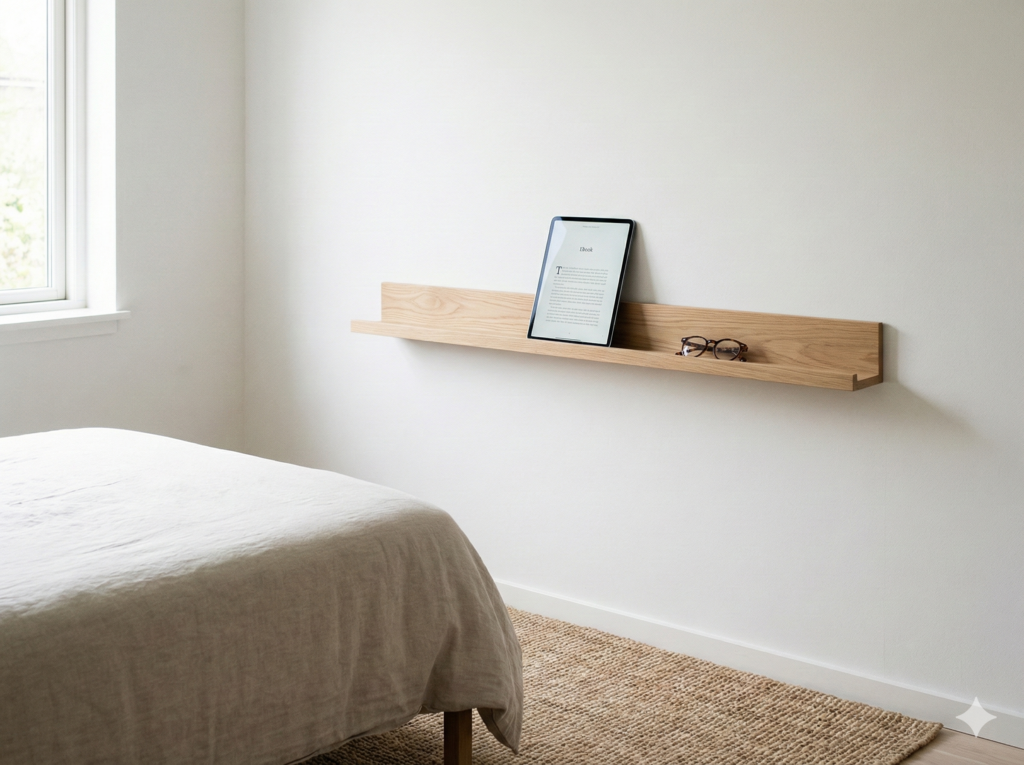
Wall-Mounted Ledges with a Lip
These look like thick shelves with a small raised edge. The lip keeps your phone, glasses, or book from sliding off during the night. Some come with a small groove in the back where you can run a phone charging cable.
Ledge-style nightstands usually stick out about 8 to 10 inches from the wall. That’s perfect for small bedrooms because they don’t jut out far into your walking space.
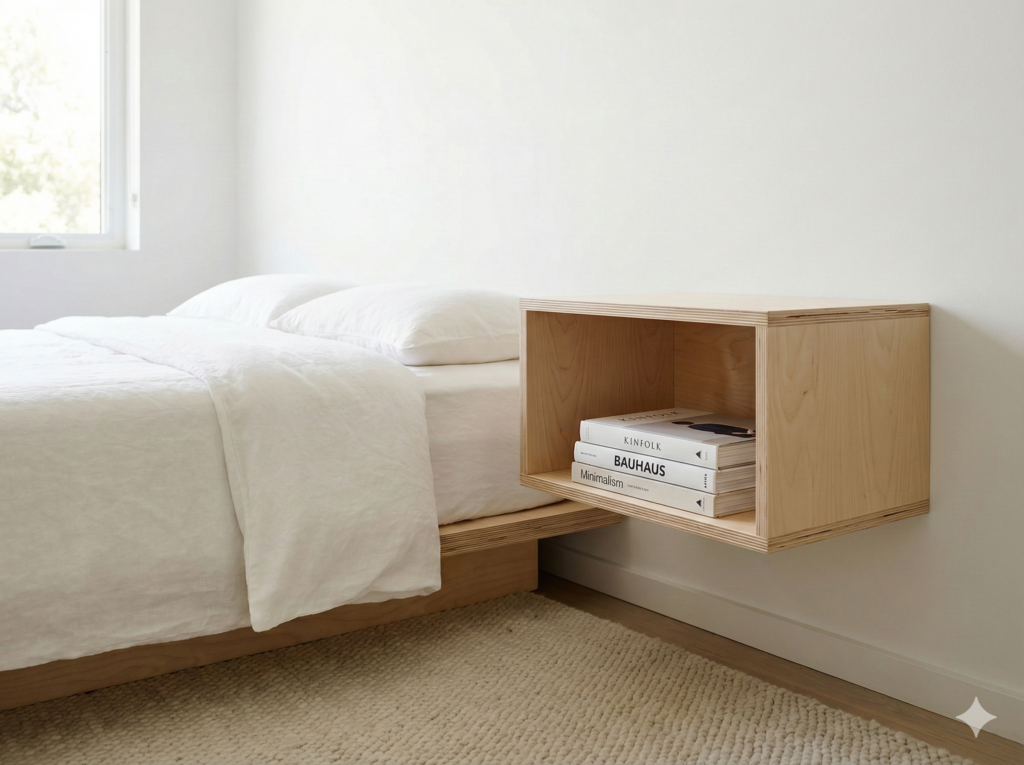
Floating Boxes or Cubes
Box-shaped floating nightstands have sides, a back, and a top. They look like little cabinets hanging on your wall. The open front gives you storage space inside, and you can use the top for your lamp and alarm clock.
These come in wood, plastic, or metal. Wood boxes add warmth to your room, while metal ones look more industrial and modern. Pick the material that matches your bedroom style.
Hanging Rope Shelves
For a boho or coastal vibe, try a shelf that hangs from rope or thick cord. These usually have wooden boards held up by rope on each corner. They hang from one or two hooks in the ceiling or wall.
Hanging shelves work great in bedrooms with exposed beams or if you’re renting and don’t want to drill lots of holes. Just make sure the rope is strong and the hook is secure, according to safety guidelines from the Consumer Product Safety Commission.
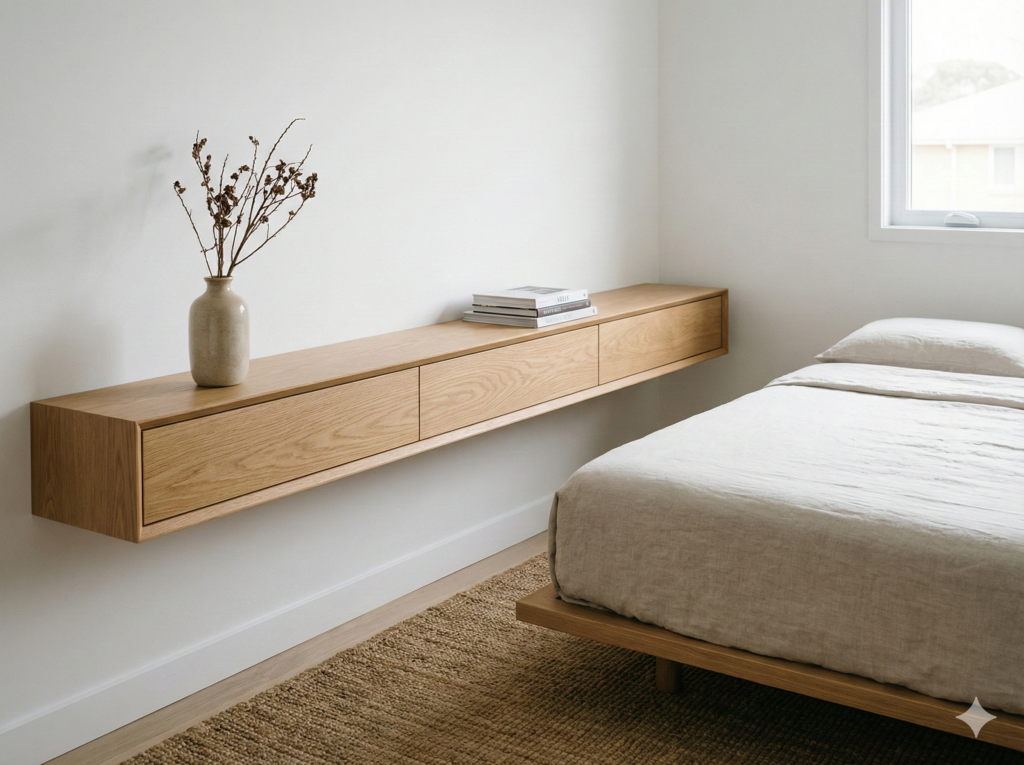
Slim Floating Console Tables
If you have a bit more wall space, a narrow floating console works beautifully. These are basically thin tables that mount to the wall. They’re usually 6 to 8 inches deep and 20 to 30 inches wide.
A slim console gives you more surface area than a single shelf. You can fit a lamp, a few books, a small plant, and your phone with room to spare. Some even have a small shelf underneath for extra storage.
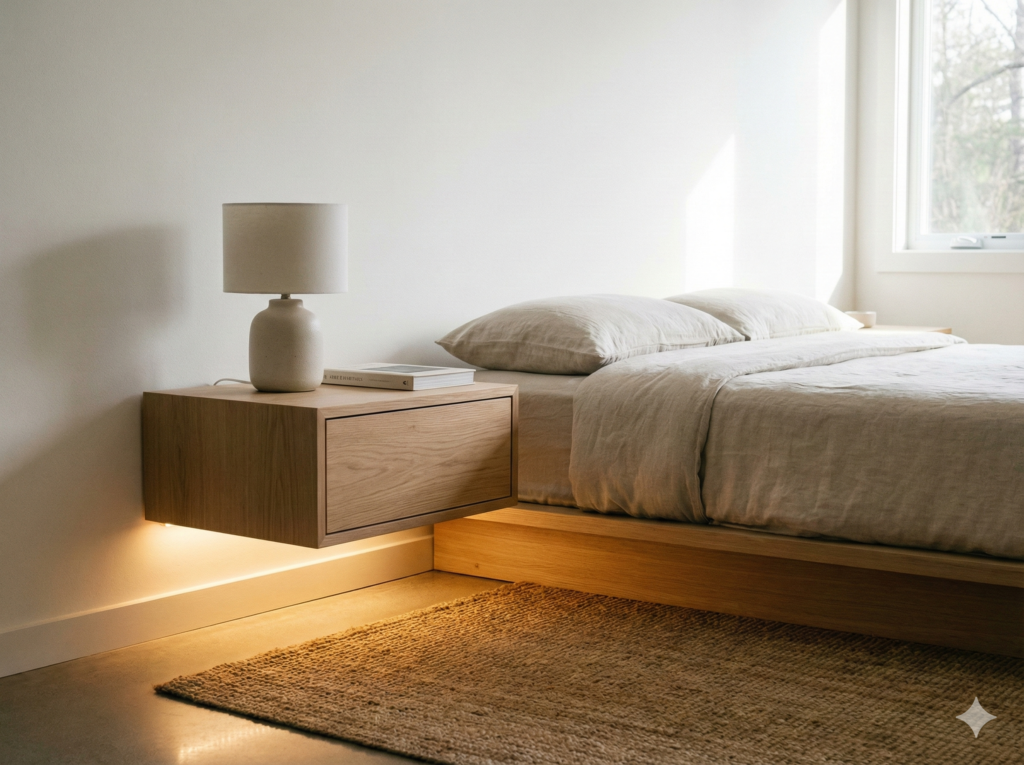
Floating Nightstands with Built-In Lighting
Some floating nightstands come with LED lights built right in. The light might be underneath the shelf, creating a cool glowing effect, or it might be a small reading light attached to the side.
Built-in lights save you from needing a separate lamp. That’s super helpful if your nightstand is small and can’t fit a lamp anyway. Plus, the soft glow looks really nice and modern.
Repurposed Items as Floating Nightstands
Get creative and turn unexpected items into nightstands. Old wooden crates, vintage suitcases, or even skateboard decks can mount on the wall and hold your bedside stuff.
This approach adds personality to your small bedroom. No one else will have the same nightstand as you. Just make sure whatever you use is sturdy and securely attached to the wall.
Folding Wall-Mounted Tables
These clever nightstands fold down when you need them and fold up flat against the wall when you don’t. They’re perfect for really tiny bedrooms or rooms that serve double duty as an office or guest room.
When folded up, they take up almost no space at all. When down, they give you a full nightstand surface. Most folding tables have a simple latch to keep them in place.
How to Choose the Right Floating Nightstand
Measure Your Space First
Before you buy anything, grab a tape measure. Figure out how much wall space you have next to your bed. Measure the width and note if there are outlets, windows, or other things in the way.
Also measure the height of your mattress. Your nightstand should be about the same height or a couple inches lower. This makes it comfortable to reach from bed.
Think About What You Need to Store
Make a quick list of what you keep on your nightstand every night. Do you have just a phone and a book? Or do you need space for a lamp, glasses, water bottle, several books, and other items?
If you have lots of stuff, pick a nightstand with a drawer or a larger surface. If you keep things simple, a single shelf might be all you need.
Check the Weight Limit
Every floating nightstand has a weight limit. This tells you how much weight it can safely hold. Most can handle 15 to 30 pounds, but some stronger ones hold up to 50 pounds.
A typical lamp weighs about 2 to 5 pounds. Books weigh about 1 pound each. Add up what you’ll put on your nightstand to make sure you don’t go over the limit. Safety first!
Match Your Bedroom Style
Your nightstand should fit with the rest of your bedroom. If you have a modern room with clean lines, pick a simple floating shelf in white, black, or natural wood. For a rustic or farmhouse style, look for reclaimed wood or distressed finishes.
Don’t stress too much about perfect matching. Sometimes a nightstand in a contrasting color or style becomes a fun accent piece. Check out ideas on sites like mycozynestideas.com for bedroom inspiration.
Consider Your Wall Type
The type of wall you have matters for installation. Drywall needs special anchors to hold heavy items. Concrete or brick walls need different hardware. Wood stud walls are the strongest and easiest to work with.
If you’re not sure what kind of walls you have, tap on them. Drywall sounds hollow. Studs (the wooden beams behind drywall) sound solid. You want to drill into studs whenever possible for the strongest hold.
Installation Tips for Floating Nightstands
Find the Studs in Your Wall
Wall studs are vertical wooden beams behind your drywall. They’re usually 16 or 24 inches apart. Screwing into studs makes your nightstand super secure and able to hold more weight.
Use a stud finder tool (about $10 to $20 at hardware stores) to locate them. Move the tool across your wall, and it will beep or light up when it finds a stud. Mark the spot with a pencil.
Use the Right Hardware
The screws and anchors that come with your nightstand aren’t always the best choice. For drywall without studs, use toggle bolts or heavy-duty anchors. These spread the weight across a larger area of the wall.
For mounting into studs, use wood screws that are long enough to go at least 1.5 inches into the stud. This creates a really strong connection that won’t pull out, according to building standards from the International Code Council.
Level It Perfectly
Nothing looks worse than a crooked nightstand. Use a level tool to make sure your shelf is perfectly straight before you drill the final holes. Most phones have a free level app you can download if you don’t own a level tool.
Place the level on top of the nightstand after you mark where it will go but before you drill. Adjust until the bubble sits right in the center. Then mark your drill holes.
Install It at the Right Height
The perfect height depends on your mattress. Sit on your bed like you’re going to sleep. Your nightstand should be about even with your mattress top or slightly lower. This lets you easily reach it without sitting up.
Most people install floating nightstands between 20 and 28 inches from the floor. But your exact height might be different based on your bed frame and mattress thickness.
Cable Management Matters
Hide ugly cords for a cleaner look. Some floating nightstands have holes or slots for running cables through. If yours doesn’t, use small cable clips on the back edge or run cords down the wall behind the nightstand.
You can also use cable sleeves that bundle all your cords together. These make multiple cords look like one neat line instead of a tangled mess.
Storage Solutions for Floating Nightstands
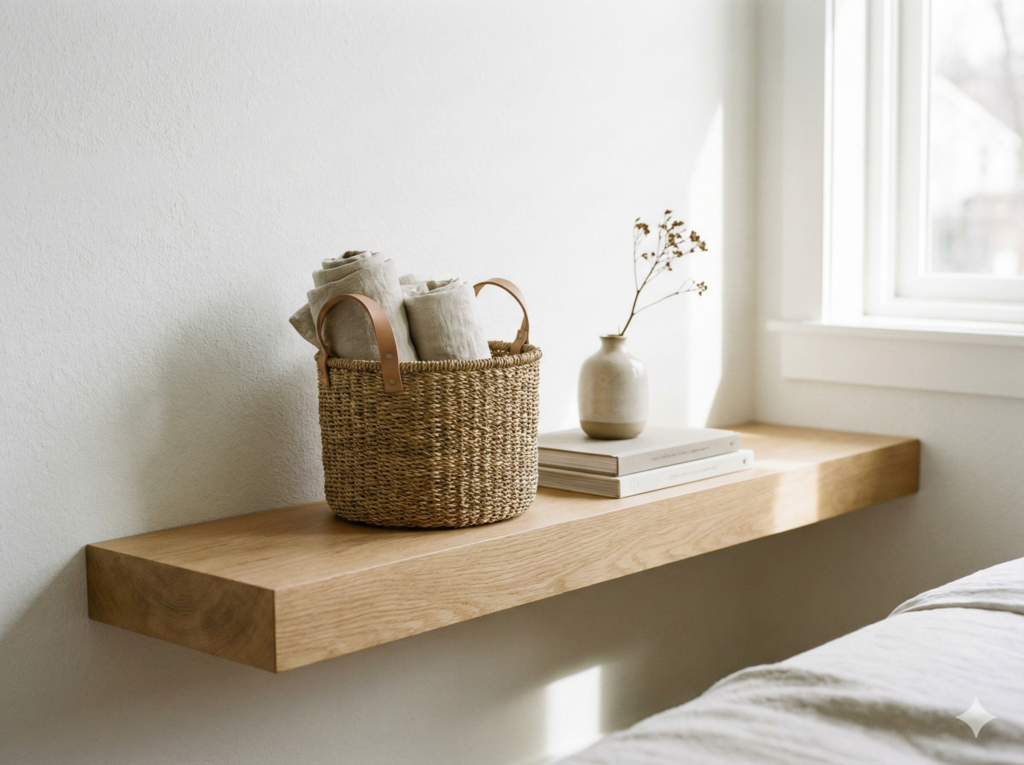
Add Small Baskets or Boxes
Put a small basket or decorative box on top of your floating nightstand. This corrals little items like lip balm, hand lotion, or hair ties. Everything stays in one spot instead of rolling around.
Pick a basket that fits on your nightstand with room left over for your lamp. Woven baskets add texture and warmth. Metal or wire baskets look more modern and industrial.
Use the Wall Space Above
Don’t stop with just the nightstand. Add a small floating shelf above it for books or decorations. This takes advantage of vertical space and keeps your nightstand surface less crowded.
Leave at least 12 inches between your nightstand and the shelf above it. This gives you room to reach for things without knocking into the upper shelf.
Hang Hooks Nearby
Mount a few small hooks on the wall next to your nightstand. These are perfect for hanging jewelry, headphones, or a sleep mask. Hooks keep items within easy reach but off your nightstand surface.
Command hooks work great for this because they don’t require drilling. They hold about 1 to 3 pounds each, which is perfect for light items. Plus, they come off without damaging walls if you’re renting.
Try a Nightstand with a Hidden Compartment
Some floating nightstands have a flip-up top or a secret drawer. These are awesome for hiding valuable items or things you want close but out of sight.
Hidden compartments usually add about $20 to $50 to the cost, but the extra privacy might be worth it for you.
Mount a Magazine Rack Below
If you love reading in bed, attach a small magazine or book rack to the wall just below your nightstand. This keeps reading material handy but frees up your nightstand top for other stuff.
Wire racks or fabric pockets both work well. Make sure whatever you choose can hold the weight of your books or magazines.
DIY Floating Nightstand Projects
Simple Wood Shelf Nightstand
Make a basic floating nightstand with a piece of wood and shelf brackets. Buy a board from a hardware store (pine or poplar work great), cut it to size if needed, sand the edges smooth, and stain or paint it any color you want.
Then attach metal L-brackets to the wall and set the board on top. The brackets hold the weight while staying hidden underneath. This project costs about $15 to $30 and takes less than an hour.
You’ll need:
- One wooden board (12 inches deep, 18 to 24 inches wide)
- Two metal L-brackets
- Wood screws
- Sandpaper
- Paint or stain (optional)
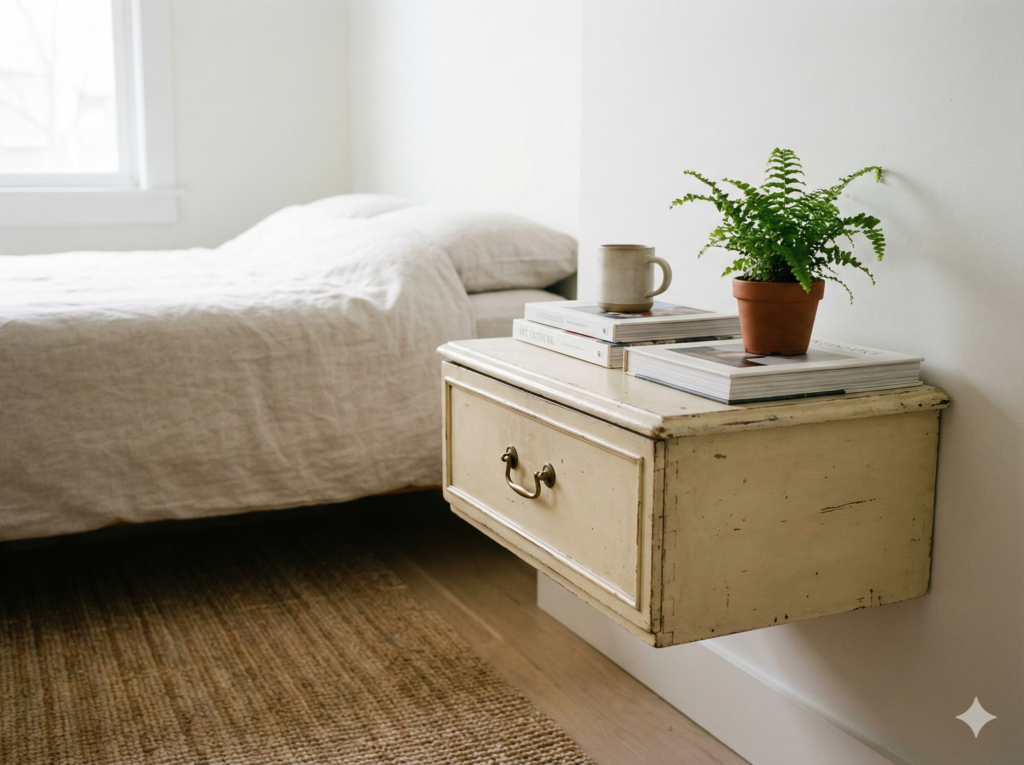
Repurposed Drawer Nightstand
Find an old drawer at a thrift store or garage sale. Clean it up, paint it if you want, and mount it on the wall with the open side facing out. The drawer becomes a shelf with built-in sides to keep things from falling off.
This works especially well with vintage drawers that have interesting details or hardware. You get a nightstand with character for just a few dollars.
Floating Crate Nightstand
Wooden crates make excellent floating nightstands. You can find them at craft stores or online for about $10 to $20. Paint or stain the crate to match your room.
Mount it to the wall horizontally (opening facing out) or vertically (opening facing up). The open design gives you storage space inside while the top works as a nightstand surface.
Industrial Pipe Shelf
For an industrial or modern farmhouse look, build a shelf using metal pipes and a wood board. The pipes create brackets that hold the board.
You’ll need two pipe flanges that screw into the wall, short pipe pieces, and elbows to create the L-shape bracket. Then rest your wood board on top. Find all these parts at hardware stores in the plumbing section.
Floating Box with Hidden Storage
Build a simple wooden box with five sides (no front). Mount it to the wall with the opening facing forward. This creates a floating nightstand with storage space inside.
You can build this with basic woodworking skills using:
- Four pieces of wood for the sides
- One piece for the back
- One piece for the top
- Wood glue and nails
- Mounting brackets hidden inside
Paint or stain it to match your bedroom. This project costs about $25 to $40 in materials.
Styling Your Floating Nightstand
Keep It Simple
The biggest mistake people make is putting too much stuff on their nightstand. A crowded nightstand looks messy and makes your small bedroom feel even smaller.
Stick to the essentials: a lamp (or phone for light), an alarm clock if you use one, maybe a small plant or one decorative item, and whatever you need right before bed (like a book or water).
Add a Small Plant
A tiny plant brings life and color to your nightstand without taking up much space. Succulents work great because they’re small and easy to care for. You only need to water them once every week or two.
Other good choices include small pothos plants, snake plants, or air plants. All of these tolerate the low light that bedrooms often have. Learn more about bedroom plants and decor ideas for your space.
Use Vertical Storage
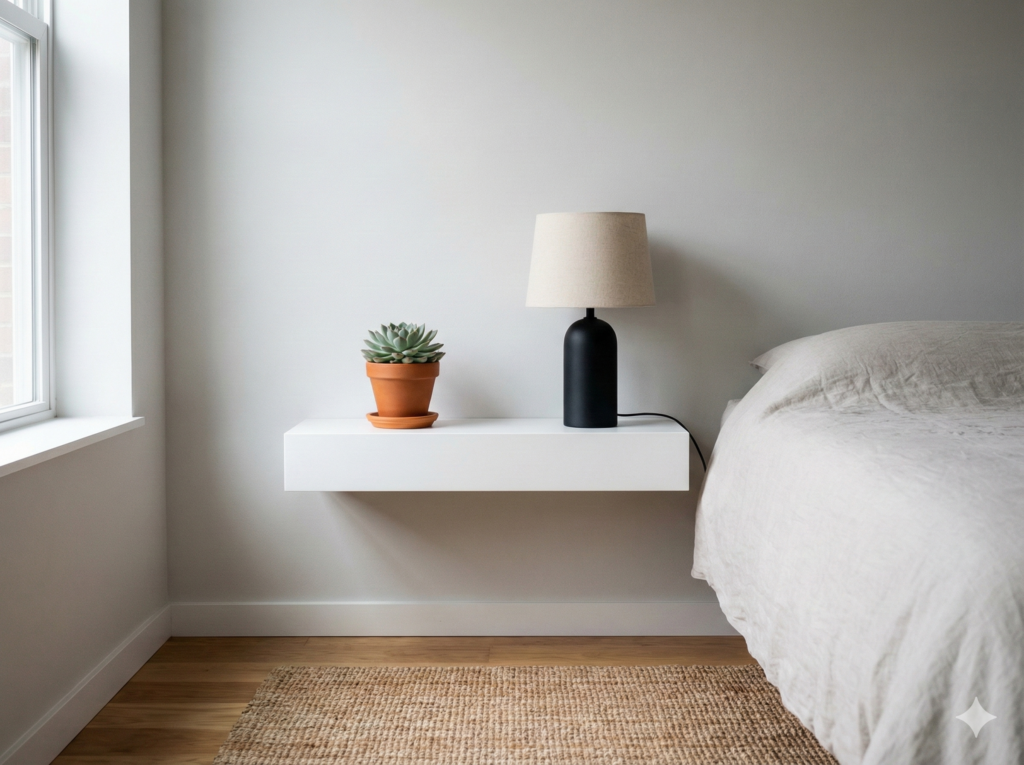
Think up, not out. A tall, thin lamp takes up less surface area than a short, wide one. Stack two or three small books instead of laying them flat.
This strategy keeps your floating nightstand surface from getting cluttered while still giving you everything you need.
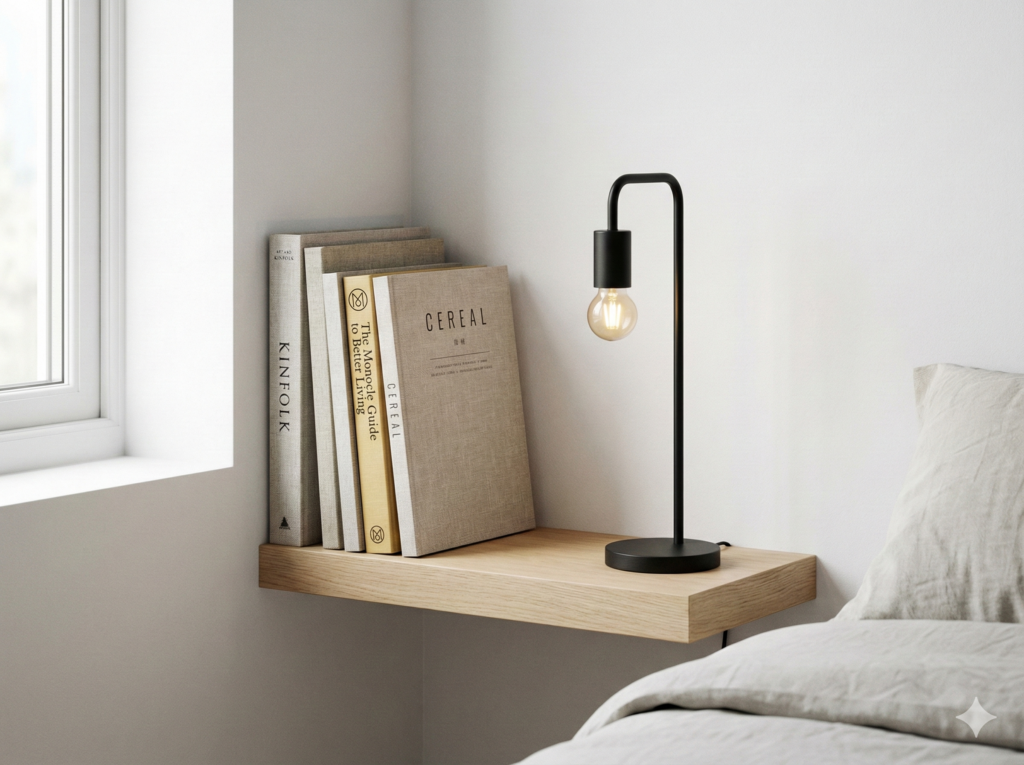
Choose the Right Lamp
Your lamp should fit the scale of your nightstand. On a small floating shelf, use a lamp with a narrow base. The lampshade should be proportional too – not so big that it hangs over the edge.
Consider wall-mounted swing-arm lamps as an alternative. These don’t take up any nightstand space at all. They mount right to the wall and swing out when you need light.
Add Personal Touches
Your nightstand should feel like yours. Add a framed photo, a special trinket, or anything that makes you smile when you see it. Just keep it small so it doesn’t overwhelm the space.
Personal items make your bedroom feel cozy and welcoming. They turn a plain nightstand into something that reflects your personality.
Common Mistakes to Avoid
Installing Without Finding Studs
The biggest installation mistake is not anchoring your nightstand properly. If you just drill into drywall without hitting a stud or using proper anchors, your nightstand might fall down. This could damage your wall and break your stuff.
Always use a stud finder or heavy-duty anchors designed for your wall type. Spending an extra 10 minutes on proper installation saves you from problems later.
Choosing a Nightstand That’s Too Small
A nightstand that’s too tiny won’t hold everything you need. You’ll end up putting stuff on the floor, which defeats the purpose of saving space. Make sure your nightstand is big enough for your daily items.
Most people need at least 10 inches of depth and 16 inches of width for a functional nightstand. Anything smaller gets crowded fast.
Ignoring the Style of Your Room
A nightstand that clashes with your bedroom style sticks out in a bad way. If you have a traditional bedroom, an ultra-modern floating shelf might look out of place. If your room is minimalist, an ornate vintage drawer might not fit.
Take a minute to think about your overall bedroom design before buying. You want your nightstand to blend in or complement the existing style.
Mounting It at the Wrong Height
A nightstand that’s too high or too low is annoying to use. You’ll constantly stretch or reach down, which gets old fast. Take time to find the perfect height before drilling holes.
Remember, you can always adjust a floating nightstand’s height before the final installation. Test the height by holding it against the wall and sitting on your bed to check if it feels right.
Overloading It
Every nightstand has a weight limit. Don’t pile on heavy items hoping it will hold. Too much weight can pull the nightstand off the wall, damage your wall, or cause injury.
If you need to store heavy items, consider a floor nightstand instead or add additional anchors and brackets for extra support.
Budget-Friendly Floating Nightstand Ideas
Use Command Strips for Lightweight Options
For very light nightstands (under 5 pounds with items), heavy-duty Command strips might work. These stick to the wall without drilling holes, which is perfect for renters.
Command makes strips that hold up to 16 pounds. Use several strips for better support. Keep in mind these work best with flat, smooth walls and should only hold light items like small shelves.
Shop Secondhand Stores
Thrift stores, garage sales, and online marketplaces have great nightstand options for cheap. Look for floating shelves, small wall-mounted cabinets, or even decorative brackets and boards you can combine.
You can often find quality pieces for $5 to $20. A little paint or new hardware makes them look brand new.
Make Your Own from Scrap Wood
If you have basic tools, scrap wood costs next to nothing. Ask at construction sites if they have leftover wood pieces. Many builders will give away scraps for free.
Sand the wood, seal or paint it, and attach it to the wall with brackets. Your total cost might be under $10 if you already have some supplies.
Look for Clearance Sales
Home stores often have clearance sections with discontinued items marked way down. You might find a nightstand originally priced at $50 for just $15 or $20.
Check the clearance section at stores like Target, IKEA, Home Depot, or local furniture stores. These items work perfectly fine – they’re just older styles or overstocked items.
Use What You Already Have
Look around your home for items you could repurpose. An old shelf from another room, a cutting board you don’t use, or even a decorative tray can become a nightstand.
This option costs nothing and helps you reuse items instead of buying new ones. Plus, you get a unique nightstand no one else has. Find more budget decorating ideas for inspiration.
Floating Nightstands for Different Bedroom Styles
Modern and Minimalist Bedrooms
For modern spaces, choose nightstands with clean lines and simple shapes. Stick to neutral colors like white, black, gray, or natural wood. Avoid fussy details or ornate designs.
A simple rectangular floating shelf with no visible brackets looks sleek and contemporary. Add a modern lamp with a metal base and you’re done.
Farmhouse and Rustic Bedrooms
Rustic bedrooms look great with wooden floating nightstands that have visible wood grain. Look for reclaimed wood, distressed finishes, or pieces with a natural, unfinished look.
Metal brackets or industrial pipe supports add to the farmhouse vibe. Pair your rustic nightstand with a vintage-style lamp and some greenery for the full effect.
Bohemian and Eclectic Bedrooms
Boho bedrooms can handle more personality. Try colorful floating shelves, hanging rope nightstands, or repurposed vintage items mounted on the wall.
Mix and match different textures and materials. A wooden shelf with a woven basket, colorful lamp, and small plants creates that laid-back boho feeling.
Scandinavian Bedrooms
Scandinavian design loves light wood tones, white, and simple shapes. A light oak or birch floating shelf works perfectly. Keep the styling minimal with just one or two carefully chosen items.
The Scandinavian approach values function and simplicity. Your nightstand should be useful and beautiful without any extra fuss.
Industrial Bedrooms
Industrial style embraces raw materials like metal and concrete. Look for floating nightstands made from dark metal, or wood and metal combinations.
Exposed brackets, visible screws, and darker colors all work with industrial design. Add an Edison bulb lamp for extra industrial flair.
Safety Tips for Floating Nightstands
Follow Weight Limits Strictly
This is the most important safety rule. Never exceed your nightstand’s rated weight capacity. Overloading leads to accidents, wall damage, and potentially injuries.
If you’re not sure about the weight limit, contact the manufacturer or weigh your items to be safe. A simple kitchen scale helps you check.
Check Stability Regularly
Every few months, gently test your nightstand’s stability. Make sure it’s still firmly attached to the wall. Screws can loosen over time, especially in drywall.
Tighten any loose screws right away. If your nightstand feels wobbly or unstable, take everything off and reinstall it properly.
Keep Heavy Items Low
If your nightstand has multiple shelves or levels, put heavier items on lower shelves. This keeps the center of gravity lower and makes everything more stable.
Light items like books go on top. Heavier items like a water carafe go on lower shelves if available.
Avoid Placing Nightstands Above Babies or Kids
If you have little ones, be extra careful where you install floating nightstands. Don’t put them above cribs, toddler beds, or play areas. If something falls, you want it to fall on the floor, not on a child.
For kids’ bedrooms, mount nightstands lower and secure everything carefully. Consider floor nightstands instead until children are older.
Use Earthquake-Safe Installation in Certain Areas
If you live in an area with earthquakes, use extra-strong mounting hardware. Toggle bolts and multiple anchor points help keep your nightstand secure during shaking.
You might also want to add small lips or railings to the front of open shelves. This prevents items from sliding off during tremors.
Lighting Options for Floating Nightstands
Plug-In Table Lamps
Traditional table lamps work on floating nightstands as long as you have a nearby outlet. Choose lamps with narrow bases that won’t take up too much surface area.
LED bulbs stay cool and use less energy. This matters on floating nightstands because some have weight limits that include the lamp and bulb heat.
Wall-Mounted Reading Lights
Wall-mounted swing-arm lights or sconces free up all your nightstand space. They mount to the wall above or beside your nightstand and swing out when you need light.
These work especially well on very small floating nightstands where a lamp won’t fit. You can adjust them to point right where you’re reading.
Battery-Operated LED Lights
No outlet nearby? Battery-operated LED lights stick or mount anywhere. They come with remote controls or touch sensors to turn them on and off.
These lights last months on a single charge or battery change. They’re perfect for rentals where you can’t add wiring or for nightstands far from outlets.
Strip Lights Under the Shelf
LED strip lights mounted under your floating nightstand create a soft glow. This looks modern and provides gentle night lighting without taking up surface space.
Most strip lights have adhesive backing. You just peel and stick them to the underside of your shelf. They plug in or run on batteries depending on the model.
Smart Bulbs with Voice Control
If you have a smart home system, use smart bulbs in your nightstand lamp. You can turn them on and off with your voice, dim them, or even change colors.
Smart bulbs cost more upfront (about $10 to $20 each) but they’re super convenient. You never have to reach for a switch in the dark.
Final Thoughts
Floating nightstands solve the biggest problem in small bedrooms: not enough space. They give you a place for bedside essentials without eating up precious floor area. Plus, they look modern and keep your room feeling open and organized.
The best floating nightstand for your bedroom depends on your style, budget, and storage needs. Start by measuring your space and thinking about what you’ll put on it every day. Then pick a design that matches your room and install it carefully using proper hardware.
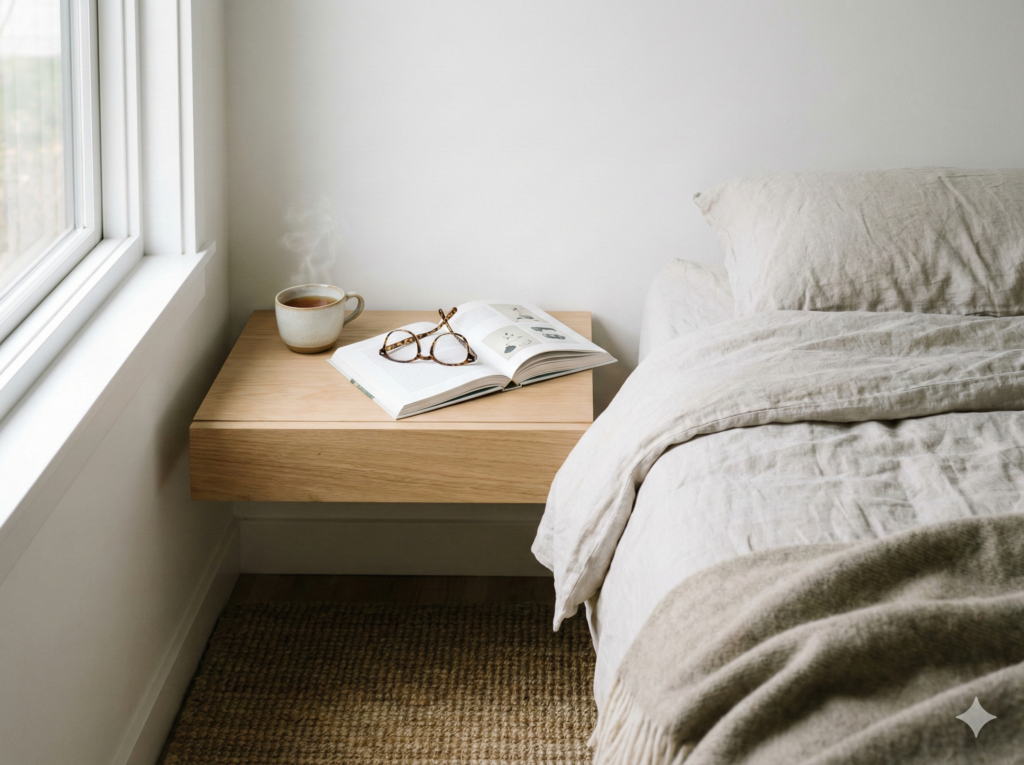
Whether you buy a ready-made nightstand or build your own, you’ll love how much bigger your small bedroom feels. And when you can finally vacuum under your nightstand without moving furniture around, you’ll wonder why you didn’t make the switch sooner.
Ready to upgrade your bedroom? Check out more small bedroom ideas and start planning your perfect floating nightstand today. Your more spacious, organized bedroom is just one simple project away.