
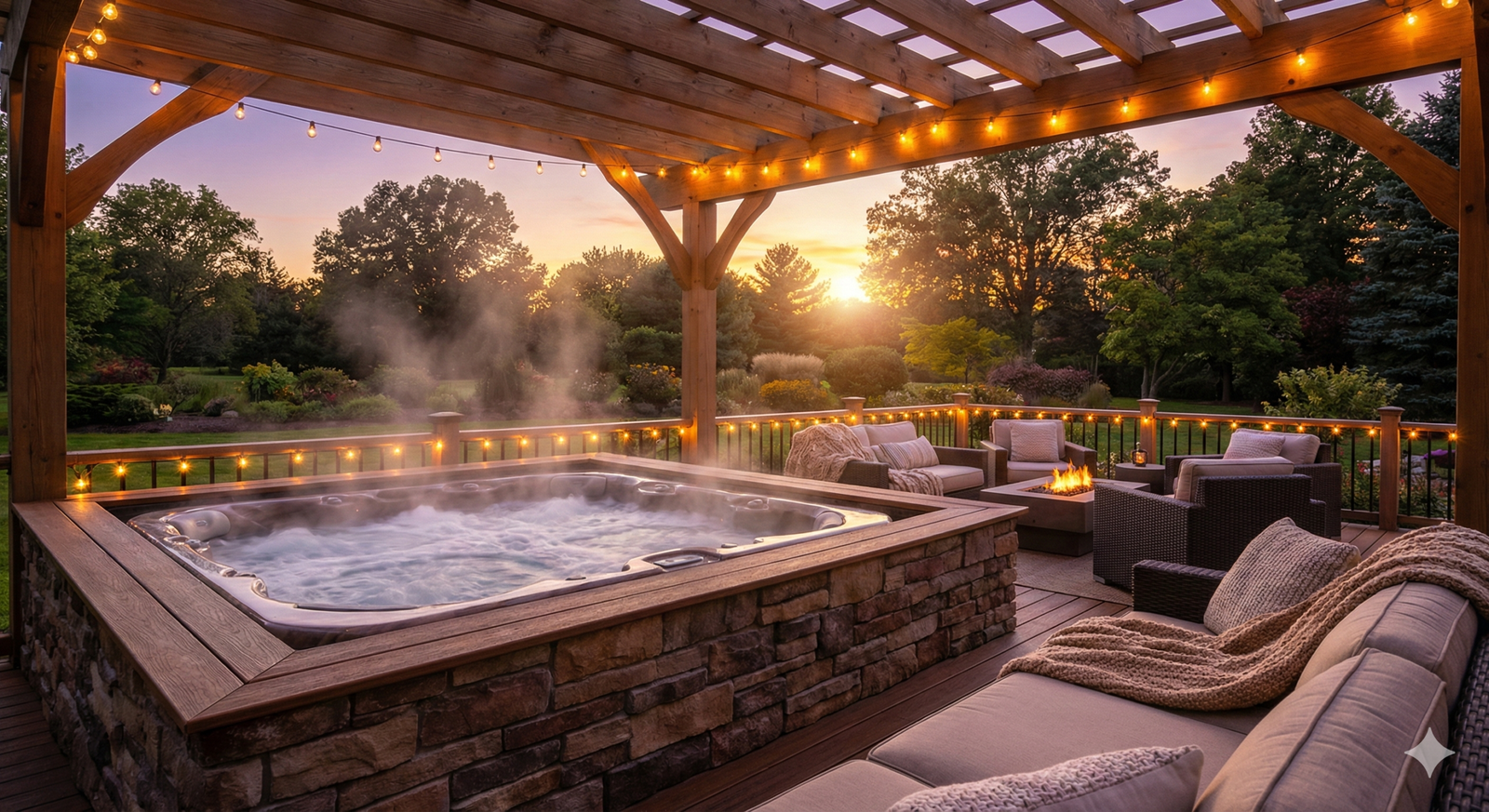
Yes, you can create a beautiful outdoor jacuzzi space in your backyard without spending a fortune or doing complicated work. From simple deck setups to fancy garden designs, outdoor jacuzzis give you a perfect spot to relax, spend time with family, and enjoy your outdoor space all year long.
In this guide, you’ll find easy-to-follow ideas for designing your outdoor jacuzzi area. We’ll cover different styles, setup tips, cost details, and ways to make your backyard feel like a spa retreat. Whether you have a tiny patio or a big yard, there’s an idea here that will work for you.
Why Add a Jacuzzi to Your Outdoor Space?
Before we jump into design ideas, let’s talk about why an outdoor jacuzzi is such a smart choice for your home.
Health Benefits You Can’t Ignore
Soaking in warm water isn’t just fun—it’s good for you too. The hot water helps your muscles relax after a long day. The massage jets ease sore spots and help you feel better. Many people find that a quick soak before bed helps them sleep better at night.
According to health experts, warm water therapy can reduce stress and improve blood flow throughout your body. It’s like having a mini spa right at home.
Your Home Value Goes Up
Adding an outdoor jacuzzi can boost your home’s worth. Real estate experts say that a well-designed hot tub setup can add 4% to 7% to your home’s value in places where people love outdoor living. Built-in designs that match your landscape tend to add the most value.
A Gathering Spot for Everyone
Your outdoor jacuzzi becomes the favorite spot for family time and friend hangouts. Whether you’re watching stars with your partner or hosting a small party, it creates special moments that everyone remembers.
Top Jacuzzi Outdoor Ideas for Every Style
Let’s explore the best ways to set up your outdoor jacuzzi. These ideas work for different spaces, budgets, and personal tastes.
Cozy Corner Setup
If you have a small yard, don’t worry. A corner jacuzzi makes smart use of limited space. Place your tub in one corner of your deck or patio. Add a few potted plants around it and some string lights overhead. This creates an intimate spot that feels private and special.
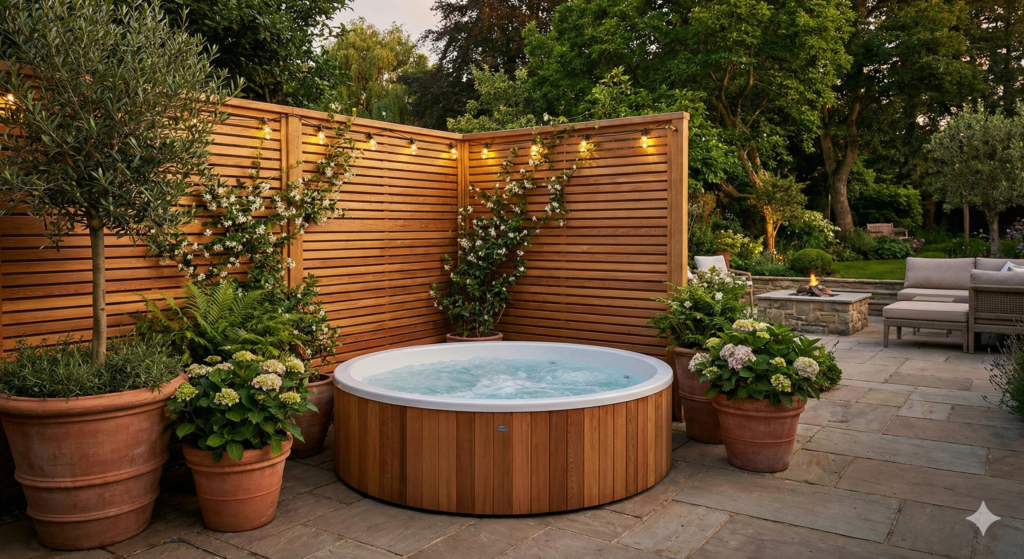
Corner setups work great because they:
- Use space that often goes to waste
- Give you two walls for privacy or decoration
- Cost less to build than full outdoor rooms
- Feel cozy and welcoming
Raised Deck Design
A raised jacuzzi on a wooden deck looks amazing and makes getting in and out easier. Build steps up to your tub with storage underneath for towels and supplies. The raised design also gives you better views of your yard or neighborhood.
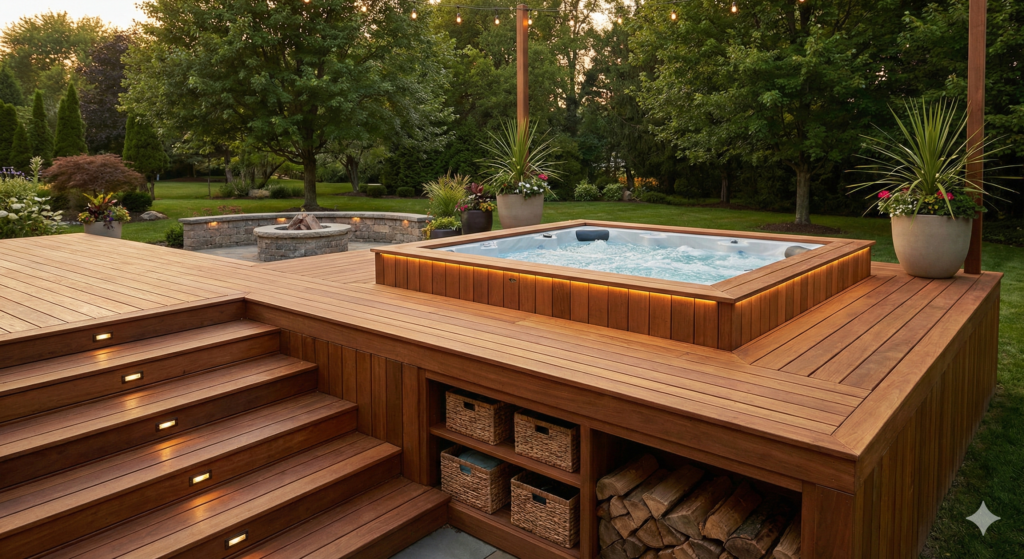
For this setup, make sure your deck can hold the weight. A full jacuzzi can weigh up to six tons. You might need to add extra support beams underneath. Talk to a builder before you start.
Sunken Garden Spa
Want a really fancy look? Try a sunken jacuzzi that sits level with your patio or garden. This design makes your hot tub look like it’s part of the landscape instead of sitting on top of it.
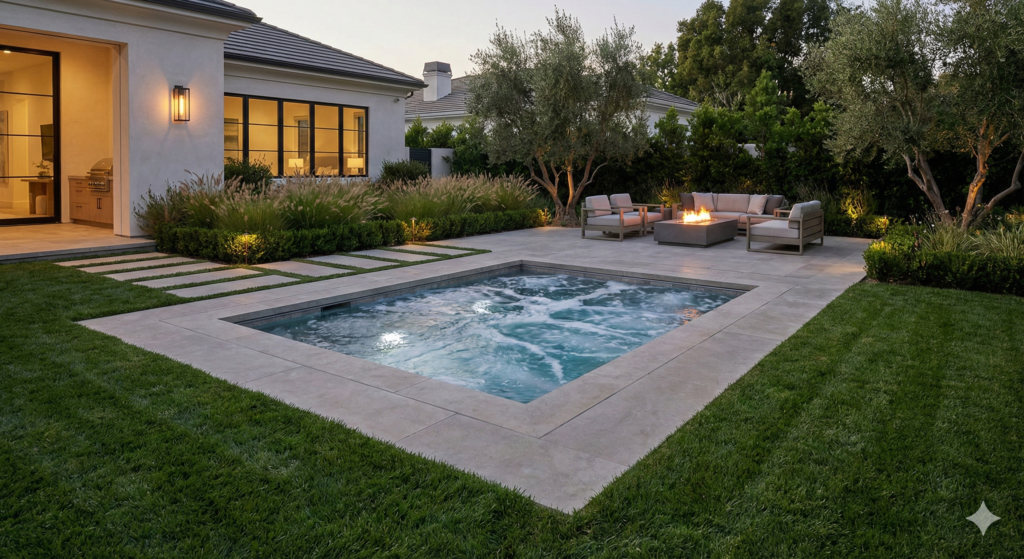
Sunken designs need more work to install because you have to dig and prepare the ground. But the result looks beautiful and feels high-end. Add flat stones or pavers around the edge for a clean finish.
Tropical Paradise Theme
Bring vacation vibes to your backyard with a tropical jacuzzi setup. Plant tall palms, bamboo, or other green plants around your tub. Add some colorful flowers and maybe a small waterfall feature. Use natural stone or wooden decking to complete the look.
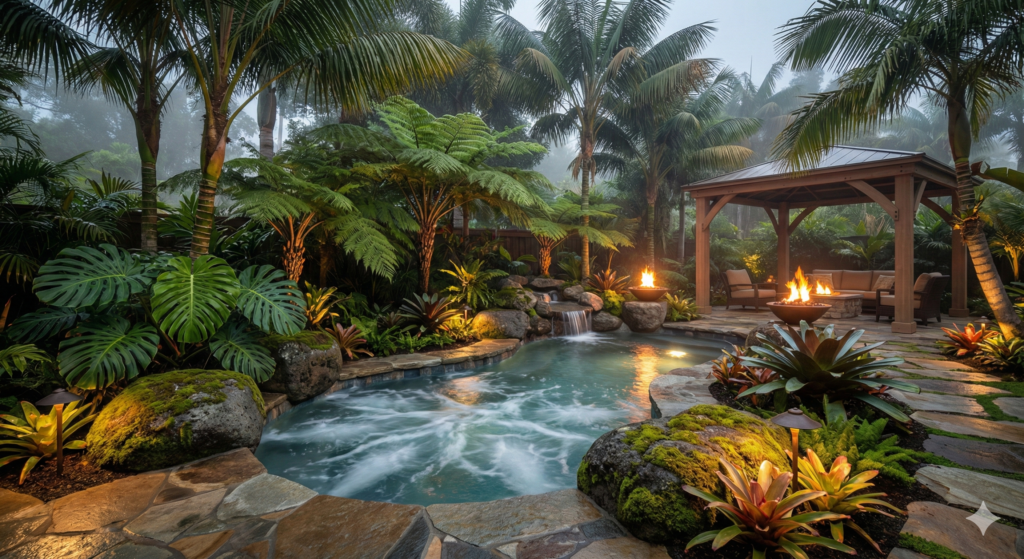
This style works best in warmer places, but you can create it anywhere with the right plants and care. The lush greenery makes you feel like you’re at a resort.
Modern Minimalist Look
If you like clean lines and simple design, go for a modern jacuzzi setup. Choose a square or rectangular tub with smooth sides. Use concrete or large format tiles around it. Keep plants to a minimum and add one or two statement pieces like a sculpture or modern planter.
Modern designs often include:
- Glass panels or railings for views
- LED lighting for nighttime ambiance
- Sleek furniture with weather-resistant cushions
- Neutral colors like gray, white, or black
Rustic Wooden Retreat
Create a cabin-like feel with a wooden jacuzzi area. Use cedar or treated wood for your deck and surround. Add a wooden fence or lattice for privacy. Place some lanterns around the space and maybe a small fire pit nearby.
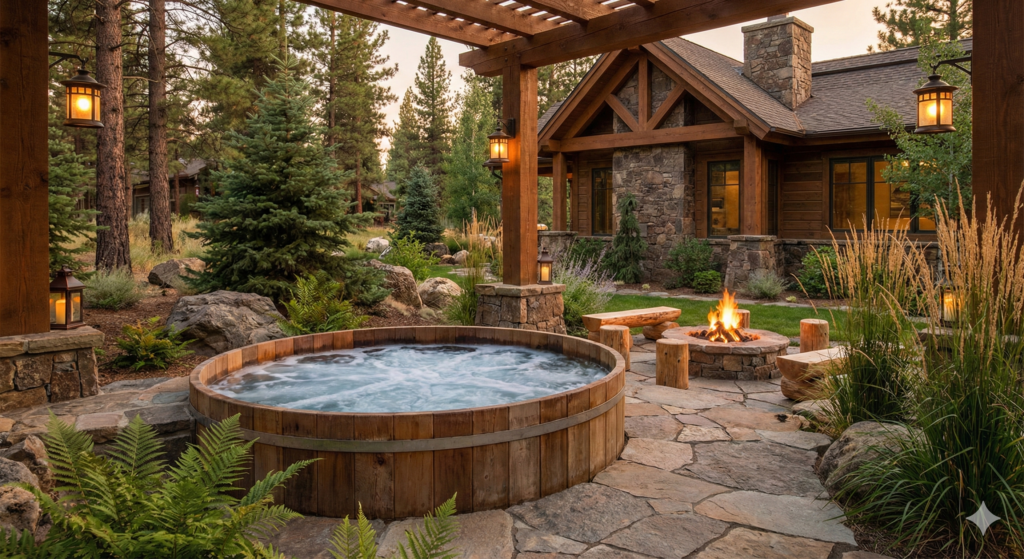
Wooden hot tubs or barrel-style tubs fit perfectly with this theme. The natural wood tones make everything feel warm and inviting. Just remember that wood needs regular care to stay looking good.
Pool and Spa Combo
If you already have a pool or plan to install one, connect your jacuzzi to it. The overflow from the spa can create a waterfall effect into the pool. This design looks impressive and lets you cool off in the pool after your hot soak.
Installing both at the same time saves you money—between $2,000 and $10,000 compared to doing them separately, according to industry estimates.
Smart Placement Ideas for Your Outdoor Jacuzzi
Where you put your jacuzzi matters just as much as how you design it. Think about these factors when choosing a spot.
Privacy First
Nobody wants neighbors watching them relax. Add privacy screens, fences, or tall plants between your jacuzzi and any nearby homes or streets. Bamboo screens work great because they grow tall and create a natural wall. You can also use outdoor curtains on a pergola for privacy you can open and close.
Easy Access from Your House
Place your jacuzzi close enough to your house that you can get to it easily. You don’t want to walk across your entire yard in the cold or rain. A spot right off your back door or deck makes sense for most people.
Also think about getting supplies like towels and drinks to your jacuzzi. The shorter the trip, the better.
Views and Scenery
If you have nice views from your yard, position your jacuzzi to take advantage of them. Facing a garden, trees, or open sky makes your soak more enjoyable. Avoid pointing your tub toward ugly views like garbage cans or your neighbor’s messy yard.
Sun and Shade Balance
Some sun feels nice, but too much can overheat your water and fade your tub. Look for a spot with partial shade, or add a pergola or umbrella. This also protects you from rain and gives you more privacy.
Level Ground is Key
Your jacuzzi needs to sit on flat, stable ground. Sloped areas cause problems with water balance and can damage your tub over time. If your yard isn’t level, you’ll need to build a platform or pad first.
Design Elements That Make Your Space Special
Little details turn a basic jacuzzi setup into an amazing outdoor retreat. Here are some extras that make a big difference.
Lighting That Sets the Mood
Good lighting changes everything. String lights create a soft glow that feels magical at night. Solar-powered path lights help you see where you’re walking. LED strips under steps or around the tub edge add modern flair.
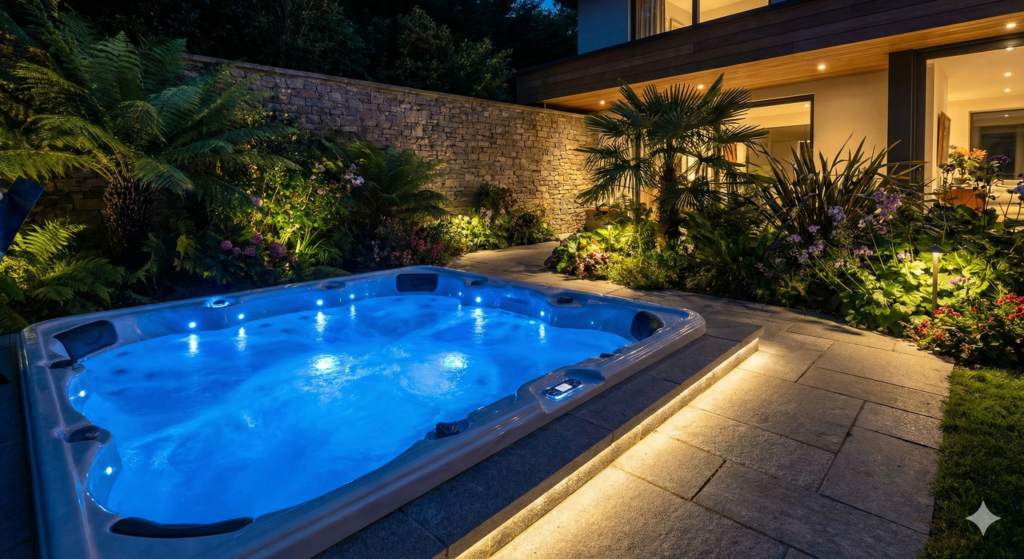
Many new jacuzzis come with built-in LED lights that change colors. You can set the mood with different colors for different occasions.
Comfortable Seating Nearby
Add some chairs, benches, or loungers near your jacuzzi. This gives people a place to sit before or after soaking. It also makes your space work for entertaining when the tub isn’t in use.
Choose outdoor furniture that can handle moisture and changing weather. Look for materials like teak, aluminum, or all-weather wicker.
Water Features Add Luxury
The sound of running water makes any space feel more relaxing. Add a small fountain, waterfall, or spillover feature near your jacuzzi. Some people build water features into the jacuzzi surround so water flows over stone or tile.
Water features don’t have to cost a lot. Even a simple bubbling rock fountain adds nice ambiance and masks neighborhood noise.
Plants and Greenery
Plants soften the space and make it feel more natural. Use a mix of heights—tall plants for privacy, medium bushes for color, and low ground cover to fill gaps. Choose plants that do well in your area and don’t need tons of care.
Some good choices include ornamental grasses, evergreen shrubs, and flowering perennials. Avoid plants that drop a lot of leaves or flowers directly into your tub.
Storage Solutions
You need somewhere to keep towels, robes, chemicals, and cleaning supplies. Build storage into your deck with benches that open up. Add a small outdoor cabinet that matches your design. Or use a stylish cart that you can roll around.
Having everything you need close by makes using your jacuzzi more convenient and keeps your space tidy.
Outdoor Music
Many people love listening to music while they soak. Some jacuzzis have built-in Bluetooth speakers. You can also add weatherproof outdoor speakers near your tub. Keep the volume respectful of neighbors, especially late at night.
Jacuzzi Size and Shape Options
Picking the right size and shape for your space matters a lot. Here’s what to consider.
Two to Three Person Tubs
Small jacuzzis work great for couples or solo soaks. They cost less to buy and run. They also need less space, which helps if your yard is tight. These usually measure about 5 to 6 feet across.
Four to Six Person Tubs
This is the most popular size for families. You have room for everyone without feeling crowded. These mid-size tubs measure roughly 7 to 8 feet across. They’re the sweet spot for most homeowners.
Large Party Tubs
If you love entertaining or have a big family, consider a tub that holds seven or more people. These can be 9 feet or larger. Just remember they cost more to heat and maintain. You’ll also need more space and stronger support for the extra weight.
Round, Square, or Rectangle?
Round tubs fit nicely in corners and have a classic hot tub look. Square and rectangular tubs have a more modern feel and often fit better against walls or in decks. Your choice depends on your space and style preference.
Some people like octagon-shaped tubs as a middle ground between round and square.
How Much Does an Outdoor Jacuzzi Cost?
Let’s talk about money. Knowing the costs helps you plan your budget and avoid surprises.
Jacuzzi Purchase Price
Basic jacuzzis start around $2,000 to $5,000. Mid-range tubs with better features run $5,000 to $10,000. High-end luxury models with all the bells and whistles can cost $11,000 to $35,000 or more.
Inflatable hot tubs are the cheapest option, starting at just $400 to $1,000. They work fine for casual use but don’t last as long as permanent tubs.
Installation Costs
Installing your jacuzzi adds to the total. According to recent data, installation labor typically runs $650 to $6,100. Simple above-ground setups cost less, while in-ground installations with excavation cost more.
Here’s what affects installation costs:
- Preparing a level base or pouring concrete ($500 to $2,500)
- Electrical work for proper power ($600 to $2,200)
- Plumbing if needed ($350 to $2,000)
- Delivery and setup ($200 to $500, or up to $2,500 for crane delivery)
- Deck building or reinforcement ($5,000 to $20,000 for new decks)
Ongoing Running Costs
Don’t forget about the costs to keep your jacuzzi running:
- Electricity: Roughly $20 to $50 per month depending on use and efficiency
- Chemicals and supplies: About $20 to $40 per month
- Water for refills: Usually under $10 per fill
- Filter replacements: $50 to $100 per year
- Professional maintenance: $100 to $300 per year if you hire help
Energy-efficient models with good insulation cost less to run. Using a quality cover when the tub isn’t in use also saves money on heating.
Total Budget Example
For a complete outdoor jacuzzi project, expect to spend:
- Budget setup: $3,000 to $7,000 (basic tub, simple pad, DIY help)
- Mid-range setup: $8,000 to $15,000 (quality tub, professional install, deck)
- Luxury setup: $20,000 to $45,000+ (top tub, full landscape, custom build)
Installation Tips and Best Practices
Getting your jacuzzi installed right from the start saves headaches later. Follow these tips for the best results.
Hire Licensed Professionals
Unless you’re putting in a simple inflatable tub, hire pros for the work. Licensed electricians should handle all wiring. Experienced contractors should do structural work like decks and concrete pads. This keeps you safe and meets local building codes.
Bad electrical work can cause fires or electrocution. Weak supports can collapse under the weight of a full tub. It’s not worth the risk to save a few dollars.
Check Local Rules and Permits
Many cities require permits for jacuzzi installation. Some have rules about:
- How far the tub must be from property lines
- Fence requirements around the tub
- Electrical and plumbing codes
- Maximum noise levels
Call your local building department before you start. Getting permits might feel like a hassle, but it protects you if something goes wrong and helps when you sell your home later.
Prepare a Solid Foundation
Your jacuzzi needs a level, strong base. Most people use:
- A concrete pad (4 to 6 inches thick)
- Paver stones on a compacted gravel base
- A reinforced deck designed for the weight
The foundation should extend a few inches beyond the tub on all sides. Make sure water can drain away from the area so you don’t get pooling or mud.
Plan Your Electrical Needs
Most outdoor jacuzzis need a dedicated 240-volt circuit with 50 to 60 amps. This is different from regular house outlets. Your electrician will run new wiring from your main panel to the tub location.
The outlet needs to be GFCI-protected for safety. It should be within 5 to 10 feet of the tub but not right next to it where it could get wet.
Consider Access for Delivery
Big jacuzzis are heavy and awkward. Think about how delivery trucks will get the tub to your backyard. Do they have to go through your house? Around the side yard? Will they need a crane to lift it over your fence or house?
Crane delivery adds $800 to $2,500 to your costs, but sometimes it’s the only way. Clear the path ahead of time by moving furniture, trimming branches, and checking that gates are wide enough.
Easy Maintenance for Your Outdoor Jacuzzi
Taking care of your jacuzzi isn’t hard if you stay on top of it. Here’s what you need to know.
Daily Quick Checks
Every day, take one minute to:
- Make sure the cover is on when nobody’s using it
- Check that the water temperature looks normal
- Look for any obvious damage or leaks
That’s it. Super simple.
Weekly Water Care
Once a week, spend about 10 minutes on these tasks:
- Test the water with test strips
- Add chemicals as needed to balance pH and sanitizer
- Skim any leaves or debris off the surface
- Wipe down the water line
Testing kits or strips cost about $10 to $20 and last for months. They show you if your water is safe and clean.
Monthly Deep Tasks
Each month, do a bit more:
- Clean or rinse your filters (takes 15 minutes)
- Check jets and pumps for any problems
- Clean the cover inside and out
- Add scale remover if you have hard water
Keeping filters clean is super important. Dirty filters make your pump work harder and can damage your tub.
Every Three to Four Months
A few times a year, give everything a deep clean:
- Drain all the water out
- Scrub the shell with non-abrasive cleaner
- Inspect for cracks or damage
- Deep clean or replace filters
- Refill with fresh water
According to maintenance experts, proper filter care and regular water changes can extend your jacuzzi’s life from 10 years to over 20 years.
Winter Care in Cold Places
If you live where it freezes, you have two choices. Keep your jacuzzi running all winter (they work fine in cold weather), or winterize it if you won’t use it.
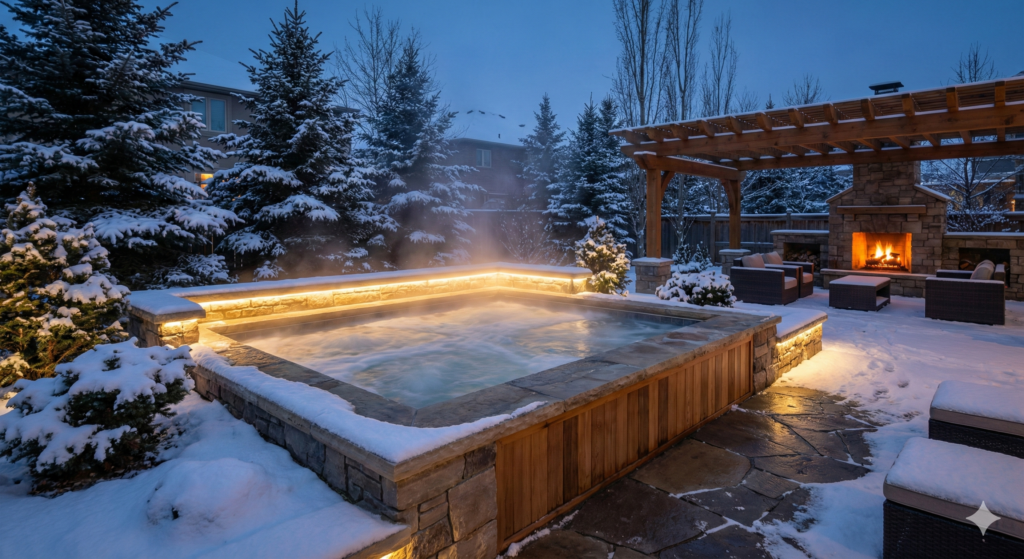
To winterize:
- Drain all water completely
- Blow out the pipes
- Remove and store filters
- Use antifreeze in plumbing lines
- Cover it well
Most people who go through the trouble to install a jacuzzi keep it running year-round. There’s something special about soaking in hot water while snow falls around you.
Popular Features and Upgrades
Modern jacuzzis come with lots of cool features. Here are some worth considering.
Advanced Jet Systems
Better jets give you better massage. Look for adjustable jets that let you control the pressure. Some tubs have different types of jets in different seats—rotating jets for backs, pulsing jets for feet, and softer jets for necks.
Top brands offer 20 to 50+ jets in their tubs. More jets isn’t always better, but well-placed jets make a big difference.
LED Color Therapy Lights
Many jacuzzis now include LED lights that change colors. Different colors are supposed to have different effects—blue for calm, red for energy, green for balance. Even if you don’t believe in color therapy, the lights look cool and set a nice mood.
Built-in Sound Systems
Bluetooth speakers let you play music from your phone. Some systems include subwoofers for better bass. Weather-resistant speakers handle moisture without problems.
Wi-Fi and Smart Controls
Control your jacuzzi from your phone with smart technology. Turn it on before you get home so it’s warm and ready. Adjust temperature, lights, and jets without getting out of the tub. Get alerts if something needs attention.
Smart features add $500 to $2,000 to the price, but they make owning a jacuzzi more convenient.
Saltwater Systems
Regular jacuzzis use chlorine or bromine to keep water clean. Saltwater systems are gentler on skin and eyes. They cost more upfront (about $500 to $2,500 extra) but some people find them easier to maintain.
Waterfalls and Fountains
Built-in waterfalls add a spa-like touch. The flowing water sounds relaxing and looks beautiful. Some tubs have tall fountain jets that shoot water up in arcs.
Design Inspiration from Real Setups
Let’s look at some specific design ideas that combine several elements we’ve talked about.
The Intimate Evening Retreat
Picture this: a round jacuzzi tucked in the corner of your deck. String lights hang overhead in a zigzag pattern. Two comfortable chairs sit nearby with a small table between them. A tall planter with bamboo gives you privacy from neighbors. A few solar lanterns line the path from your back door.
This setup costs $6,000 to $12,000 total and works great for couples. It’s simple, private, and doesn’t take up much space.
The Family Fun Zone
Imagine a large rectangular jacuzzi built into a multi-level deck. Steps lead up one side with hidden storage underneath. Colorful outdoor pillows line built-in benches around the tub. A pergola overhead has climbing vines growing on it. A small outdoor shower lets everyone rinse off before getting in.
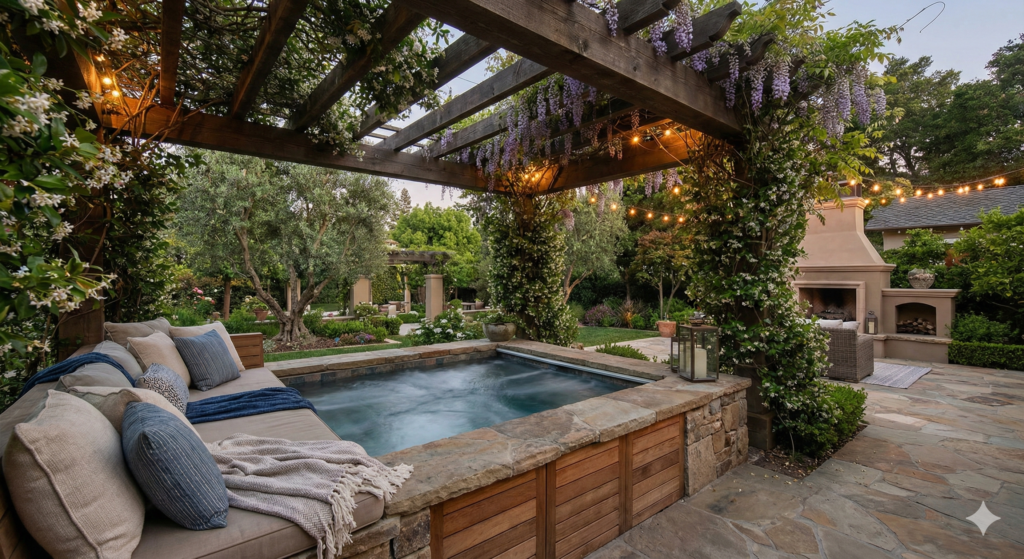
This family-friendly design runs $15,000 to $25,000 but creates an amazing space everyone will use.
The Luxury Spa Experience
Envision a sunken jacuzzi surrounded by natural stone. A waterfall feature flows over stacked slate behind the tub. Lush tropical plants create a jungle feel. Teak loungers with plush cushions sit on one side. Hidden LED lights under the water and in the landscaping create a magical glow at night.
This high-end setup costs $30,000 to $50,000 or more, but it’s absolutely stunning.
The Simple Deck Addition
Think about a basic jacuzzi on a wooden platform next to your house. The tub sits on pressure-treated decking stained to match your home. A simple railing surrounds three sides for safety. You added a few potted plants and an outdoor towel holder. Done.
This no-frills approach costs $4,000 to $8,000 and gets the job done without any fuss.
Common Mistakes to Avoid
Learn from others’ mistakes so you don’t make them yourself.
Skipping the Cover
Some people think they don’t need a cover to save money. Big mistake. Covers keep your water clean, hold in heat, and protect your tub from weather. They pay for themselves in lower energy bills within months.
Quality covers cost $300 to $800 but last several years. Cheap covers fall apart quickly, so invest in a good one.
Putting It Too Far from Power
The farther your jacuzzi is from your electrical panel, the more the wiring costs. Keep your tub within 50 feet of the panel if possible. Beyond that, you might need expensive upgrades.
Ignoring Drainage
Your jacuzzi area needs somewhere for water to go. Splashing, rain, and overflow all create puddles. Make sure the ground slopes away from your house and the tub sits slightly higher than surrounding areas. Add a drain nearby if needed.
Choosing Looks Over Function
That pretty spot by your garden might flood when it rains. The area with the best view might be impossible for delivery. Think about practical needs first, then make it look nice.
Not Planning for Maintenance
Will you be able to reach the access panel? Is there room to clean around all sides? Can you easily add water with a hose? Think through the daily and monthly tasks before you finalize your design.
Get Started on Your Outdoor Jacuzzi Project
Ready to create your backyard oasis? Here’s how to begin.
Step 1: Set Your Budget
Figure out how much you can spend total. Remember to include the tub, installation, landscaping, and extras. Be realistic and add 10% to 15% for unexpected costs.
Step 2: Measure Your Space
Measure the area where you want your jacuzzi. Take photos from different angles. Note where power and water access currently are. Mark any slopes or problem areas.
Step 3: Research Models
Visit local hot tub dealers to see models in person. Sit in different tubs to test the seats and jets. Ask about warranties and energy efficiency. Get information on several models that fit your budget.
Step 4: Get Multiple Quotes
Talk to at least three contractors about installation. Get written quotes that include all the work you need. Check their references and look at their past projects. Make sure they’re licensed and insured.
Step 5: Plan Your Design
Sketch out your jacuzzi area. Decide on materials, colors, and extras like lighting or plants. Look at pictures online for inspiration. Think about how you’ll use the space.
Step 6: Pull Permits
Apply for any needed permits before work starts. Your contractor might handle this for you. Expect the permit process to take a few weeks in most places.
Step 7: Schedule Installation
Once everything is planned and permitted, schedule your installation. Most basic setups take one to three days. Complex projects with landscaping and structures take longer.
Step 8: Enjoy Your New Space
After installation, spend time learning how your jacuzzi works. Read the manual. Ask your dealer questions. Start with basic water care and build your confidence.
Final Thoughts
Creating an outdoor jacuzzi space transforms your backyard into a place you’ll use year-round. Whether you choose a simple setup or go all-out with a luxury design, the result is your own private retreat right at home.
Remember the key points:
- Pick a location that’s private, level, and easy to access
- Budget for the full project, not just the tub
- Hire professionals for electrical and structural work
- Keep up with simple weekly maintenance
- Add personal touches that match your style
Start small if you’re not sure what you want. You can always add more features later. The important thing is taking that first step toward your backyard oasis.
Ready to start planning? Look at your yard this weekend and imagine where your jacuzzi would fit best. Then reach out to local dealers to explore your options. Your perfect outdoor retreat is closer than you think.