
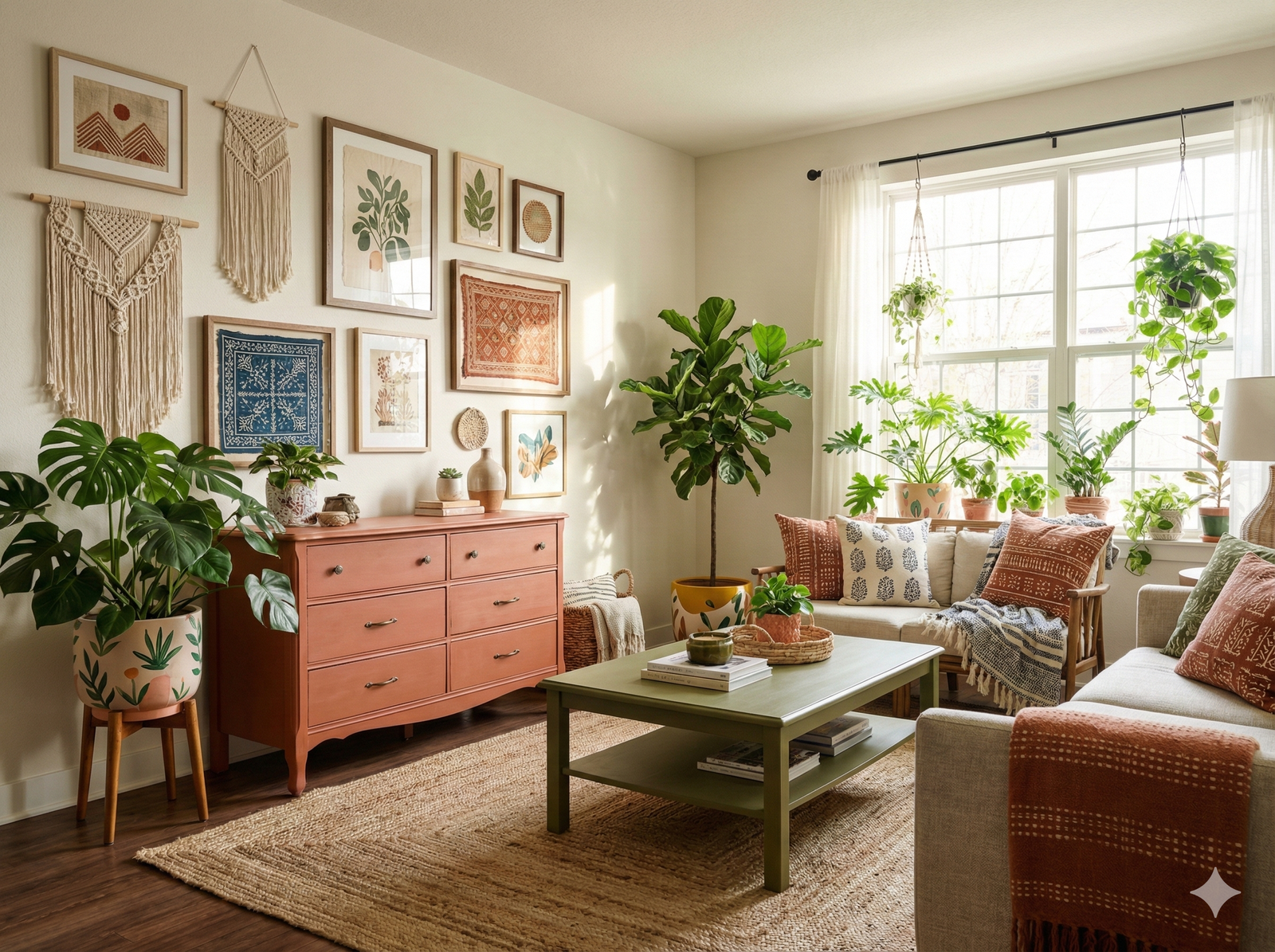
Room Decor Ideas DIY: Easy Projects to Transform Your Space
DIY room decor lets you create a beautiful space that feels like you without spending tons of money. You can make wall art, build shelves, paint furniture, or sew pillows with simple supplies from craft stores. Most projects take just a few hours and cost less than $50.
This guide shows you how to decorate every room in your home with easy DIY projects. You’ll learn what supplies to buy, how to start each project, and tips that make decorating simple. Whether you want to fix up your bedroom, living room, or kitchen, you’ll find ideas that work for your space and skill level.
Why DIY Room Decor Works Better Than Store-Bought
Making your own decorations gives you control over colors, sizes, and styles. Store shelves only have what everyone else buys. When you make things yourself, your room looks different from your neighbor’s house.
You Save Money on Every Project
Buying decor from stores costs three to five times more than making it yourself. A canvas painting at a home store might cost $80. You can make the same thing for $15 with paint and a blank canvas.
According to the U.S. Bureau of Labor Statistics, Americans spend an average of $2,000 per year on furniture and home decor. DIY projects can cut that cost by 60-70%.
Your Space Feels More Personal
Things you make with your hands mean more than things you buy. Each piece tells a story about what you like and what matters to you. Friends notice when decor feels personal instead of copied from a catalog.
DIY Projects Build Useful Skills
Every project teaches you something new. You learn to use tools, mix colors, and solve problems. These skills help with future projects around your house. What starts as decorating becomes fixing leaks and building furniture.
Getting Started With DIY Room Decor
You don’t need special skills to start decorating. Most projects need basic supplies you might already have. Start small with one project and build from there.
Essential Tools and Supplies Every DIYer Needs
Keep these items in a craft box:
- Hot glue gun and glue sticks
- Scissors and craft knife
- Paintbrushes in different sizes
- Acrylic paints in basic colors
- Measuring tape and ruler
- Sandpaper in fine and medium grits
- Picture hanging strips and nails
- Twine, ribbon, and string
These tools cost about $50 total and last for years. Buy them once and use them for every project.
Where to Find Cheap Materials
Dollar stores sell frames, vases, baskets, and candles for $1-5 each. Thrift stores have old furniture, books, and jars perfect for projects. Hardware stores cut wood to size for free when you buy it.
Nature gives you free supplies too. Collect branches, pinecones, rocks, and flowers from your yard or park. These natural items make beautiful decor that costs nothing.
Choosing Projects That Match Your Skill Level
Start with projects that need no tools. Arrange books by color. Make a gallery wall with photos. Fill jars with shells or buttons.
Move to projects that need basic tools next. Paint a frame. Hang floating shelves. Sew a simple pillow cover.
Save projects that need power tools or lots of steps for later. Build furniture. Install new light fixtures. Make built-in shelves.
DIY Wall Decor Ideas That Transform Empty Spaces
Walls make up most of what you see in a room. Empty walls make spaces feel cold and unfinished. The right wall decor adds color, texture, and personality.
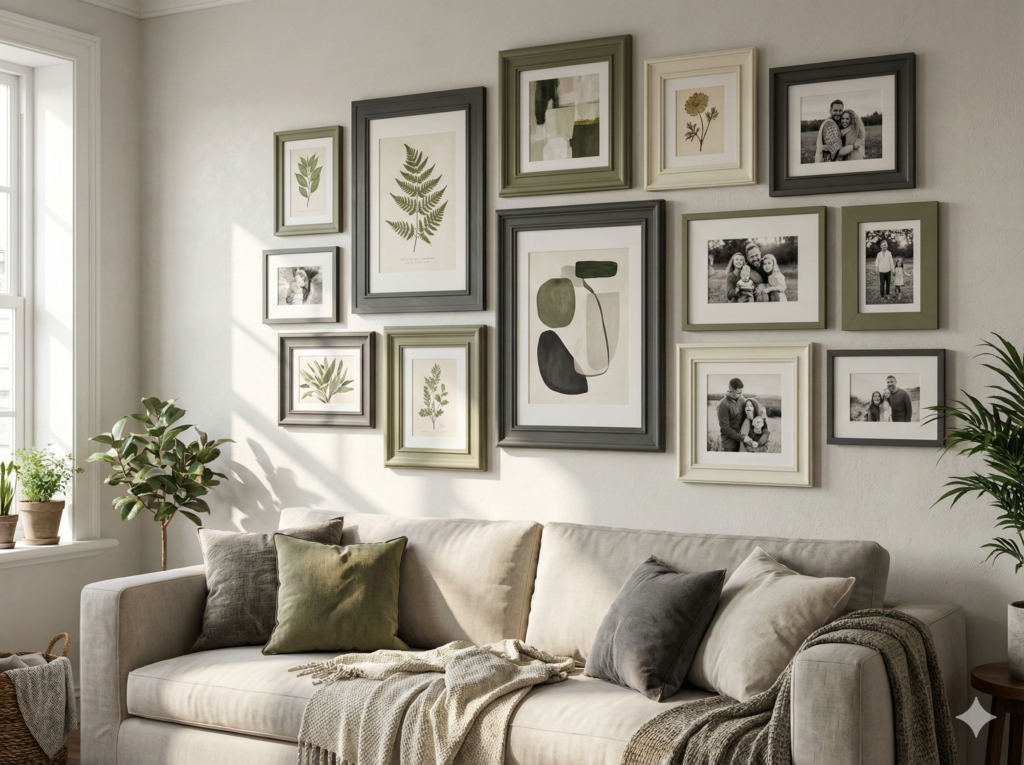
Create a Gallery Wall With Mixed Frames
Gallery walls look hard but follow easy rules. Buy 5-9 frames in different sizes from thrift stores. Paint them all the same color or leave them different for variety.
Steps to build your gallery wall:
- Lay frames on the floor in different arrangements
- Take a photo of the layout you like best
- Trace each frame on paper and tape paper to the wall
- Hang frames where the paper shows
- Remove paper and add your photos or art
Start with the biggest frame in the center. Add smaller frames around it. Keep 2-3 inches between each frame. Mix photos, prints, and quotes for interest.
Make Large Canvas Art for Under $20
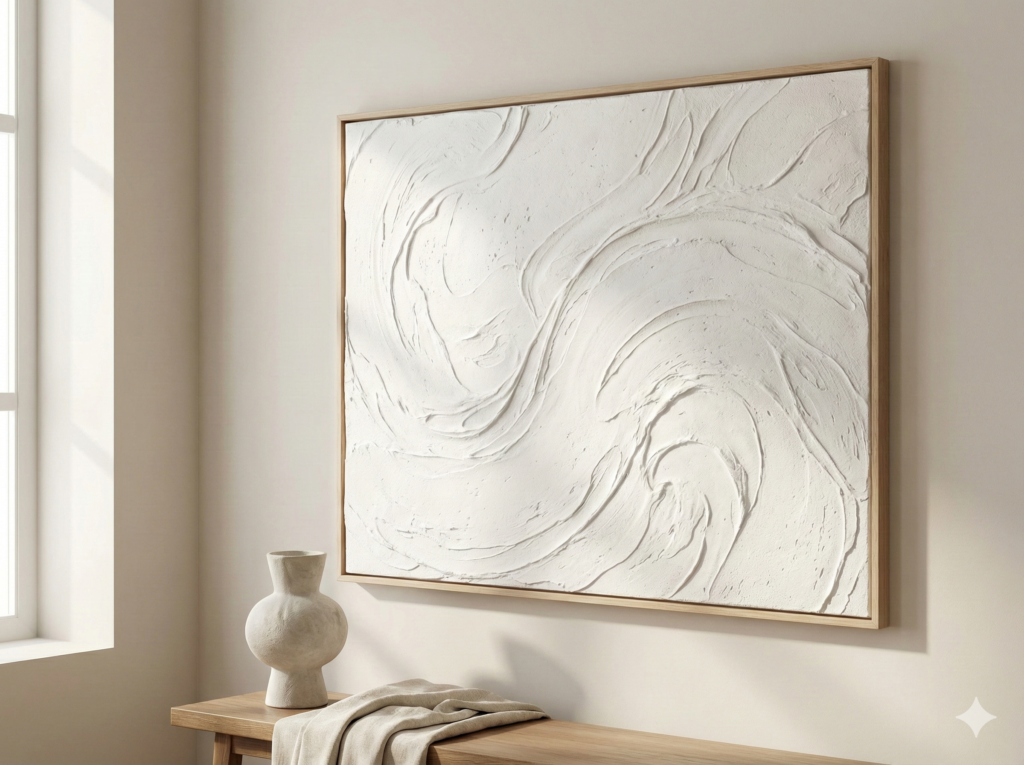
Big art makes big statements but costs $100+ in stores. Make your own for the cost of a blank canvas and paint.
Easy abstract painting method:
- Buy a large canvas (24×36 inches or bigger)
- Pick 3-4 paint colors that match your room
- Paint the whole canvas with the lightest color
- Add stripes, dots, or shapes with other colors
- Let each layer dry before adding the next
You can also tape off geometric shapes, pour paint and tilt the canvas, or use sponges to dab on texture. No painting skills needed—abstract art has no rules.
Build Floating Shelves for Display Space
Floating shelves hold plants, books, and small decorations. They add storage without taking floor space. According to Harvard University research, vertical storage increases usable space by up to 40% in small rooms.
Most hardware stores sell shelf boards for $10-20. Add floating shelf brackets that hide inside the shelf. The shelf looks like it sticks to the wall by magic.
Paint or stain the wood to match your room. Add small items in groups of three. Plants look great on shelves near windows. Books stand up or stack flat for different heights.
Design a Pegboard Organization Wall
Pegboards work in any room. They hold jewelry in bedrooms, tools in garages, or kitchen utensils above counters. Buy a pegboard sheet, paint it any color, and add hooks and baskets.
Mount the pegboard to the wall with spacers behind it. The spacers let you move hooks around. Change what you display whenever you want. Pegboards grow with your needs.
Hang Fabric or Tapestries as Soft Wall Art
Fabric adds softness to hard walls. Find sheets, curtains, or actual tapestries at thrift stores. Hang them with a curtain rod or thumbtacks hidden under the top edge.
Large scarves work well over beds. Vintage quilts add color in living rooms. Even pretty dish towels can frame in shadow boxes for kitchen art.
DIY Bedroom Decor Ideas for Better Sleep and Style
Your bedroom should feel calm and look pretty. Small changes make big differences in how well you sleep and how happy you feel waking up.
Update Your Headboard With Paint or Fabric
Headboards cost $200-500 new. Update what you have or make one from scratch for $30.
DIY fabric headboard:
- Cut plywood to the width of your bed
- Cut foam to cover the plywood
- Wrap fabric around the foam and plywood
- Staple fabric to the back
- Hang on the wall behind your bed
Pick fabric that matches your bedding. Velvet looks fancy. Cotton feels casual. Patterned fabric adds interest to solid-colored rooms.
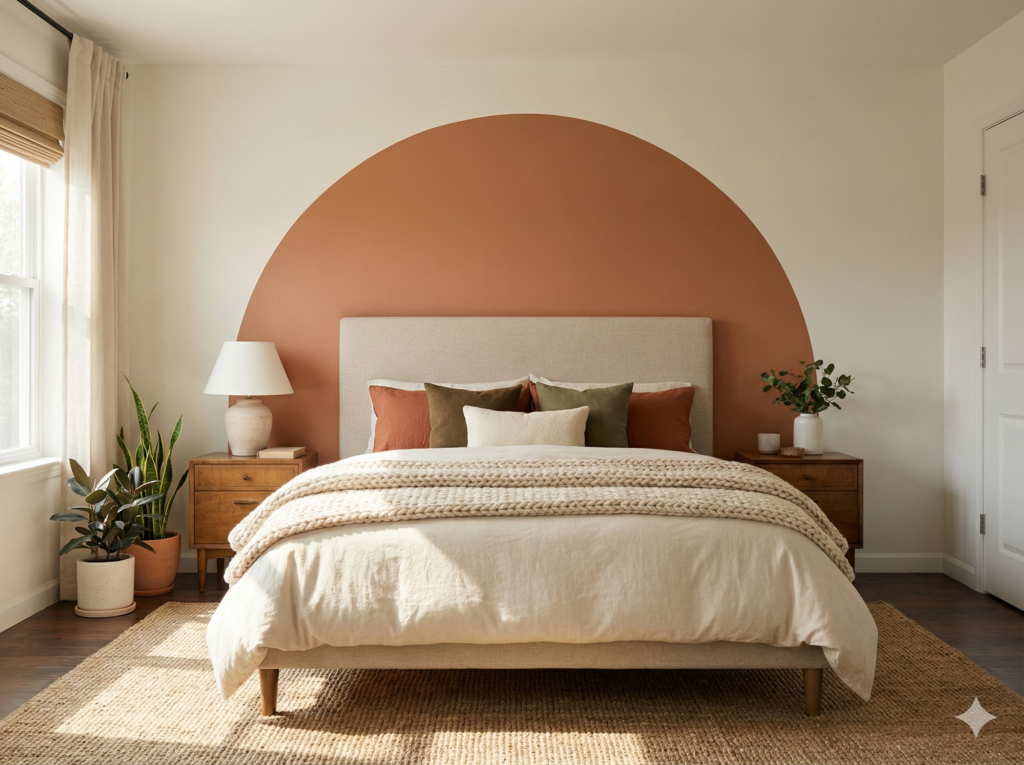
You can also paint a headboard shape right on the wall. Use painter’s tape to mark the outline. Paint inside the lines with two coats. Remove the tape when dry.
Make Custom String Lights Displays
String lights make bedrooms feel cozy. Hang them in new ways instead of just draping them across walls.
Try these ideas:
- Wrap lights around a ladder leaning against the wall
- Hang lights in a canopy over your bed
- Put lights inside glass jars for soft lamps
- Spell out words or shapes on the wall
- Weave lights through a macrame wall hanging
Battery-powered LED lights work best. They don’t get hot and you can put them anywhere without finding an outlet.
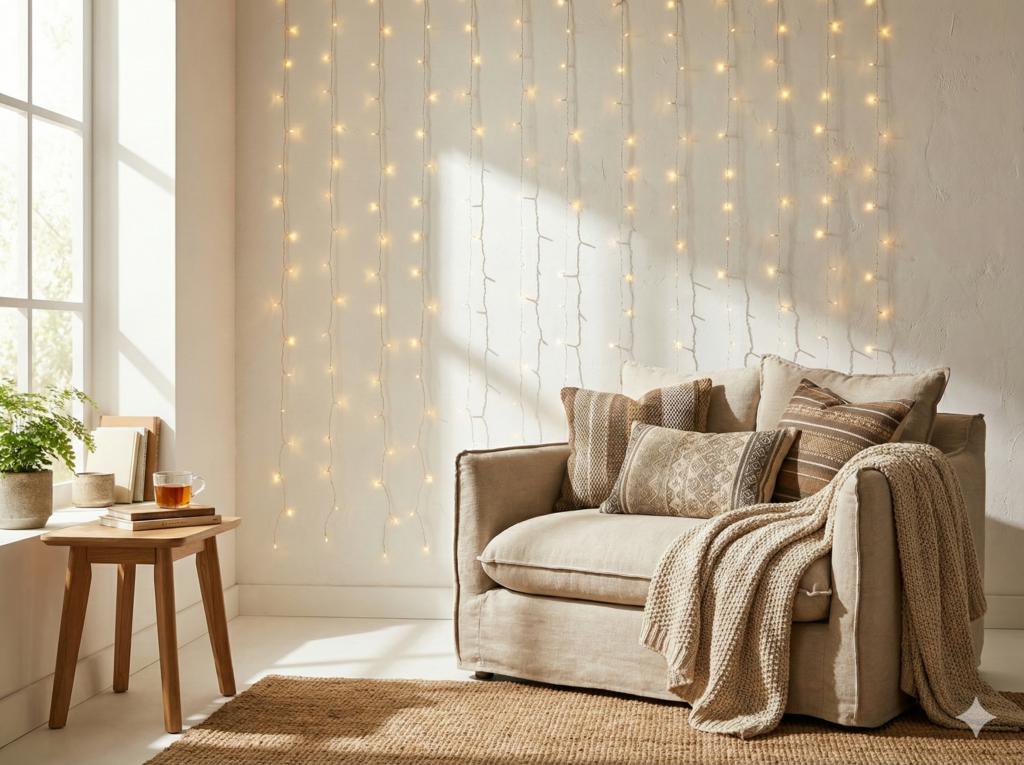
Create a Reading Nook With Pillows and Blankets
Every bedroom needs a spot for reading or relaxing that isn’t the bed. Use a corner, window seat, or even just a comfortable chair.
Add lots of pillows in different sizes. Layer blankets you can wrap up in. Put a small side table next to your spot for books and tea. Add a lamp for nighttime reading.
You can create cozy spaces throughout your home using soft textures and good lighting.
Design a Jewelry Display That’s Also Art
Jewelry tangles in boxes. Display it on the wall where you can see everything and grab what you need.
Easy jewelry display ideas:
- Hammer small nails in a pattern on the wall
- Hang an old picture frame with chicken wire inside
- Mount cabinet knobs on a painted board
- Use a branch in a vase with necklaces draped over it
- Install hooks under a floating shelf
Paint your display to match the wall or make it a different color that pops. Group jewelry by type or color for a cleaner look.
DIY Living Room Decor Ideas for Gathering Spaces
Living rooms get the most use and the most guests. These spaces need to look good and work hard. DIY decor makes living rooms feel welcoming without looking messy.
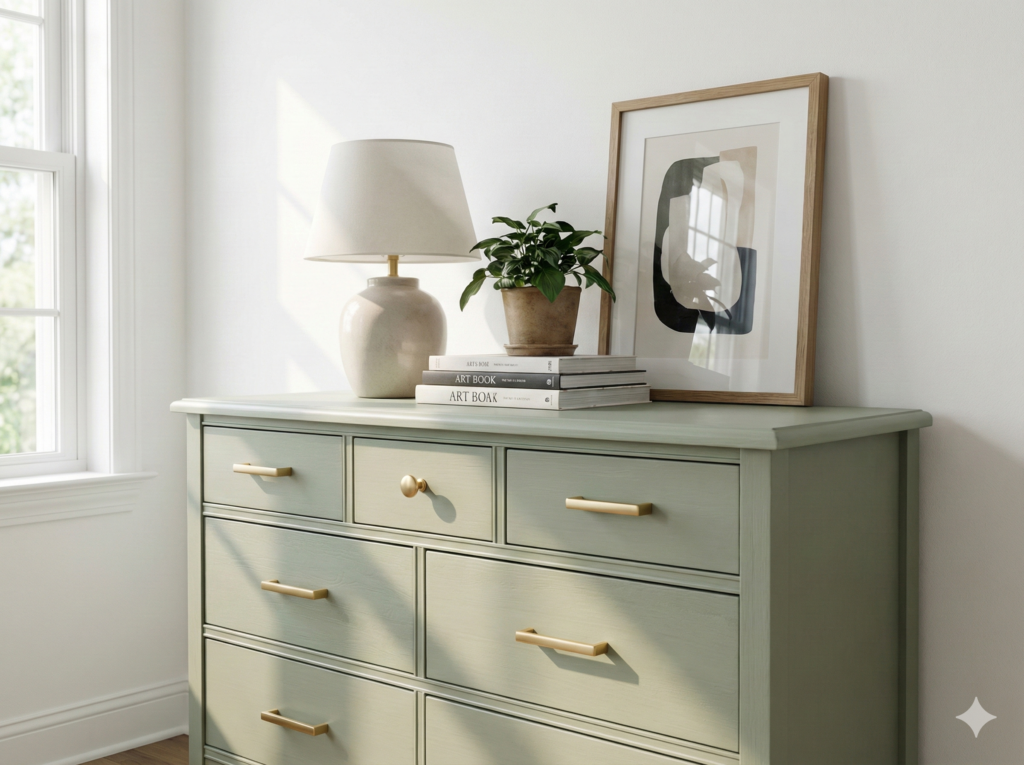
Refinish Old Furniture With Paint
Old furniture looks new again with paint. Coffee tables, side tables, and bookshelves all take paint well. Sand the surface first so paint sticks. Apply two coats of paint. Let each coat dry completely.
According to Environmental Protection Agency guidelines, using water-based acrylic paint indoors reduces harmful fumes. Choose low-VOC or no-VOC paints for better air quality.
Try these furniture painting ideas:
- Paint legs a different color than the top
- Add a pattern with tape and two colors
- Use chalk paint for a matte, vintage look
- Stencil designs on drawer fronts
- Add new knobs and handles after painting
Make Throw Pillows Without Sewing
Throw pillows cost $20-40 each. Make covers for $5 using fabric and no-sew methods.
No-sew pillow cover method:
- Cut fabric 2 inches bigger than your pillow on all sides
- Place pillow in the center of fabric
- Tie opposite corners together in a knot
- Tuck the knot under the pillow
- Repeat with other two corners
You can also use fabric glue or iron-on hem tape to seal edges. Old sweaters make cozy pillow covers. Just cut them to size and glue the edges closed.
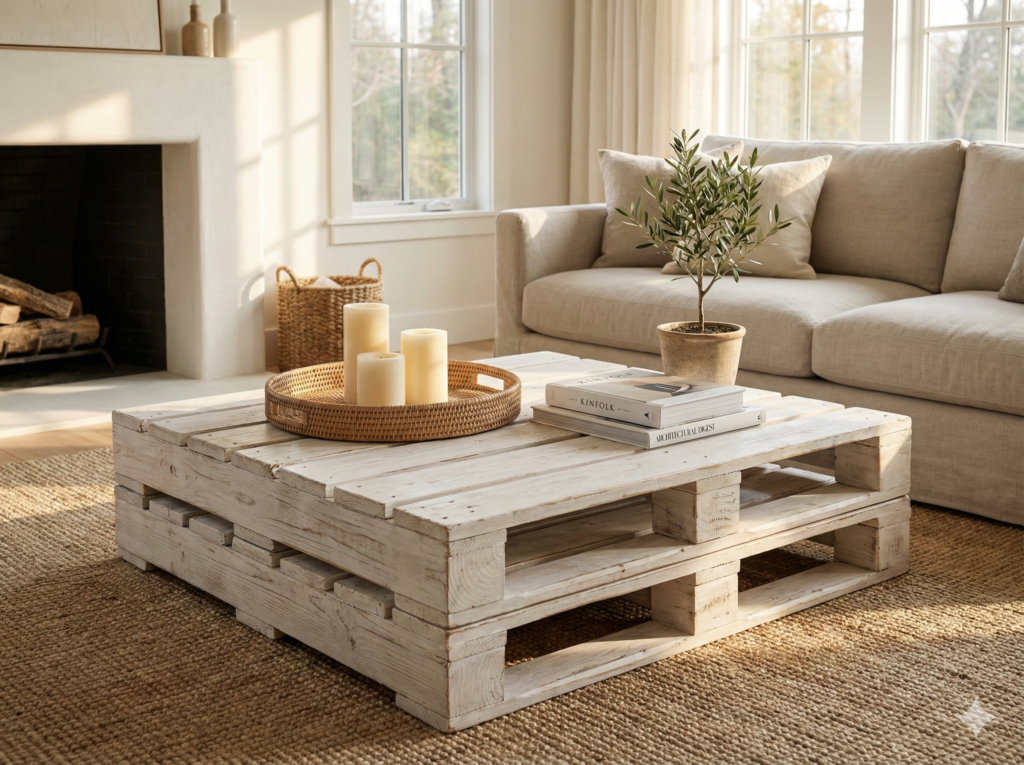
Build a Coffee Table From Old Pallets
Wood pallets are free or cheap at hardware stores. They make great coffee tables, side tables, and outdoor furniture. Sand the pallet smooth. Add wheels on the bottom for easy moving. Paint or stain to match your room.
Stack two pallets for a taller table. Add a glass top for a smooth surface. Store blankets or magazines in the pallet openings.
Create a Photo Ledge for Easy Picture Swapping
Photo ledges let you change photos without taking frames off walls. They work like mini shelves that hold frames at an angle.
Buy crown molding from a hardware store. Cut it to your desired length. Paint it to match your wall. Mount it to the wall with the shelf part facing out. Lean frames against the wall on the ledge.
Make several ledges at different heights. Mix frame sizes and add small plants or candles between photos. Swap photos whenever you want without making new holes in the wall.
Design a Console Table Behind Your Sofa
The space behind sofas often goes unused. Add a narrow console table for lamps, plants, or decor. Build one from a long board and two brackets or hairpin legs.
Console tables work in small spaces because they’re skinny. Most are only 10-12 inches deep. They add function without blocking walking paths.
Style your console with items in odd numbers. Three vases look better than two or four. Add different heights for visual interest. Include one item that makes you smile when you see it.
DIY Kitchen Decor Ideas for Function and Style
Kitchens need to work well first and look good second. DIY kitchen decor adds personality without getting in the way of cooking.
Update Cabinet Hardware for an Instant Change
New cabinet knobs and pulls change how your whole kitchen looks. Remove old hardware. Fill old holes with wood filler if new hardware doesn’t match the holes. Paint or stain over the filler.
Hardware comes in every style from modern to rustic. Brass adds warmth. Black adds contrast. Silver keeps things simple. Mixing styles works too—use different hardware on upper and lower cabinets.
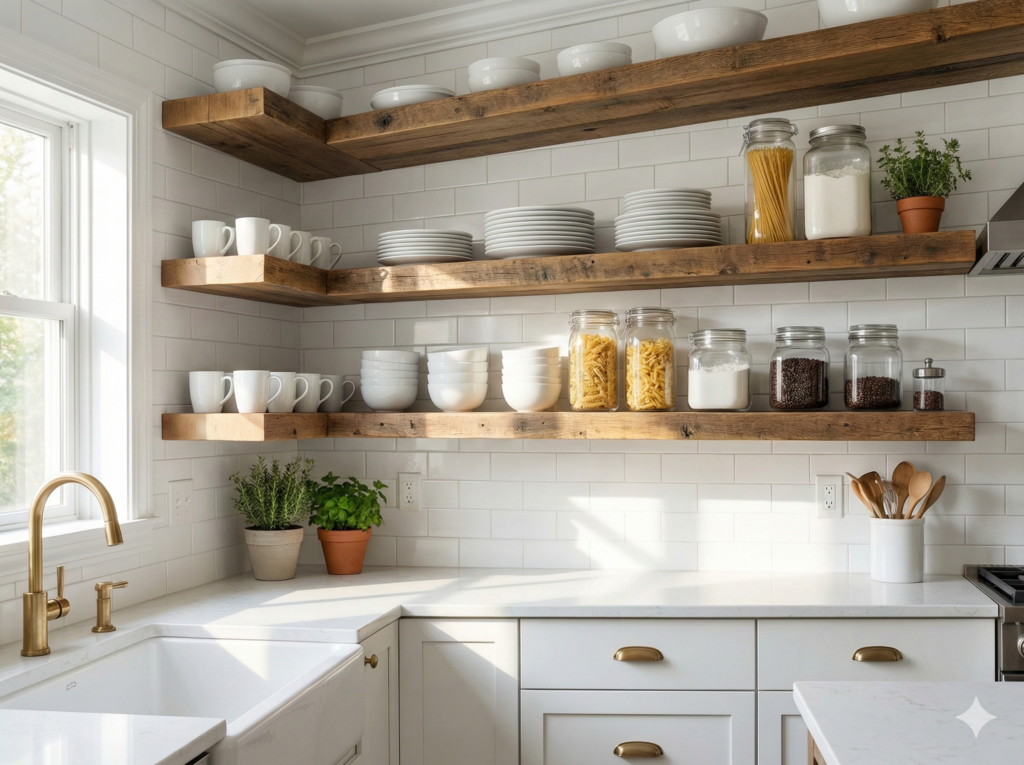
Create Open Shelving From Floating Brackets
Replace upper cabinet doors with open shelves. You see your dishes and glasses instead of hiding them. Open shelving makes small kitchens feel bigger.
Remove cabinet doors. Paint or wallpaper the inside back wall for color. Add plates, bowls, and cups in stacks. Include a plant or pretty pitcher for decoration.
Only display items you actually use. Open shelves collect dust, so things need to get washed regularly anyway. This system works when you choose function over just looks.
Make a Magnetic Knife Strip From Wood
Knife blocks take up counter space. Magnetic strips mount on the wall and hold knives safely. Buy a strip of strong magnets from a hardware store. Glue magnets to a piece of stained wood. Mount the wood to the wall. Your knives stick to the magnets and look like art.
Design a Command Center for Family Organization
Command centers keep calendars, keys, mail, and notes in one spot. Hang a large calendar or chalkboard on the wall. Add hooks below for keys and bags. Include a basket or wall pocket for mail.
Paint a section of wall with chalkboard paint for notes and lists. Add a small shelf for pens and phone chargers. Everyone knows where to find what they need.
You can find more organization ideas for small spaces that work in kitchens and throughout your home.
DIY Bathroom Decor Ideas That Add Spa Vibes
Bathrooms should feel clean and calm. Small decorating changes make daily routines more pleasant.
Create Storage With Baskets and Jars
Bathrooms never have enough storage. Add baskets under the sink for cleaning supplies. Use jars on the counter for cotton balls and swabs. Hang baskets on the wall for extra toilet paper.
Label jars with paint pens or tags. Group similar items together. Clear jars show what’s inside. Colored jars add style while hiding contents.
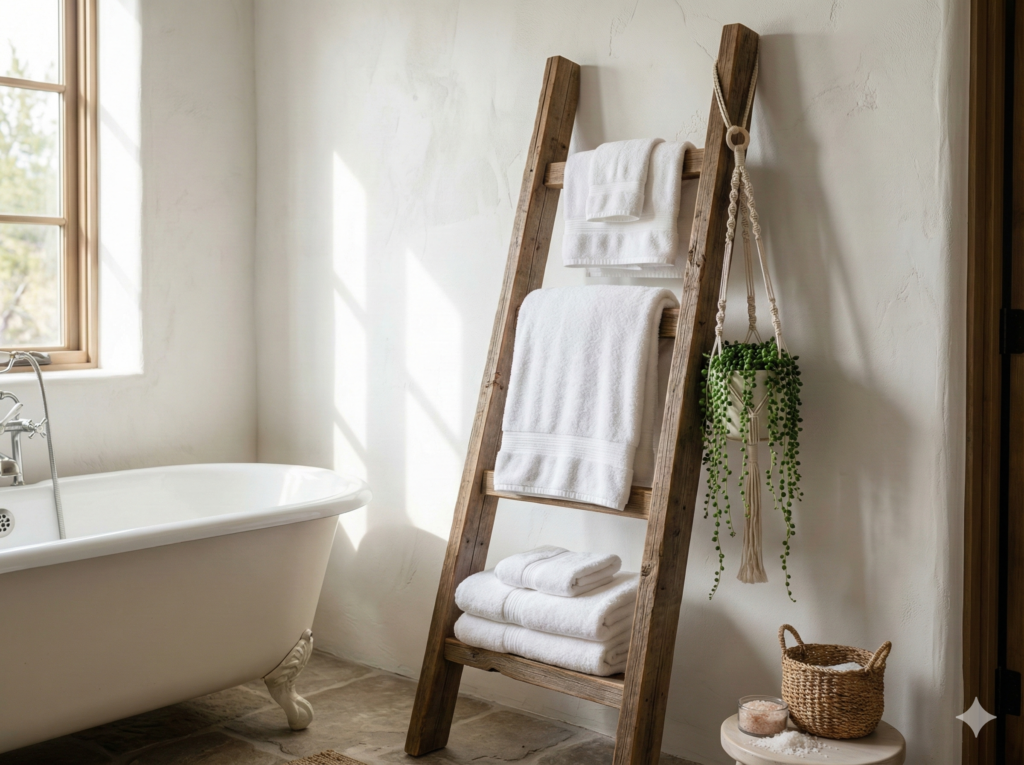
Make a Towel Ladder From Branches
Towel ladders lean against the wall and hold multiple towels. Find a thick branch or buy a piece of lumber. Cut 4-5 shorter pieces for rungs. Drill holes in the long piece. Glue rungs into the holes.
Stain or paint your ladder to match the bathroom. Lean it against the wall at an angle. Roll towels and drape them over the rungs. The ladder takes up less space than a towel bar but holds more towels.
Update Your Mirror With a Wood Frame
Builder-grade mirrors are plain and boring. Add a frame around yours without removing it from the wall. Cut trim boards to fit around the mirror edges. Miter the corners at 45-degree angles. Glue the frame directly to the wall around the mirror. Paint or stain to match your bathroom.
The frame makes a basic mirror look expensive. It adds warmth to tile and fixture-heavy bathrooms.
Design a Tray for Counter Organization
Bathroom counters collect clutter fast. Put daily items on a pretty tray to corral the mess. Trays make counters look organized even when they’re full.
Use a wooden tray, a small cutting board, or even a picture frame with the glass removed. Keep soap, lotion, and hand cream on the tray. Add a small plant or candle for decoration.
DIY Lighting Ideas That Change Your Mood
Lighting affects how rooms feel more than any other single thing. The right light makes you feel awake or sleepy, happy or calm.
Make Pendant Lights From Baskets or Bowls
Pendant lights hang from the ceiling and focus light downward. Turn baskets, colanders, or bowls into pendant lights for under $30.
Basic pendant light conversion:
- Buy a pendant light cord kit from a hardware store
- Drill a hole in the bottom of your basket or bowl
- Thread the cord through the hole
- Attach the light socket according to kit directions
- Add a light bulb and plug it in
Wire baskets make great pendants because light shines through the holes. Paint the inside of solid bowls white so they reflect more light.
Create a Lamp From Almost Anything
Table lamps need a base, a socket, a shade, and a cord. Hardware stores sell lamp-making kits with everything except the base. Turn bottles, books, wooden blocks, or vintage items into lamp bases.
Drill a hole through your base for the cord. Follow the kit instructions to attach the socket. Add a shade that fits the size of your base. Bigger bases need bigger shades for the right proportions.
Update Lamp Shades With Fabric or Paint
Old lamp shades look new with fresh fabric. Remove the old fabric if there is any. Wrap new fabric around the shade. Glue the edge down with fabric glue. Trim excess fabric at the top and bottom.
You can also paint shades with acrylic paint. Use painters tape to make patterns. Paint the inside of shades white or gold to reflect more light.
Install Dimmer Switches for Mood Control
Dimmer switches replace regular light switches and let you control how bright lights get. According to the U.S. Department of Energy, dimming lights by just 25% saves energy and extends bulb life by up to four times.
Bright lights wake you up. Dim lights help you relax. Install dimmers in bedrooms, living rooms, and dining rooms where you want lighting flexibility.
Most dimmers install in 15 minutes. Turn off the power at the breaker box. Remove the old switch. Connect the new dimmer switch wires to the same wires. Mount the dimmer and turn the power back on.
DIY Decor Ideas for Small Spaces
Small rooms need smart decorating. Every choice matters more when you don’t have much space to work with.
Use Mirrors to Make Rooms Feel Bigger
Mirrors reflect light and views, making spaces feel twice as large. Hang a big mirror across from a window. Put mirrors behind lamps to double the light. Lean a tall mirror against the wall in a corner.
Group small mirrors together like a gallery wall. Mirror tiles stick directly to walls without frames. The more mirrors you add, the bigger your room feels.
Choose Furniture That Does Two Jobs
Small spaces need furniture that works hard. Ottomans open up for storage. Beds have drawers underneath. Tables fold down when not in use.
Buy less furniture that does more. A storage bench works as seating, storage, and a coffee table. A desk becomes a dining table. A bookshelf divides one room into two areas.
Go Vertical With Wall Storage
Floor space runs out fast. Walls offer lots of unused space. Add floating shelves up high for items you don’t use daily. Hang organizers on the backs of doors. Mount a pegboard for tools or craft supplies.
Stack items on shelves instead of spreading them out. Use the full height of your walls, not just the middle section. Eyes move up naturally, making rooms feel taller.
Keep Decor Simple and Light
Small spaces feel crowded with too much stuff. Choose fewer, bigger decor pieces instead of lots of small things. One large plant makes more impact than five small ones. One big painting beats ten small frames.
Light colors make spaces feel open. White, cream, light gray, and soft pastels reflect light. Dark colors absorb light and make rooms feel smaller. Save dark colors for accent walls or small doses.
Budget-Friendly DIY Decor Tips That Save Money
Beautiful rooms don’t require big budgets. Smart shopping and planning stretch every dollar.
Shop Your Own Home First
Look at what you already own before buying anything new. Move items from one room to another. Decor that blends into your bedroom might stand out in your living room. Rearranging costs nothing and makes spaces feel new.
Stack books in different ways. Flip art to face different directions. Switch throw pillows between rooms. These small changes refresh your space without spending money.
Buy Materials on Sale or With Coupons
Craft stores run sales every week. Sign up for email lists to get coupons. Buy paint when it’s marked down. Stock up on supplies when they’re 40-50% off.
Hardware stores mark down lumber with small flaws. These pieces work fine for projects you’ll paint anyway. Ask about their discount section before shopping full-price areas.
Focus on One Room at a Time
Decorating your whole house at once costs thousands. Pick one room and do it well. Finish that space completely before moving to the next room.
Starting and finishing one room feels more satisfying than having five half-done rooms. You get to enjoy your finished space while saving for the next project. For ideas on creating a cozy bedroom, start with the space where you spend the most time.
Do the Work Yourself Instead of Hiring Help
Labor costs more than materials for most projects. Painting a room costs $300-500 if you hire someone. Paint and supplies cost $50-100 if you do it yourself.
Watch video tutorials before starting new projects. Most DIY work needs patience more than skill. Take your time and fix mistakes as you go. The money you save makes mistakes worth it.
Common DIY Decor Mistakes to Avoid
Learning what not to do saves time and money. These mistakes trip up most beginners.
Starting Too Big or Too Complicated
Your first project shouldn’t be building a deck or remodeling a bathroom. Start with something small like painting a frame or making a pillow. Success builds confidence for bigger projects later.
Choose projects with few steps and common tools. Save complicated builds for when you’ve finished 5-10 easier projects. Skills develop with practice, not wishful thinking.
Not Measuring Before Buying or Building
Measure your space before shopping. Write measurements down and bring them to the store. Wall space that looks big enough for a shelf might be too small when you actually measure it.
Measure twice before cutting anything. Wasted materials cost money and time. A tape measure costs $5 and prevents expensive mistakes.
Forgetting to Prep Surfaces for Paint
Paint doesn’t stick to dirty or glossy surfaces. Clean furniture before painting. Sand glossy finishes so paint has something to grip. Primer helps paint stick to tricky surfaces.
Skipping prep means your paint peels off in a few months. You end up doing the project twice. Twenty minutes of prep saves hours of fixing later.
Buying Cheap Tools That Don’t Work Well
Dollar store scissors don’t cut fabric. Cheap paintbrushes leave streaks and loose bristles. Bad tools make easy projects feel hard.
Buy decent tools even if they cost a bit more. Good scissors last for years. Quality paintbrushes paint smoother and wash clean for reuse. The right tools make work faster and results better.
Not Planning Layout Before Hanging Things
Holes in walls are permanent until you patch them. Plan your gallery wall or shelf layout on paper first. Use painter’s tape on the wall to mark where things go. Step back and look before making holes.
Templates help too. Trace frames on paper and tape the paper to the wall. You can move paper around until the arrangement looks right. Then hang the real frames where the paper shows.
How to Choose DIY Projects That Match Your Style
Your decor should feel like you, not like a magazine. Pick projects that match how you want your home to feel.
Figure Out What Styles You Like
Look at rooms you love in photos. Notice what they have in common. Do they use lots of color or stick to neutrals? Do they mix old and new items? Are they full of stuff or pretty simple?
Your favorite rooms show your style. Copy elements from them in your own projects. If you love farmhouse style, add wood tones and vintage items. If you prefer modern looks, choose clean lines and simple shapes.
Consider How You Actually Use Each Room
Pretty rooms that don’t work for your life are frustrating. If you have kids and pets, white couches are a bad choice no matter how pretty they look. If you cook a lot, you need open shelving you can actually reach.
Decor should make your life easier, not harder. Choose projects that solve problems while looking good. Form follows function in the best rooms.
Mix High and Low Budget Items
You don’t need to DIY everything. Mix handmade items with store-bought pieces. Save your energy for projects that make the biggest visual impact. Buy boring items that no one really notices.
Make artwork and decorative pieces. Buy basics like good mattresses and comfortable chairs. Spending money wisely and making things smartly creates the best rooms.
Let Your Personality Show
Rooms should tell your story. Include things you love even if they don’t match perfectly. Travel souvenirs, family photos, collections, and hobbies all deserve space in your home.
Perfect magazine rooms often feel cold because no one really lives in them. Real homes have personality. DIY projects let you make exactly what you want instead of settling for what stores sell.
Resources and Where to Find DIY Inspiration
Good ideas come from many places. Knowing where to look helps when you’re ready to start a new project.
Online Communities and Video Tutorials
YouTube has thousands of DIY videos that show every step. Search for your specific project and watch a few videos before starting. Seeing someone else do it first makes you more confident.
Pinterest helps you collect ideas in one place. Save photos you like to boards organized by room. When you’re ready to decorate, you already have a collection of ideas you love.
Thrift Stores and Estate Sales
Second-hand stores have items perfect for DIY projects. Old furniture, frames, books, and jars cost almost nothing. Look past the current condition and imagine what items could become.
Estate sales happen when someone sells everything in their home. You find vintage items at low prices. Get there early for the best selection. Bring cash because many sales don’t take cards.
Hardware Stores and Their Free Workshops
Home improvement stores teach free classes on weekends. Learn to tile, build shelves, or use power tools. Taking a class builds confidence for home projects. You can ask questions and practice before working at home.
Staff at hardware stores answer questions about projects. Describe what you want to build and they’ll help you find the right materials and tools. Their advice is free and usually pretty helpful.
Nature and Your Own Backyard
Branches, rocks, shells, and pinecones all make beautiful decor. Collect natural items during walks or trips. Bring them home and incorporate them into your projects.
Natural elements add texture and interest that store-bought items lack. They cost nothing and no one else has the exact same pieces. Each item is special because you chose it yourself.
Final Thoughts
DIY room decor transforms your house into a home that feels like you. Starting is easier than you think. Pick one small project from this guide and try it this weekend. You’ll gain confidence with each finished piece.
Remember that perfect isn’t the goal—personal is. Your handmade decor tells your story better than anything you could buy. Mistakes teach you what works and what doesn’t for next time.
The best part about DIY decorating is that you can change it whenever you want. If you get tired of something, paint over it or remake it differently. Your home grows and changes with you.
Start with what you have, add what you can make, and buy only what you really need. This approach creates cozy spaces that work for your life while saving money. Grab some supplies and make your first project today. Your walls are waiting for something beautiful that only you can create.