
Finished Basement Ideas
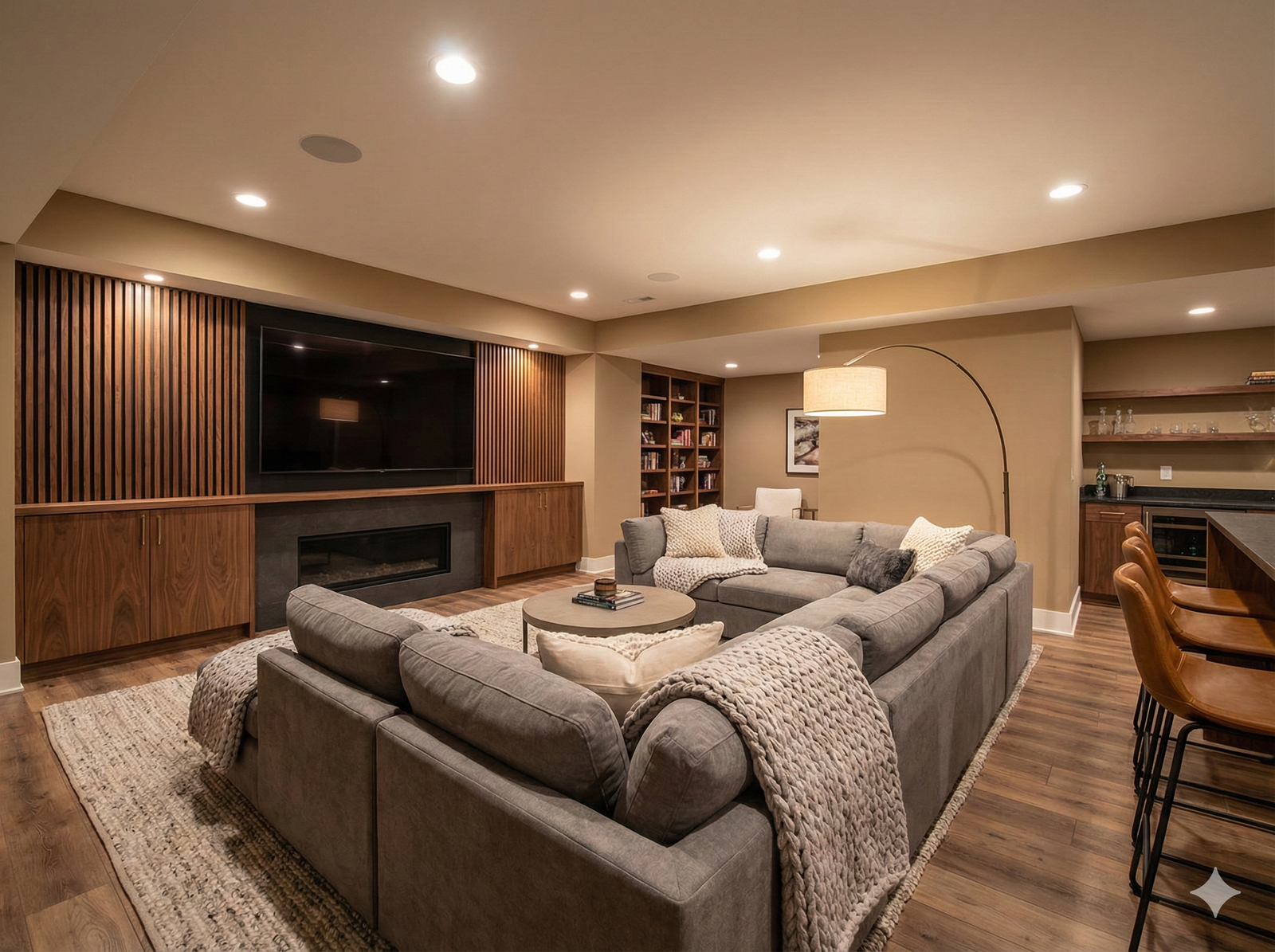
A finished basement can add 20,000 to 30,000 dollars to your home’s value, according to the National Association of Realtors. But beyond money, it gives you extra room to work, play, or relax. Whether you want a cozy family room, a home gym, or a rental suite, your basement holds tons of potential.
This guide walks you through the best finished basement ideas. You’ll learn about different room types, design tips, budget options, and how to make the space feel bright and welcoming. Let’s turn that cold, dark basement into your favorite room.
Why Finish Your Basement?
Finishing your basement isn’t just about adding square footage. It’s about creating a space that fits your life.
More Living Space for Growing Families
Kids need room to play. Teens want a hangout spot. Parents deserve a quiet corner. A finished basement gives everyone their own area without moving to a bigger house.
You can set up a playroom downstairs while keeping toys out of the living room. Or create a homework station where kids focus better. The basement becomes the overflow space that makes your whole home work better.
Higher Home Value
Real estate experts say a finished basement can return 70% of your investment when you sell. That’s better than many home improvements.
Buyers love move-in-ready spaces. A furnished basement with proper lighting, flooring, and walls shows better than an empty concrete room. It helps them picture how they’ll use the space.
Extra Income Potential
Many homeowners turn basements into rental units. A small apartment with a bathroom and kitchenette can bring in 500 to 1,500 dollars per month, depending on your area.
Check local laws first. Some cities require separate entrances or specific ceiling heights for rental units. But if it works, a basement apartment pays for itself over time.
Planning Your Finished Basement
Good planning saves money and headaches later. Start with these steps before you pick paint colors.
Check for Moisture Problems
Basements leak. It’s what they do. Before finishing anything, fix water issues.
Look for:
- Puddles or damp spots on the floor
- White powder on walls (called efflorescence)
- Musty smells
- Cracks in the foundation
The Environmental Protection Agency says moisture control is critical for preventing mold. Install a dehumidifier, seal cracks, and make sure gutters direct water away from your foundation.
Don’t skip this step. Water ruins finished basements fast.
Measure Ceiling Height
Building codes usually require 7 feet of ceiling height for living spaces. Some cities want 7.5 feet.
Measure from the floor to the lowest pipe or beam. If you’re tight on space, consider these options:
- Reroute pipes along walls instead of across the ceiling
- Use recessed lighting instead of hanging fixtures
- Choose low-profile flooring
Short ceilings feel cramped, but smart design helps. Light colors and minimal furniture keep the space open.
Understand Local Building Codes
Every city has rules about basements. You might need:
- Permits for electrical or plumbing work
- Egress windows for bedrooms (emergency exits)
- Specific insulation ratings
- Fire-rated materials
Call your building department before starting. Permits cost money, but working without them costs more if you have to redo everything later.
Set a Realistic Budget
According to HomeAdvisor, finishing a basement costs between 30 and 75 dollars per square foot. A 1,000 square foot basement runs 30,000 to 75,000 dollars.
Your costs depend on:
- How much plumbing or electrical work you need
- Flooring type (carpet is cheaper than hardwood)
- Whether you do some work yourself
- How fancy you want the finishes
Save 10% extra for surprises. Old houses always have hidden issues.
Best Finished Basement Ideas by Room Type
Let’s look at specific ways to use your basement. Pick what fits your family best.
Family Room and Entertainment Space
Most people turn basements into family rooms. It’s the obvious choice, and for good reason.
Home Theater Setup
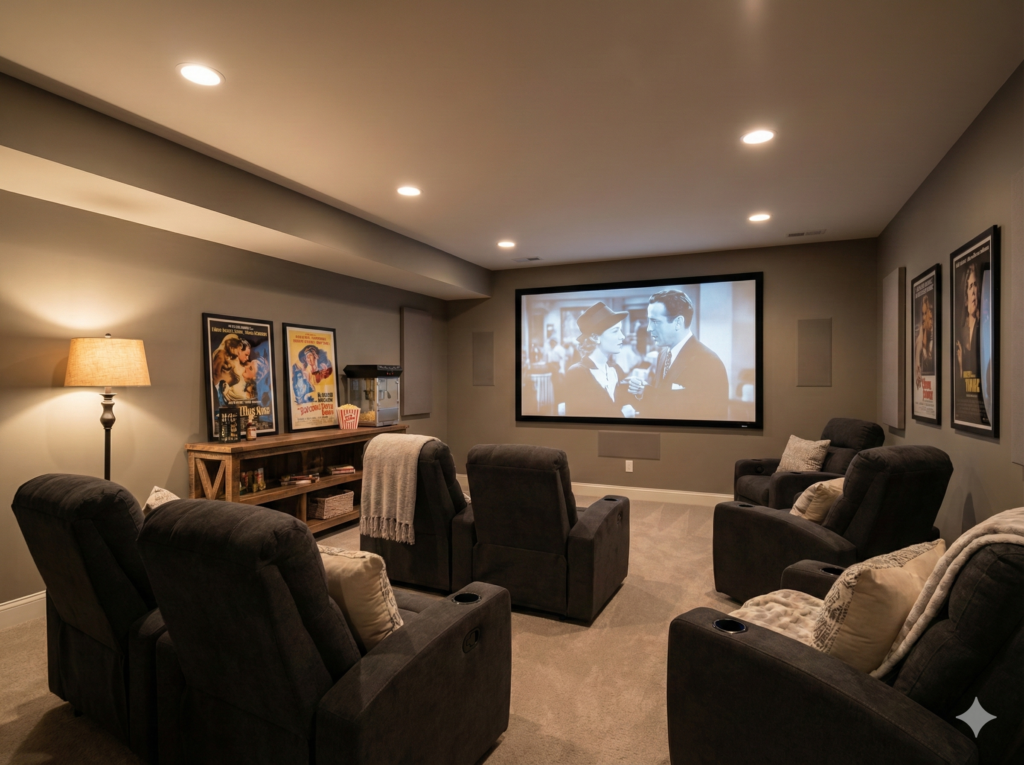
Dark basements make perfect movie rooms. You don’t need expensive equipment to create a theater feel.
Start with:
- A large TV or projector and screen
- Comfortable seating (sectional sofas or recliners)
- Blackout curtains if you have windows
- Sound-absorbing materials like rugs and curtains
Add theater-style lighting on dimmers. Rope lights along the baseboards give that cinema glow without glaring on screens.
Skip the expensive surround sound if you’re on a budget. A good soundbar works fine for most people.
Game Room for All Ages
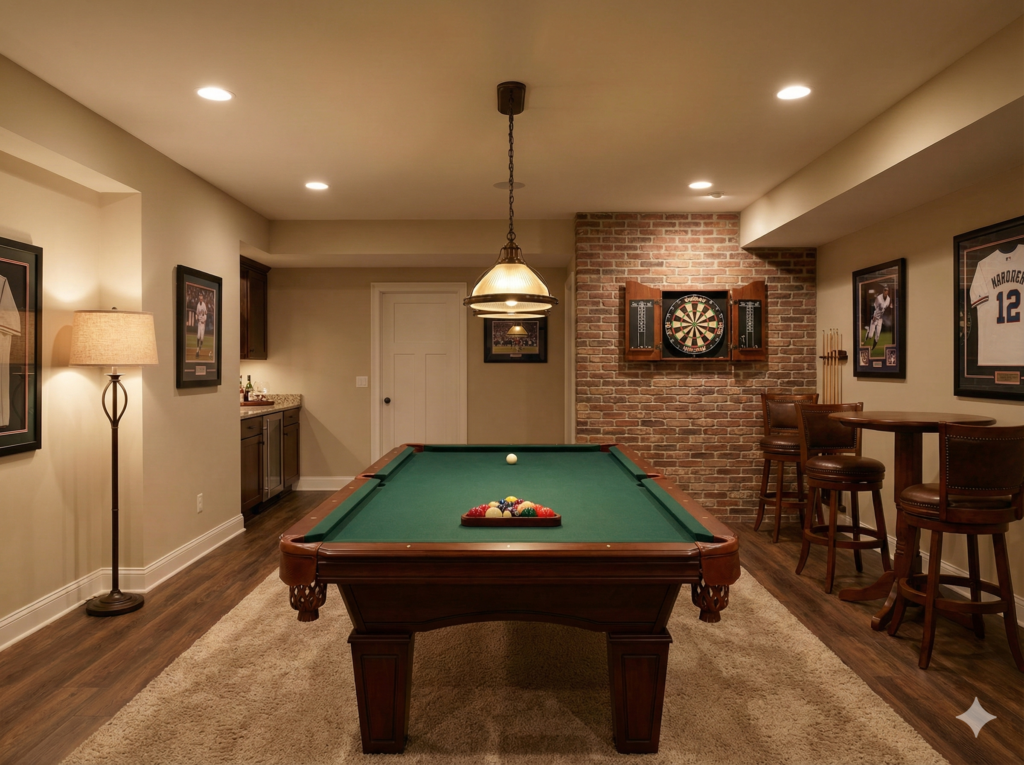
Game rooms keep everyone entertained. Set up different zones for different activities.
Include:
- Pool table or ping pong table
- Video game station with comfy chairs
- Board game area with a large table
- Bar area or snack station
Use area rugs to define each zone. This makes the big space feel organized instead of cluttered.
Storage matters in game rooms. Built-in shelves or cabinets hide games, controllers, and equipment when not in use.
Kids’ Playroom
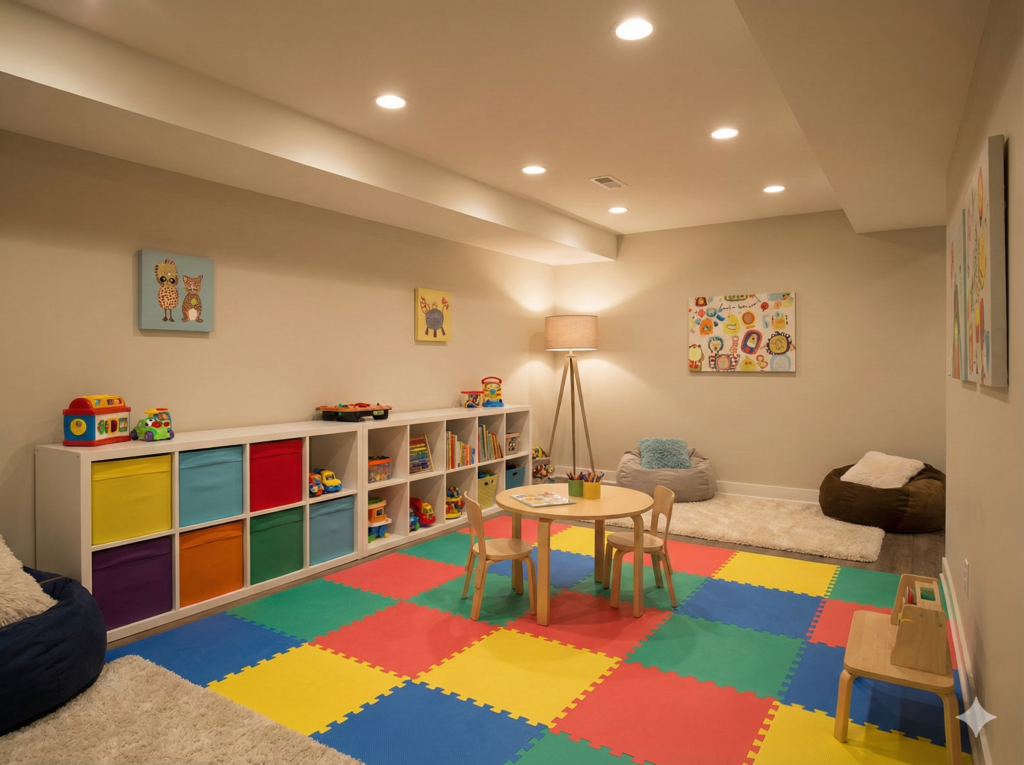
Give kids their own space, and they’ll stay out of your hair. A basement playroom contains the mess.
Make it work:
- Use washable paint on walls (they’ll get dirty)
- Choose durable flooring like vinyl or rubber tiles
- Add tons of storage for toys
- Include a craft or homework table
- Mount a TV for educational shows or movies
Safety first with kids’ spaces. Cover outlets, pad sharp corners, and secure heavy furniture to walls.
Keep one area open for active play. Kids need room to run around, build forts, or practice cartwheels.
Home Office and Workspace
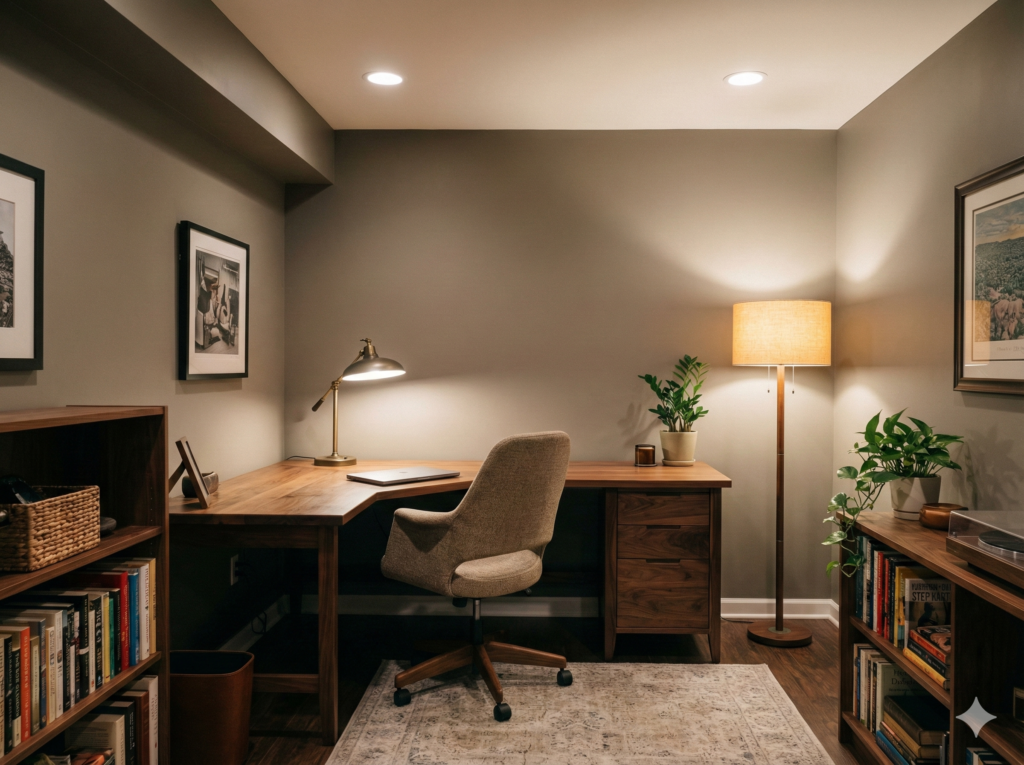
Working from home is normal now. A basement office gets you away from household noise.
Quiet Home Office
Basements stay naturally quiet. They’re below street level and away from main living areas.
Set up your office:
- Position your desk near a window if possible
- Add bright overhead lights and a desk lamp
- Use light wall colors to counter the basement feel
- Include plenty of outlets for equipment
- Add a comfortable chair (you’ll sit there for hours)
Consider soundproofing if your basement shares a wall with a utility room. Foam panels or thick curtains absorb noise.
Temperature matters too. Basements run cold, so add a space heater for winter.
Creative Studio
Artists, crafters, and hobbyists love basement studios. You can make a mess without worrying.
Your studio needs:
- Good lighting (critical for detailed work)
- Large work surfaces
- Storage for supplies and materials
- Easy-to-clean flooring
- Ventilation if you use paints or chemicals
Set up zones for different activities. Painters need an easel area. Sewers need cutting tables. Woodworkers need tool storage.
Install a utility sink if your hobby gets messy. Cleaning up downstairs keeps the rest of your house cleaner.
Guest Suite and Bedroom
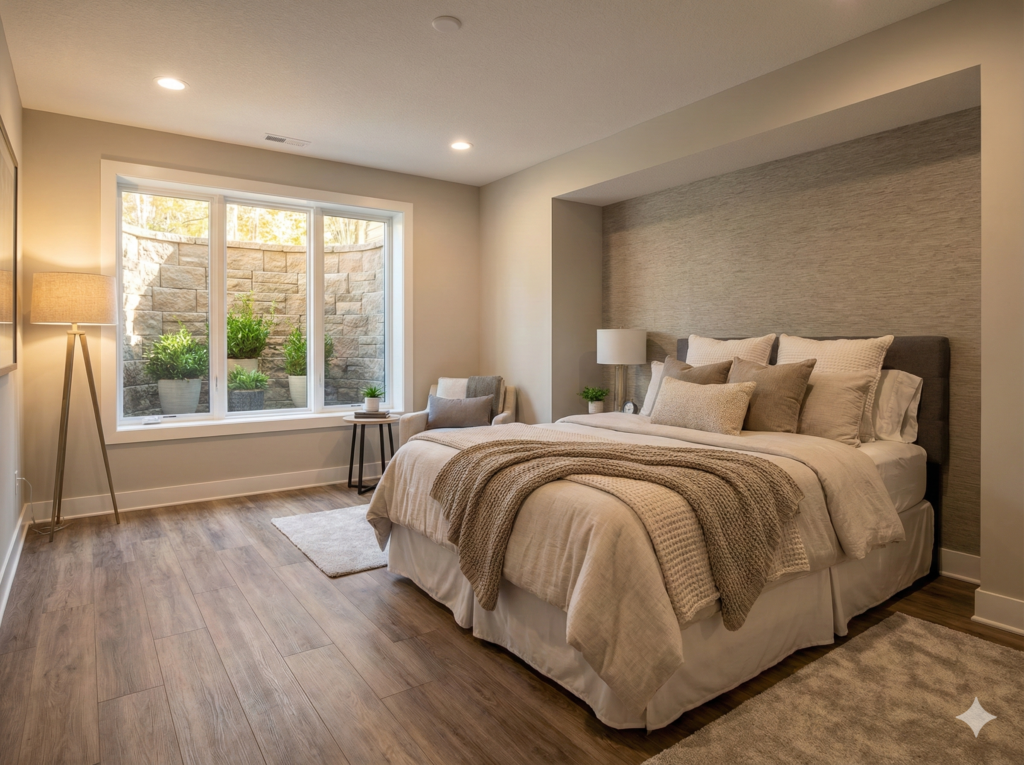
Turn your basement into a private guest area. It’s like having an in-law suite without building an addition.
Guest Bedroom Requirements
A basement bedroom needs certain features to be legal and comfortable.
Must-haves:
- Egress window (emergency exit)
- Closet space
- Good lighting
- Climate control
The egress window requirement is serious. Building codes mandate windows big enough for firefighters to enter or people to escape. Usually, this means at least 5.7 square feet of opening.
Add a bathroom nearby if possible. Guests don’t want to walk upstairs in the middle of the night.
Decorate like a hotel room. Keep it simple, neutral, and comfortable. Add bedside lamps, a luggage rack, and a small dresser.
In-Law Suite or Rental Unit
A full basement apartment includes a bedroom, bathroom, and small kitchen or kitchenette.
Plan for:
- Separate entrance if possible
- Full bathroom with shower
- Mini kitchen with fridge, microwave, and sink
- Living area
- Laundry access
Rental units need proper insulation and soundproofing. Nobody wants to hear footsteps above them all day.
Check zoning laws before creating a rental. Some neighborhoods don’t allow them. You might need a special permit or variance.

Home Gym and Wellness Space
Gym memberships cost 50 to 100 dollars per month. A home gym pays for itself within a couple of years.
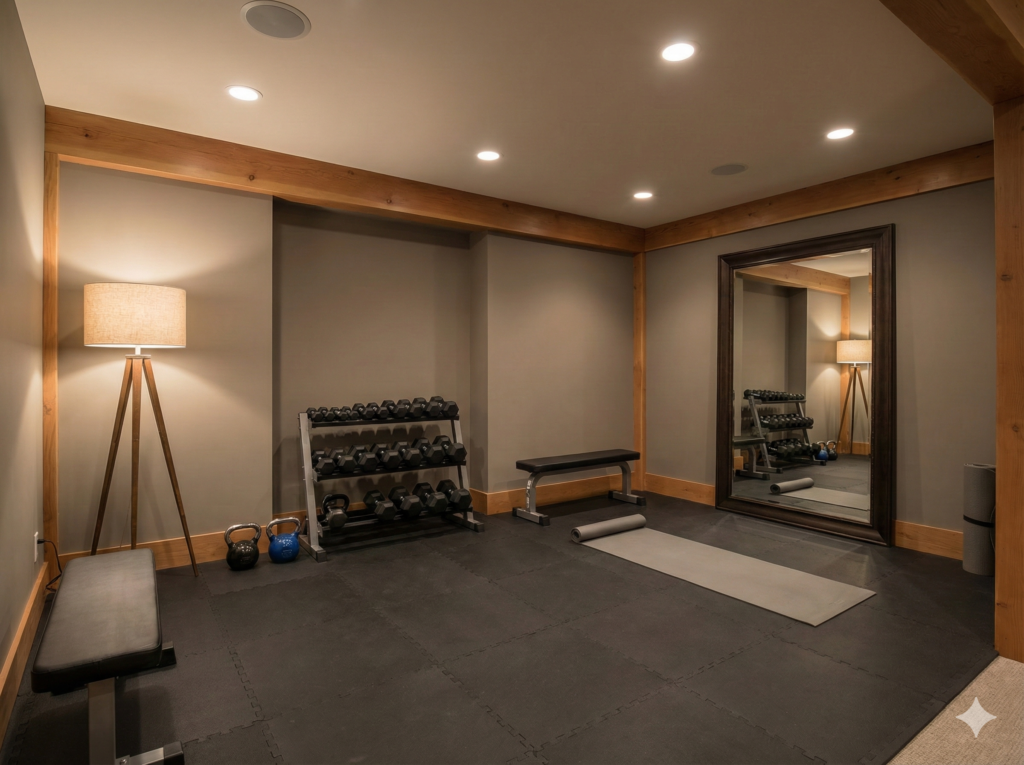
Basic Home Gym Setup
You don’t need fancy equipment to get fit. Start simple and add more as you go.
Essential items:
- Rubber flooring or gym mats (protects concrete and reduces noise)
- Adjustable dumbbells or kettlebells
- Resistance bands
- Yoga mat
- Wall-mounted mirror
Add cardio equipment if space allows. A treadmill, stationary bike, or rowing machine gives you options.
Mount a TV for workout videos. Many people follow YouTube trainers or streaming fitness classes.
Ventilation is important in gym spaces. Basements get stuffy during workouts. Add a fan or improve air circulation.
Yoga and Meditation Room
Create a calm space for stretching, yoga, or meditation. This works great in smaller basements.
Keep it minimal:
- Soft, neutral colors on walls
- Wood or bamboo flooring
- Plants for air quality
- Soft lighting or candles
- Storage for mats and props
Add a small sound system for calming music. Some people like fountains or other white noise.
This doubles as a reading nook or quiet thinking space when you’re not working out.
Wet Bar and Entertainment Areas
A basement bar makes you the favorite host on the block. It’s perfect for parties without disrupting the whole house.
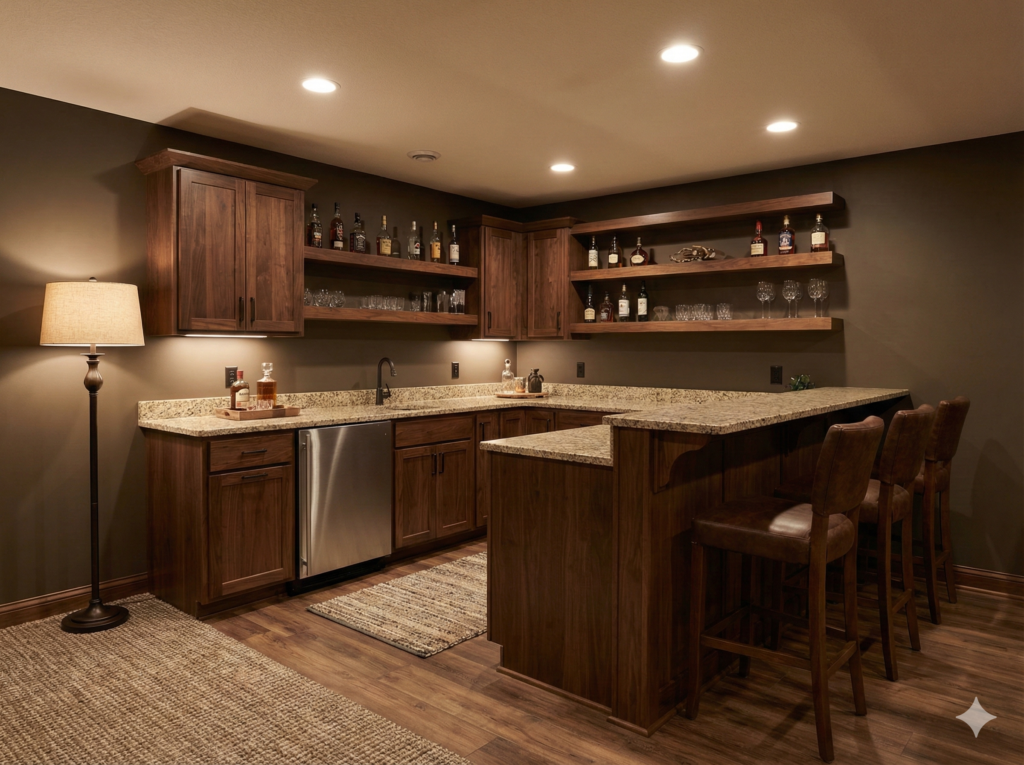
Home Bar Design
Your bar can be simple or elaborate. Even a small setup works.
Basic bar needs:
- Counter space for making drinks
- Bar stools
- Mini fridge for beer and mixers
- Shelves for glasses and bottles
- Sink (if your budget allows)
Use open shelving to display fancy bottles. Add under-cabinet lighting for ambiance.
Include a small table and chairs nearby. Not everyone sits at the bar.
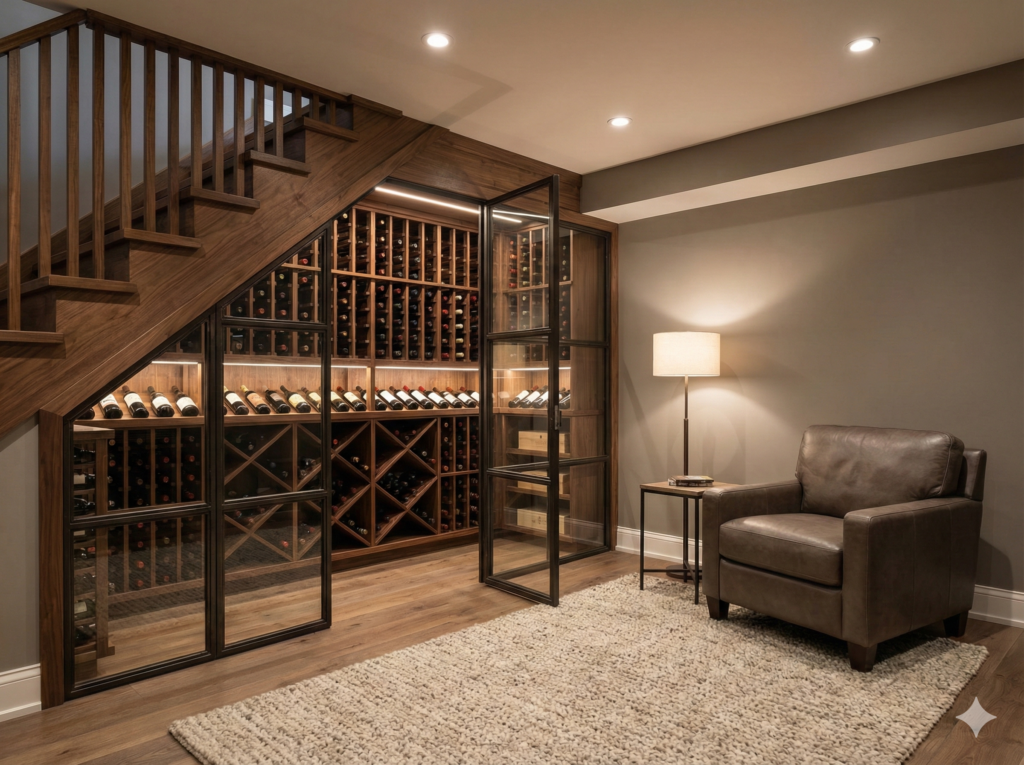
Wine Cellar or Tasting Room
Basements stay naturally cool and dark—perfect for storing wine.
For serious collectors:
- Temperature-controlled wine racks
- Humidity control (55-75% is ideal)
- Dim lighting
- Tasting area with counter or table
Even a small corner wine rack works if you’re not a big collector. Just keep it away from heat sources like furnaces.
Add wine-themed decor. Framed vineyard posters or vintage wine labels make it feel special.
Laundry Room and Utility Space
If your washer and dryer live in an unfinished part of the basement, finish that area first.
Functional Laundry Room
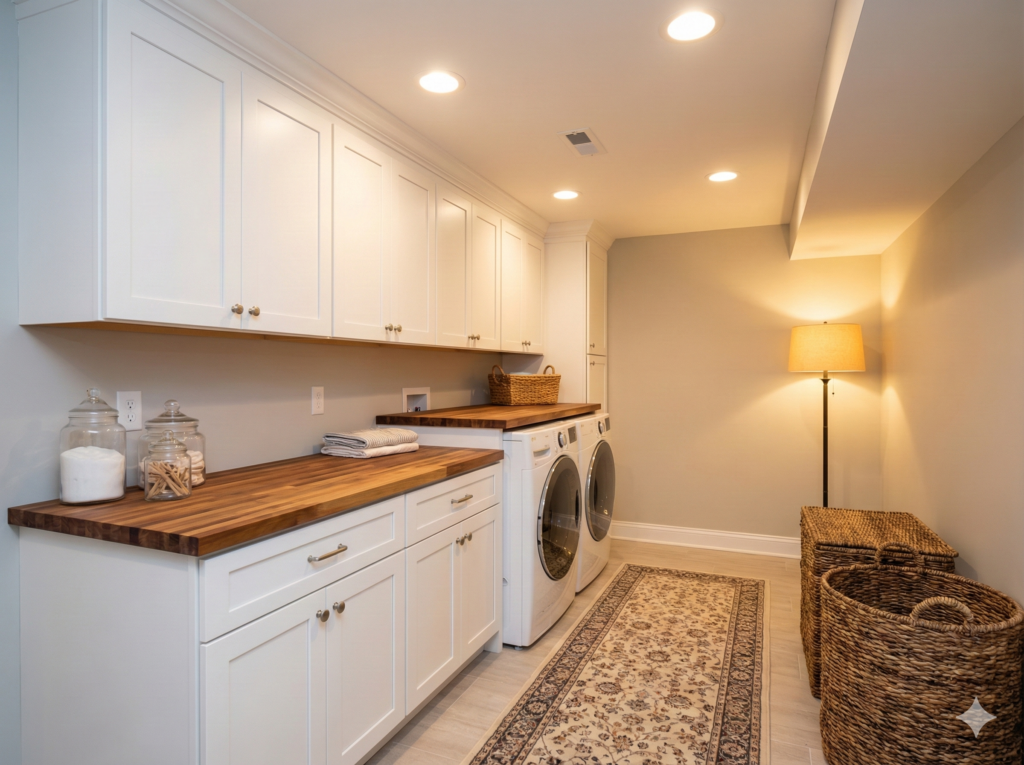
A finished laundry room makes chores less annoying. Make it bright and organized.
Include:
- Countertop for folding
- Cabinets for detergent and supplies
- Hanging rod for air-drying clothes
- Sink for hand-washing or treating stains
- Good lighting (basements are dark)
Use washable, moisture-resistant materials. Laundry rooms get damp from dryers and wet clothes.
Add a bench or chair if you sort laundry. Your back will thank you.
Combination Storage and Utility
Most basements still need space for furnaces, water heaters, and storage. Separate these from living areas.
Create a utility room:
- Close off mechanical equipment behind a door
- Use the space under stairs for storage
- Install industrial shelving units
- Label storage bins clearly
- Keep a clear path to equipment for repairs
Finishing the utility area still makes it nicer. Add walls, lighting, and maybe paint the floor. It’s better than looking at bare concrete and cobwebs.
Design Tips for Finished Basements
Basements have different challenges than upstairs rooms. These design tricks help.
Maximize Natural Light
Light makes basements feel less like basements. Bring in as much natural light as possible.
Try these:
- Enlarge existing windows
- Add window wells to bring windows closer to grade
- Use glass block windows for privacy with light
- Paint walls white or light colors
- Hang mirrors to reflect light
If you can’t add windows, fake it. Install bright LED lights that mimic daylight. Use light fixtures with white or neutral shades instead of colored glass.
Choose the Right Flooring
Basement floors need to handle moisture. Pick materials that won’t get ruined if water sneaks in.
Best options:
- Luxury vinyl plank (LVP): Waterproof, looks like wood, comfortable underfoot
- Ceramic or porcelain tile: Totally waterproof, cold without rugs
- Carpet tiles: Removable if sections get wet, comfortable
- Stained concrete: Modern look, extremely durable
- Rubber flooring: Great for gyms, reduces noise
Avoid solid hardwood in basements. It warps and buckles with moisture. Engineered hardwood works better but still risks damage.
Always use moisture barriers under flooring. This plastic sheet keeps ground moisture from reaching your floor.
Pick Moisture-Resistant Materials
Everything in a basement should handle humidity. Even with dehumidifiers, basements stay damper than upstairs.
Smart material choices:
- Use mold-resistant drywall (often green or purple board)
- Choose semi-gloss or satin paint (easier to clean than flat)
- Pick synthetic baseboards instead of wood
- Use metal or plastic furniture instead of solid wood
Don’t overdo fabric. Heavy curtains, upholstered furniture, and thick rugs hold moisture. Keep soft furnishings minimal.
Create Zones in Open Spaces
Large basements feel cavernous without definition. Break them into zones for different activities.
Ways to divide space:
- Use area rugs to mark different zones
- Arrange furniture to create separate seating areas
- Add partial walls or half-walls
- Use bookcases or shelving as room dividers
- Change flooring materials between zones
Each zone should have its own lighting. Floor lamps, table lamps, or pendant lights help define spaces.
Don’t block sightlines completely. You want separation without making rooms feel tiny.
Control Temperature and Air Quality
Basements run cold in winter and sometimes damp in summer. Good climate control makes the space comfortable year-round.
Improve conditions:
- Extend your HVAC system into the basement
- Add extra vents or a separate zone
- Run a dehumidifier constantly (empty it regularly)
- Use space heaters in winter if needed
- Ensure good air circulation
Poor air quality makes basements smell musty. Change HVAC filters regularly and consider an air purifier.
Indoor air quality affects health. The EPA recommends keeping indoor humidity between 30% and 50% to prevent mold growth.
Basement Lighting Ideas
Lighting transforms basements from dungeon to delightful. Layer different types for best results.
Recessed Ceiling Lights
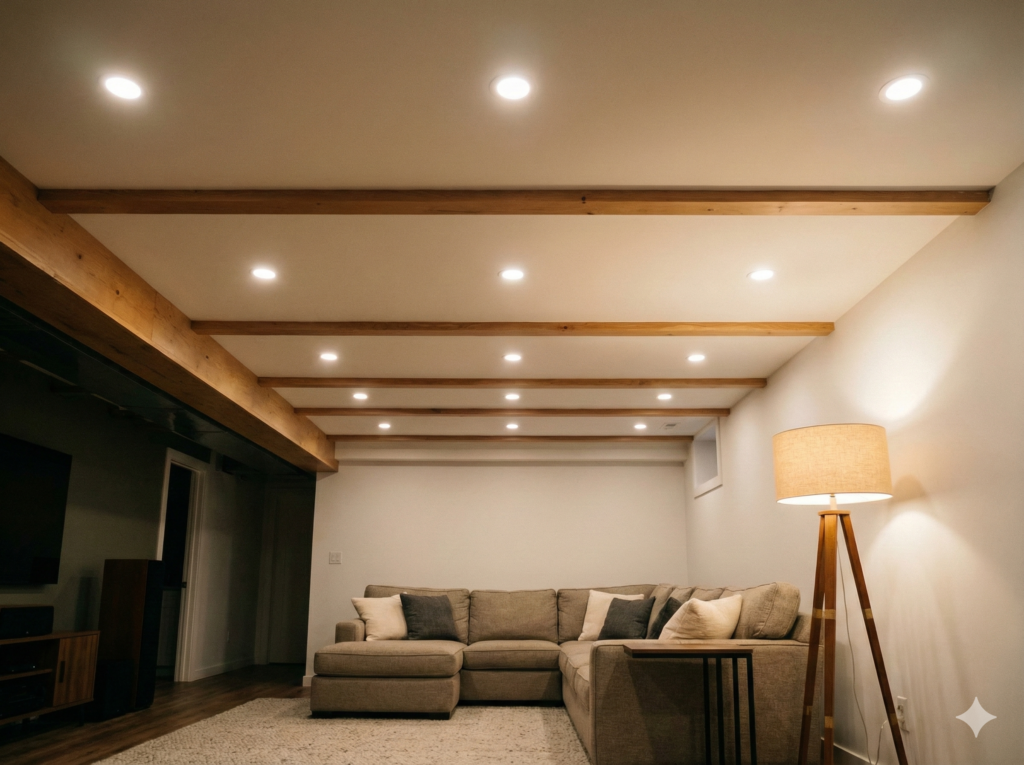
Recessed lights (can lights) fit in low ceilings without hanging down. They provide even, bright light across the whole space.
Space them about 4 to 6 feet apart for general lighting. Use LED bulbs to save energy and reduce heat.
Add dimmers so you can adjust brightness for different activities. Bright for cleaning, dim for movie nights.
Task Lighting for Work Areas
Anywhere you work needs extra light. This includes desks, craft tables, kitchen counters, or workout spaces.
Use:
- Desk lamps at computer stations
- Under-cabinet lights in wet bars or kitchenettes
- Pendant lights over tables
- Track lighting aimed at specific areas
Position task lights to avoid glare on screens. Side lighting works better than overhead lighting for computers.
Ambient and Accent Lighting
Create mood with softer lighting. This makes basements feel cozy instead of stark.
Add:
- Floor lamps in seating areas
- Table lamps on end tables
- LED strip lights under shelves or cabinets
- Wall sconces for gentle ambient light
Warm white bulbs (2700-3000K) feel cozier than cool white. Save bright white bulbs for task lighting only.
Basement Color Schemes
Color choices dramatically affect how your basement feels. Light colors open up the space, while dark colors can make it feel smaller but cozy.
Light and Bright Palettes
White, cream, light gray, and pale blues make basements feel bigger and brighter. They reflect limited natural light.
Use light colors on:
- Walls and ceilings
- Large furniture pieces
- Window treatments
Add pops of color through:
- Throw pillows
- Artwork
- Rugs
- Small decor items
All-white can feel sterile. Mix in warm wood tones, plants, or textured fabrics to add warmth.
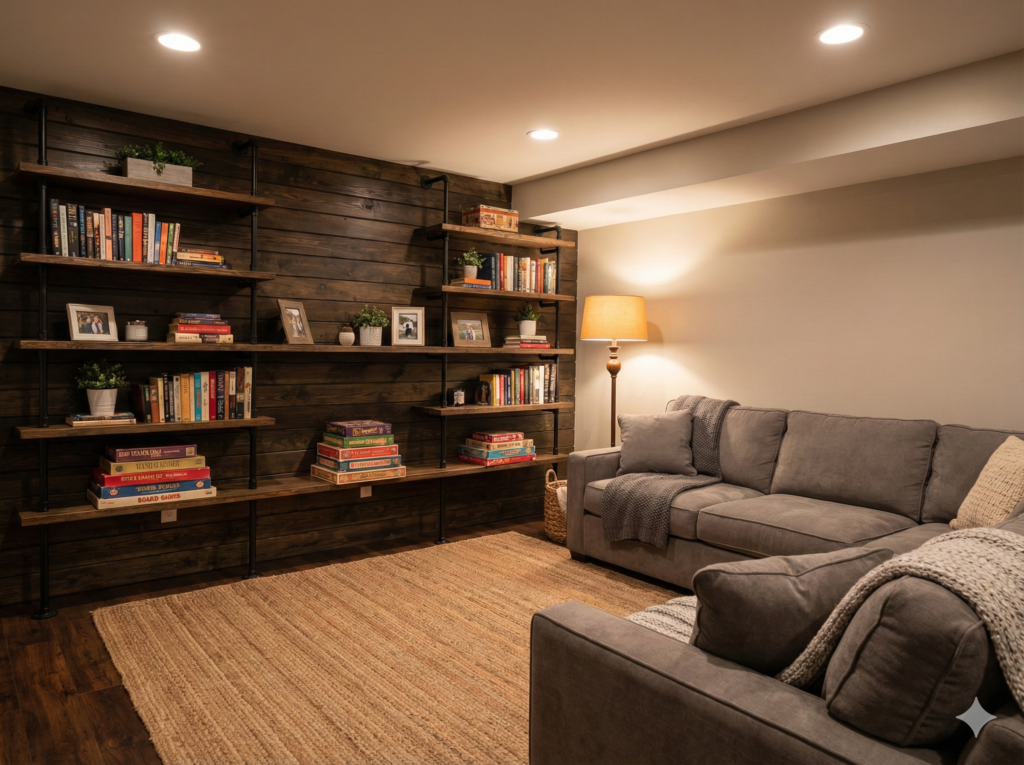
Warm and Cozy Schemes
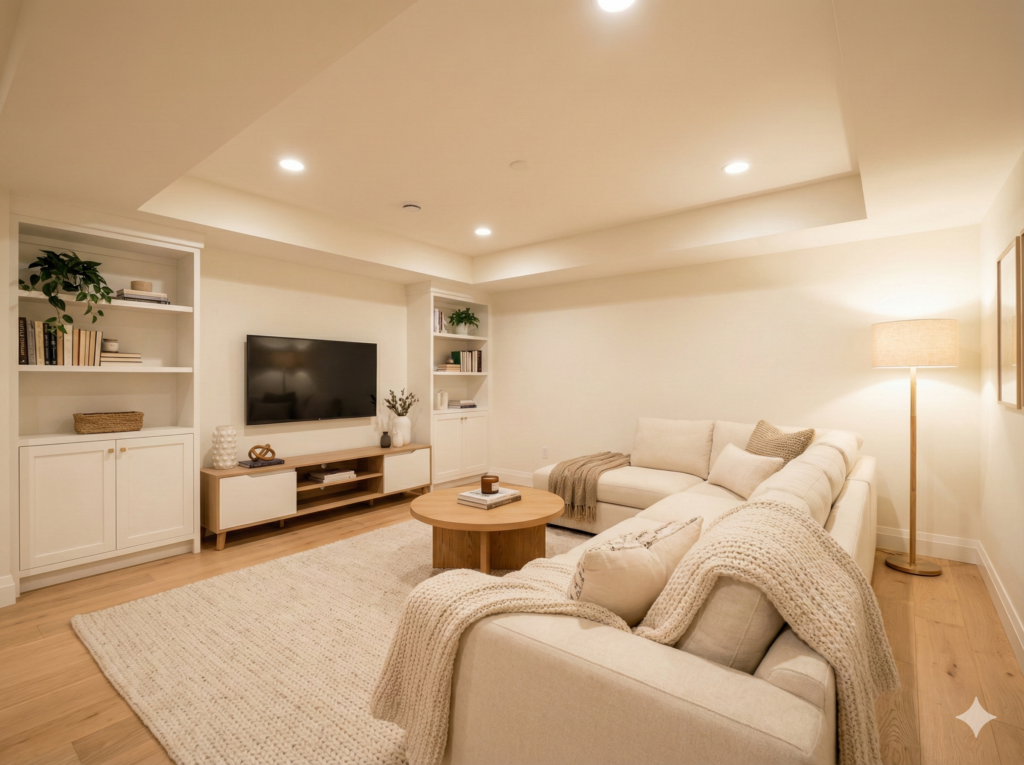
Some basements embrace the cozy cave feeling. Rich, warm colors make the space feel intimate.
Try:
- Warm grays with brown undertones
- Soft beiges and tans
- Muted greens or blues
- Terracotta or rust accents
Keep ceilings lighter than walls. Dark ceilings make low spaces feel even lower.
Balance dark walls with plenty of light sources. You need more lights in dark rooms to keep them from feeling gloomy.
Bold Accent Walls
One accent wall adds personality without overwhelming a small space.
Good spots for accent walls:
- Behind a TV or entertainment center
- Behind a bed in a bedroom area
- The back wall of a bar area
- At the bottom of the stairs
Use paint, wallpaper, wood panels, or stone veneer. The accent wall becomes a focal point that draws the eye.

Budget-Friendly Basement Finishing Ideas
You don’t need to spend 50,000 dollars to finish a basement. Smart choices save money without sacrificing quality.
Do-It-Yourself Projects
Labor costs eat up half of most renovation budgets. Doing some work yourself cuts costs significantly.
DIY-friendly tasks:
- Painting walls and ceilings
- Installing vinyl plank flooring
- Building simple shelving
- Hanging curtains or blinds
- Basic decorating and furniture arranging
Leave electrical, plumbing, and structural work to professionals. Mistakes in these areas cost more to fix than hiring experts upfront.
Watch YouTube tutorials before starting. A little research prevents expensive mistakes.
Use Cost-Effective Materials
You can find good-looking materials that don’t break the bank.
Budget choices:
- Luxury vinyl instead of hardwood (looks similar, costs less)
- Paint instead of wallpaper
- Prefab countertops instead of granite
- Stock cabinets instead of custom
- Laminate instead of solid wood
Shop sales at home improvement stores. Clearance items work fine if you’re flexible on exact colors.
Consider gently used items. Facebook Marketplace and Craigslist often have furniture, appliances, and materials cheap.
Finish in Phases
You don’t have to complete everything at once. Finish the basement in stages as budget allows.
Phase 1: Fix structural issues (moisture, insulation, framing) Phase 2: Add flooring and drywall Phase 3: Paint and install lighting Phase 4: Add furniture and decor
Living with a partially finished basement beats waiting years to do it all at once. You can enjoy the space while saving for the next phase.
Shop Smart for Furnishings
Furniture and decor add up quickly. Be strategic about what you buy.
Money-saving tips:
- Check Facebook Marketplace for used furniture
- Shop end-of-season sales
- Mix new and used pieces
- Repaint or refinish secondhand finds
- Start with essentials and add extras later
Don’t fill every corner immediately. Buy what you need for the activities you actually do.
Measure before shopping. Nothing wastes money like furniture that doesn’t fit.
Common Basement Finishing Mistakes to Avoid
Learn from others’ mistakes. These problems pop up repeatedly in finished basements.
Ignoring Moisture Issues
This can’t be stressed enough. Moisture ruins basements.
Signs you’re ignoring moisture:
- Installing carpet over damp concrete
- Finishing walls before fixing leaks
- Skipping moisture barriers
- Not running a dehumidifier
Water always finds a way in. Even if your basement seems dry, take precautions. It’s cheaper than redoing everything later.
Poor Lighting Planning
One ceiling light in the center of the room isn’t enough. Basements need multiple light sources.
Lighting mistakes:
- Not enough lights overall
- Only overhead lighting
- No dimmers
- Forgetting task lighting for work areas
Plan lighting early. Running wires is harder after walls are closed up.
Not Considering Future Use
Your needs change over time. Kids grow up. Parents retire. Work situations evolve.
Build in flexibility:
- Use furniture instead of built-ins for easy rearranging
- Keep plumbing access open for future bathroom additions
- Don’t make spaces too specific
- Leave some unfinished storage area
A playroom today might be a teen hangout tomorrow and a home office later. Design for adaptation.
Forgetting About Building Codes
Cutting corners on codes causes problems when you sell or need permits later.
Common code violations:
- Bedroom without egress window
- Not enough ceiling height
- Missing fire safety features
- Unpermitted electrical or plumbing work
Get permits even if you think you can skip them. Inspectors catch issues and make sure work is safe.
Getting Started: First Steps to Finish Your Basement
Ready to start? Here’s how to move from planning to doing.
Assess Your Basement’s Current State
Walk through your basement with a notebook. Write down:
- Current condition (finished, partially finished, unfinished)
- Moisture problems you see
- Ceiling height measurements
- Existing utilities and their locations
- Natural light sources
- Current storage needs
Take photos. They help when talking with contractors or planning designs.
Determine Your Primary Use
What do you need most? Be honest about how your family will actually use the space.
Ask yourself:
- What activities don’t fit in our current living space?
- Who will use this space most?
- How often will we use it?
- What would make our daily life easier?
Your answer guides every other decision. A home theater needs different features than a guest suite.
Hire Professionals or Go DIY
Decide what you can handle and what needs experts.
Definitely hire pros for:
- Fixing structural issues
- Electrical work
- Plumbing
- HVAC extensions
- Anything requiring permits
Consider DIY for:
- Demolition and cleanup
- Painting
- Simple flooring installation
- Decorating and furnishing
Get multiple quotes from contractors. Prices vary wildly. Check reviews and ask for references.
Set a Timeline
Finishing a basement takes time. A full renovation runs 4 to 8 weeks with professional help.
Factor in:
- How much DIY work you’re doing
- Permit approval time
- Contractor availability
- Your budget (finishing in phases takes longer)
Don’t rush. Quality work takes time. Fast contractors might cut corners.
Basement Finishing Cost Breakdown
Understanding costs helps you budget effectively. Here’s what you’ll spend money on.
| Item | Cost Range | Notes |
| Permits | $100-$500 | Varies by location and scope |
| Moisture control | $500-$3,000 | Waterproofing, dehumidifier |
| Framing | $1,000-$3,000 | For 1,000 sq ft |
| Electrical | $1,500-$5,000 | Depends on outlets and lighting |
| Plumbing | $2,000-$8,000 | If adding bathroom |
| HVAC | $1,000-$5,000 | Extending existing system |
| Drywall | $2,000-$4,000 | Materials and labor |
| Flooring | $3,000-$8,000 | Varies greatly by material |
| Painting | $1,000-$3,000 | For 1,000 sq ft |
| Trim and doors | $1,000-$2,500 | Baseboards, door frames |
| Lighting fixtures | $500-$2,000 | Depends on number and style |
These are rough estimates. Get detailed quotes for your specific project.
Labor typically costs 30-40% of your total budget. The rest goes to materials.
Maintaining Your Finished Basement
Once finished, your basement needs regular care to stay nice.
Control Humidity Year-Round
Run a dehumidifier constantly during humid months. Empty it daily or connect it to a drain.
Keep humidity between 30% and 50%. Buy a cheap hygrometer to monitor levels.
If rooms feel damp, increase air circulation. Open doors between rooms and run ceiling fans.
Regular Cleaning
Basements collect dust because they’re below ground. Vacuum weekly and dust surfaces regularly.
Clean air vents and change HVAC filters every three months. Dirty filters reduce air quality and system efficiency.
Wipe down moisture-prone areas like bathrooms and bar sinks after each use.
Watch for Water Problems
Check for moisture every few months. Look at:
- Corners where walls meet floors
- Around windows and window wells
- Near utility connections
- Behind furniture against exterior walls
Catch small leaks early before they cause major damage. Small fixes prevent big problems.
Refresh Paint and Decor
Basements show wear faster than upstairs because of humidity and temperature changes.
Touch up paint every few years. Semi-gloss finishes wipe clean easily between paint jobs.
Update decor periodically. Swap throw pillows, artwork, or rugs to keep the space feeling fresh without major renovation.
Final Thoughts
Your finished basement might become your family’s favorite space. It offers room to spread out, try new hobbies, host friends, or just relax away from the main house chaos.
Start by fixing any moisture issues and planning how you’ll actually use the space. Pick designs and materials that fit your budget and timeline. Remember that you don’t need to do everything at once—finishing in phases works perfectly well.
Whether you create a cozy family room, a productive home office, an income-generating rental, or a personal gym, your basement adds real value to your home and your daily life.
Take your time, make smart choices, and soon you’ll wonder how you ever lived without that extra space. Ready to start? Grab a measuring tape and start planning your dream basement today.